- /
- Destinations
- / Agra
Agra
Agra – Home to the Timeless Beauty of the Taj Mahal
Agra is one of India's most iconic destinations and a must-visit for travelers exploring the country's rich history and architectural heritage. Best known as the home of the world-famous Taj Mahal, Agra attracts millions of visitors each year who come to admire one of the greatest monuments ever built. Beyond the Taj Mahal, the city offers magnificent Mughal forts, elegant tombs, bustling markets, and a remarkable legacy that shaped the history of India for centuries.
Situated on the banks of the Yamuna River, Agra served as the capital of the Mughal Empire during the 16th and 17th centuries. Under emperors such as Akbar, Jahangir, and Shah Jahan, the city flourished as a center of art, architecture, and culture. Their legacy lives on through magnificent palaces, gardens, mosques, and UNESCO World Heritage Sites that continue to inspire visitors from around the globe. Every monument tells the story of an empire renowned for its artistic vision and architectural excellence.
While the Taj Mahal is undoubtedly the city's greatest attraction, Agra offers much more than a single monument. The imposing Agra Fort, the elegant Tomb of Itimad-ud-Daulah, and the nearby abandoned city of Fatehpur Sikri provide fascinating insight into Mughal history and everyday royal life. Visitors can spend days exploring beautifully preserved palaces, marble pavilions, courtyards, and gardens while learning about the rulers who transformed Agra into one of the world's most important imperial capitals.
The city's lively markets offer another side of Agra's cultural heritage. Travelers can shop for handcrafted marble inlay work, leather products, carpets, jewelry, textiles, and traditional handicrafts created by artisans whose skills have been passed down through generations. Agra is also famous for its local cuisine and the traditional sweet known as Petha, which has become one of the city's signature delicacies.
Agra forms an essential part of India's renowned Golden Triangle, connecting Delhi, Jaipur, and Agra through excellent road and rail networks. The city can easily be explored on a day trip, but spending an extra night allows visitors to experience the Taj Mahal at sunrise, when the changing light creates one of the world's most unforgettable travel experiences. The most comfortable time to visit is between October and March, when pleasant weather makes sightseeing enjoyable throughout the day.
Whether you are passionate about history, architecture, photography, or cultural heritage, Agra offers an extraordinary journey through one of the greatest civilizations in Indian history. Its remarkable monuments, artistic traditions, and timeless beauty ensure that every visit becomes an unforgettable part of any journey through India.
Recommended Tours
Major Tourist Spots in Agra

Taj Mahal
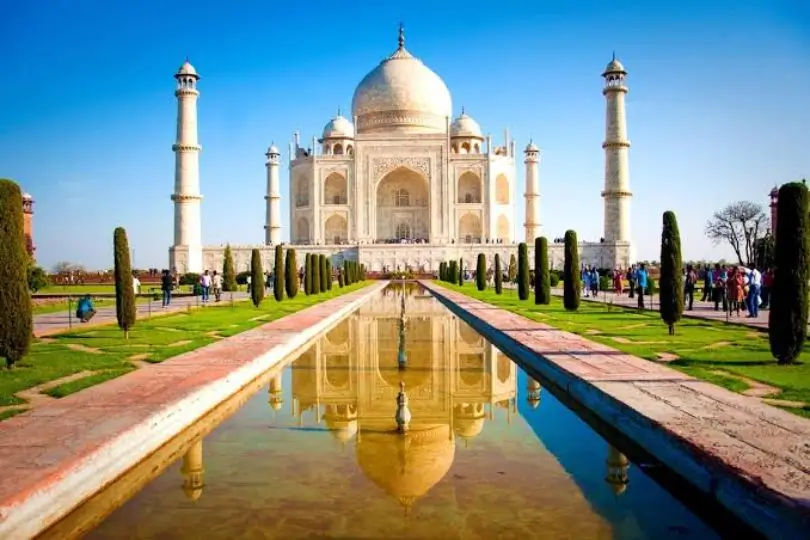
The Taj Mahal is one of the world's most celebrated architectural masterpieces and a UNESCO World Heritage Site that symbolizes eternal love. Commissioned by Emperor Shah Jahan in memory of his beloved wife Mumtaz Mahal, construction began in 1632 and continued for more than two decades. Built entirely from white marble and decorated with intricate floral carvings, precious stone inlay work, and elegant calligraphy, the monument is widely regarded as the finest achievement of Mughal architecture.
Visitors from around the world arrive to witness the monument's remarkable beauty, particularly at sunrise and sunset when the marble changes color with the natural light. The surrounding gardens, reflecting pools, and the peaceful Yamuna River enhance its timeless elegance. More than simply a monument, the Taj Mahal represents artistic perfection and remains one of the most inspiring landmarks ever created by human hands.

Agra Fort
Just a few kilometers from the Taj Mahal stands Agra Fort, another UNESCO World Heritage Site that served as the principal residence of the Mughal emperors before the capital moved to Delhi. Built primarily by Emperor Akbar in the 16th century, the massive red sandstone fortress encloses an extraordinary collection of royal palaces, audience halls, mosques, courtyards, and beautifully landscaped gardens that reflect the grandeur of the Mughal Empire.
Visitors can explore remarkable structures including Jahangiri Mahal, Khas Mahal, Diwan-i-Am, Diwan-i-Khas, Musamman Burj, and the elegant Sheesh Mahal. One of the fort's most moving stories is that Shah Jahan spent his final years imprisoned here, gazing across the Yamuna River toward the Taj Mahal. The fort offers exceptional historical insight while providing magnificent views of Agra's most famous monument.

Fatehpur Sikri
Located about 40 kilometers from Agra, Fatehpur Sikri is one of the finest surviving examples of Mughal urban planning and a UNESCO World Heritage Site. Built by Emperor Akbar in the late 16th century, the city served briefly as the capital of the Mughal Empire before being abandoned due to water shortages. Today, its remarkably preserved palaces, courtyards, mosques, and gateways offer visitors a fascinating glimpse into the grandeur of one of India's greatest imperial cities.
Highlights include the magnificent Buland Darwaza, the elegant Panch Mahal, Diwan-i-Khas, Jodha Bai's Palace, and the revered Tomb of Salim Chishti. Walking through the vast complex allows visitors to appreciate the architectural brilliance and cultural vision that defined Akbar's reign. Fatehpur Sikri is an essential excursion for anyone wishing to explore Mughal history beyond the monuments of Agra.

Tomb of Itimad-ud-Daulah
Often referred to as the "Baby Taj," the Tomb of Itimad-ud-Daulah is considered one of the most elegant monuments of the Mughal period. Built by Empress Nur Jahan in memory of her father, the mausoleum introduced many architectural features that later reached perfection in the Taj Mahal, including extensive white marble construction and delicate pietra dura inlay work using semi-precious stones.
Set within beautifully landscaped Persian-style gardens along the Yamuna River, the monument offers a peaceful atmosphere away from the larger crowds. Visitors can admire intricate lattice screens, finely carved marble panels, colorful floral motifs, and exceptional craftsmanship that demonstrates the evolution of Mughal architecture. The tomb provides valuable insight into the artistic innovations that shaped one of the world's greatest architectural traditions.

Mehtab Bagh
Situated on the opposite bank of the Yamuna River, Mehtab Bagh is a beautifully restored Mughal garden offering one of the finest panoramic views of the Taj Mahal. Originally designed during the reign of Emperor Babur and later enhanced by Shah Jahan, the garden was intended to complement the symmetry of the Taj Mahal across the river. Its peaceful setting makes it an excellent destination for visitors seeking a quieter perspective of Agra's most famous landmark.
The garden is especially popular during sunrise and sunset when changing light conditions create spectacular reflections and exceptional photography opportunities. Landscaped walkways, fountains, flowering plants, and unobstructed views of the Taj Mahal provide a relaxing environment for visitors who wish to appreciate the monument away from the busiest viewing areas.

Akbar's Tomb
Located in Sikandra on the outskirts of Agra, Akbar's Tomb is the final resting place of Emperor Akbar, one of the greatest rulers in Indian history. Constructed according to the emperor's own vision and completed by his son Jahangir, the monument combines Islamic, Hindu, Jain, and Buddhist architectural influences, reflecting Akbar's philosophy of religious harmony and cultural unity.
The expansive complex is surrounded by beautifully maintained gardens where deer, peacocks, and monkeys are often seen roaming freely, creating a peaceful atmosphere for visitors. The grand entrance gateway, decorated with intricate geometric patterns and colorful marble inlay, leads to an elegant sandstone mausoleum that reflects the artistic brilliance of the Mughal Empire. The site offers both historical significance and architectural beauty in a tranquil setting.

Jama Masjid
Built in the 17th century by Jahanara Begum, the daughter of Emperor Shah Jahan, Jama Masjid is one of the largest and most important mosques in northern India. Constructed from red sandstone with white marble decorations, the mosque features graceful domes, elegant arches, spacious courtyards, and finely crafted calligraphy that reflect the refined architectural style of the Mughal period.
Visitors are welcomed by the peaceful atmosphere of the mosque while appreciating its impressive scale and intricate decorative details. Located near Agra Fort and the city's traditional markets, Jama Masjid also offers an opportunity to observe local daily life and experience one of Agra's active places of worship, where centuries-old traditions continue to be practiced.

Kinari Bazaar
Located in the historic heart of Agra, Kinari Bazaar is one of the city's oldest and most vibrant shopping districts. The lively market is famous for its colorful lanes filled with traditional textiles, handcrafted leather goods, marble souvenirs, jewelry, spices, embroidered fabrics, decorative items, and wedding accessories. Walking through the narrow streets provides visitors with an authentic glimpse into the city's commercial heritage and everyday life.
The market is also an excellent place to sample Agra's famous street food and traditional sweets, including the city's renowned Petha. Friendly local shopkeepers and skilled artisans create a welcoming atmosphere where travelers can discover handcrafted products while supporting family-run businesses that have served customers for generations.

Chini Ka Rauza
Overlooking the Yamuna River, Chini Ka Rauza is a unique Mughal mausoleum dedicated to Allama Afzal Khan Mullah, a distinguished scholar and poet who served in the court of Shah Jahan. Unlike many monuments in Agra, the structure is renowned for its colorful glazed ceramic tiles, many of which were imported from Persia, giving the mausoleum its distinctive appearance and historical importance.
Although less visited than Agra's major attractions, Chini Ka Rauza offers travelers an opportunity to explore a quieter heritage site while appreciating the diversity of Mughal architecture. Its elegant design, riverside setting, and historical significance make it a worthwhile addition for visitors interested in discovering Agra beyond the iconic Taj Mahal.
Tell us about your
Travel Plans
Share your travel preferences and our destination specialists will create a personalized itinerary along with the best travel recommendations and pricing. Most inquiries receive a detailed response within 24 hours with no obligation.
Have a Question?
Whether you're planning a private tour, luxury holiday, family vacation, chauffeur-driven journey, hotel booking, or a customized India itinerary, our travel experts are ready to assist you.
Share your requirements and we'll provide the best travel options, recommendations, and pricing tailored to your needs.
Begin your
India journey
From the palaces of Rajasthan to the backwaters of Kerala - tell us where you wish to go. Our luxury travel experts at India Fortune Journey craft every itinerary to your pace, taste, and story.
Plan My Tour