
- /
- India Tour Packages
- / Gujarat Heritage, Wildlife & Kutch Tour
Gujarat Heritage, Wildlife & Kutch Tour
12 Nights / 13 Days
Places Covered: Ahmedabad - Patan - Modhera - Little Rann of Kutch - Bhuj - Kutch Villages - Mandvi - Gondal - Sasan Gir - Somnath - Porbandar - Dwarka - Ahmedabad
Overview
Gujarat rewards travellers who are prepared to look beyond India's familiar tourist routes. Historic trading cities, intricately carved stepwells, desert communities, textile workshops, wildlife reserves and pilgrimage centres are spread across a state with a remarkably varied cultural identity. This 13-day Gujarat Heritage, Wildlife & Kutch Tour brings those elements together in a private journey designed especially for overseas visitors who want to see both celebrated landmarks and places where regional traditions remain part of everyday life.
The first section follows the architectural and craft heritage of northern Gujarat, beginning in Ahmedabad before travelling to Patan and Modhera. Rani Ki Vav introduces the extraordinary artistry of Gujarat's stepwell architecture, while Patola weaving provides a closer look at one of the state's highly skilled textile traditions. From here, the landscape opens into the Little Rann of Kutch, where an early-morning safari searches for the Indian wild ass and resident or migratory birdlife. The route then reaches Bhuj and the wider Kutch region, where embroidery, weaving, Bandhani, traditional homes and artisan villages reveal a cultural heritage shaped by desert geography and generations of craftsmanship.
Western and southern Gujarat add further dimensions to the journey. Mandvi brings royal architecture and the Arabian Sea coastline, Gondal introduces another strand of princely Gujarat, and Sasan Gir shifts the focus towards wildlife with a jeep safari in the last natural stronghold of the Asiatic lion. The final section follows Gujarat's spiritual coastline through Somnath, Porbandar and Dwarka. Combined with private road travel, knowledgeable guides, carefully chosen hotels and regional food experiences, the itinerary offers foreign travellers a broad introduction to Gujarat without reducing the state to a conventional monument-to-monument tour.
Highlights
- Walk through the historic quarters of Ahmedabad and see traditional Pol architecture.
- Visit Sabarmati Ashram, Sidi Saiyyed Mosque and Adalaj Stepwell.
- See the UNESCO-listed Rani Ki Vav at Patan.
- Meet skilled artisans and learn about traditional Patola textile weaving.
- Visit the intricately carved Modhera Sun Temple.
- Take an early-morning wildlife safari in the Little Rann of Kutch.
- Look for the Indian wild ass and seasonal birdlife in the Rann landscape.
- Learn about salt production and rural livelihoods in the Little Rann region.
- Visit Aina Mahal, Prag Mahal and the craft community at Bhujodi.
- Meet Kutch artisans specialising in embroidery, weaving and Bandhani.
- Watch sunset across the White Rann of Kutch.
- Visit Vijay Vilas Palace and Mandvi's traditional shipbuilding area.
- Discover Gondal's royal heritage before travelling to Sasan Gir.
- Join a jeep safari in Gir National Park in search of the Asiatic lion.
- Visit the sacred coastal centres of Somnath and Dwarka.
- Travel through Porbandar and visit Kirti Mandir.
- Include regional meals, craft demonstrations and local interactions throughout the route.
- Stay in a combination of quality hotels, heritage properties, eco-lodges and wildlife resorts.
Itinerary
Arrive at Sardar Vallabhbhai Patel International Airport in Ahmedabad, where an India Fortune Journey representative will meet you after immigration and baggage collection. Transfer by private air-conditioned vehicle to your hotel and complete the check-in formalities. The remainder of the initial hours is deliberately kept easy, particularly for guests arriving after a long international flight. Settle into your room, rest and become accustomed to the local time before beginning the journey through Gujarat. Your representative will brief you about the route, travel arrangements and important practical details for the coming days.
Towards the evening, head to the Sabarmati Riverfront for your first introduction to Ahmedabad. The landscaped promenade beside the Sabarmati provides a relaxed setting from which to observe the city without immediately beginning a demanding sightseeing programme. Walk along a suitable section of the riverfront, watch residents enjoying the evening and take in the changing cityscape as daylight fades. Depending on arrival time and energy levels, the outing can be shortened or extended, keeping the first day flexible for international travellers.
Dinner tonight introduces the flavours of Gujarat through a carefully selected local restaurant or hotel dining experience. A traditional Gujarati meal may include a combination of breads, vegetables, lentils, rice, chutneys and regional accompaniments, with the menu adjusted where possible for individual dietary preferences. Your guide or local host can explain some of the characteristic sweet, savoury and mildly spiced combinations found in Gujarati cooking. Return to the hotel afterwards for a comfortable night's rest before tomorrow's deeper look at Ahmedabad's history and neighbourhoods.
Overnight: Ahmedabad
Begin early with a guided walk through Old Ahmedabad, where closely built neighbourhoods preserve a distinctive form of urban architecture. Walk through selected Pols—traditional residential clusters characterised by narrow lanes, carved wooden façades, internal courtyards and community spaces. Rather than viewing Ahmedabad only through its major monuments, this morning provides an understanding of how architecture, commerce, religion and neighbourhood life developed alongside one another. Your guide will point out details in façades, shrines, houses and streets that are easily overlooked when travelling through the old city by vehicle.
Continue to Sabarmati Ashram, closely associated with Mahatma Gandhi and India's independence movement. The relatively simple buildings, photographs, documents and personal objects provide historical context to Gandhi's years in Ahmedabad and the political activities connected with the ashram. Later, see the celebrated stone latticework of the Sidi Saiyyed Mosque before travelling to Adalaj Stepwell, located outside the central city. Descend through its carved levels and learn how stepwells combined practical water management with sophisticated architecture and social functions in the dry climate of western India.
Lunch can be arranged at a restaurant specialising in Gujarati cuisine, giving you another opportunity to become familiar with regional dishes. Later, return to the hotel for a break before heading out again in the evening. Visit the lively area around Manek Chowk, which changes character through different hours of the day and becomes particularly well known for food after dark. With a knowledgeable guide, sample selected items according to comfort and dietary preferences while learning about Ahmedabad's street-food culture. Return to the hotel after an evening among one of the city's most animated local settings.
Overnight: Ahmedabad
Leave Ahmedabad after breakfast and drive towards Patan, an important historic centre of northern Gujarat. The principal visit here is Rani Ki Vav, the monumental stepwell constructed with multiple descending levels and exceptionally detailed sculptural work. Walk through the complex with your guide and examine the architectural arrangement that turns a functional water structure into an elaborate subterranean monument. The numerous carved figures and decorative surfaces provide an impressive introduction to the craftsmanship that flourished in medieval Gujarat.
Patan is equally important for its textile traditions. Visit an appropriate workshop or weaving centre to learn about Patan Patola, the highly skilled double-ikat tradition for which the city has long been renowned. Observe how patterns are planned and how threads are prepared before weaving, while your host explains why producing traditional Patola textiles demands considerable precision and time. Continue afterwards to Modhera, where the Sun Temple stands as another outstanding example of Gujarat's historic architecture. Examine the temple complex, carved surfaces and stepped water tank while learning about its architectural arrangement and religious significance.
From Modhera, continue by road towards Dasada and the Little Rann of Kutch. The surroundings gradually become more open as you approach the semi-arid landscape bordering the Rann. Check into a wildlife lodge, eco-resort or character property and spend the remainder of the evening at leisure. Dinner is generally taken at the resort, where regional dishes may form part of the menu. Rest early tonight, as tomorrow begins before the heat of the day with a wildlife drive into one of Gujarat's most unusual natural environments.
Overnight: Little Rann of Kutch / Dasada
Set out early in the morning by safari vehicle for the Little Rann of Kutch, a vast seasonal salt-marsh landscape unlike the forest reserves found elsewhere on this itinerary. The primary wildlife interest is the Indian wild ass, an animal strongly associated with this region. Accompanied by experienced local naturalists or guides, travel across permitted safari areas while looking for wildlife and learning how species survive in the dry, saline environment. The early hours also provide favourable light for photography and generally more comfortable temperatures.
Birdlife forms another important part of the excursion. Depending on season, rainfall and migration patterns, the wetlands and surrounding areas can support flamingos, cranes, pelicans, raptors, waterbirds and numerous other species. Sightings naturally vary because the excursion takes place in a wild habitat, but the changing relationship between salt flats, seasonal water and grassland makes the landscape itself worth understanding. After completing the morning drive, return to the lodge for breakfast and some time to rest during the warmer part of the day.
Later, visit a nearby rural community and learn about livelihoods connected with this challenging landscape. Where locally permitted, the programme may include an introduction to traditional salt production and the communities whose work is closely tied to the salt pans. Artisan interactions can also be incorporated according to the village and season, providing a cultural counterpoint to the morning safari. Towards sunset, return to an open section of the Rann to watch the colours change across the flat horizon before heading back to the lodge for dinner.
Overnight: Little Rann of Kutch / Dasada
After breakfast, depart the Little Rann and begin the road journey towards Bhuj, the principal urban centre for exploring the Kutch region. Today's drive crosses a broad section of western Gujarat and reveals increasingly arid scenery as you travel deeper into Kutch. Comfort and refreshment stops will be made along the route as required. Arrive in Bhuj later in the day, check into your hotel and take a short break before beginning an introduction to the city's historical landmarks.
Visit Aina Mahal, associated with the former rulers of Kutch and known for interiors that reflect an unusual mixture of regional craftsmanship and European influences. Nearby, see Prag Mahal, whose architecture provides a striking contrast to the more traditional buildings encountered earlier in the tour. Your guide will explain the royal history of Bhuj as well as the effects of major historical events and earthquakes on the city's built heritage. Together, the palace complexes provide useful context before tomorrow's journey into the craft villages and rural landscapes beyond Bhuj.
Later, travel to Bhujodi, a craft village known particularly for textile traditions. Meet local craftspeople where arrangements permit and observe weaving techniques that continue to be practised within artisan families. This is an opportunity to understand the work behind Kutch textiles rather than seeing them only as finished products in shops. Guests interested in purchasing genuine handmade pieces can do so directly where appropriate, although there is no obligation to buy. Return to Bhuj in the evening and enjoy dinner at leisure.
Overnight: Bhuj
Today is devoted to the cultural landscape of Kutch, travelling towards the Hodka and Dhordo region after breakfast. Village architecture here has developed in response to local climate, materials and community traditions, with circular Bhunga houses among the region's most recognisable forms. Visit selected communities according to access and local arrangements, accompanied by someone able to explain the cultural background of the settlements. The purpose is not simply to photograph the villages, but to understand how craft, architecture and family traditions remain connected.
Spend time with artisans specialising in skills such as embroidery, weaving or Bandhani, depending on the communities visited that day. Techniques and designs vary considerably across Kutch, and many textile traditions are closely linked to particular groups and family histories. Watch demonstrations where available and speak with artisans through your guide about materials, motifs and the time required to produce handmade work. A locally arranged lunch or traditional meal may be included in the day's programme, giving the visit a more personal character than conventional sightseeing.
Later, continue towards the White Rann of Kutch, subject to seasonal access and applicable permits. The immense salt landscape creates one of Gujarat's most distinctive settings, particularly in the late afternoon when changing light alters the appearance of the white surface. Walk in the designated visitor area and remain through sunset when conditions permit. Afterwards, enjoy a traditional Kutch-style dinner or cultural arrangement depending on the selected accommodation and season. Return either to Bhuj or stay in the Hodka region according to the confirmed hotel plan.
Overnight: Bhuj / Hodk
Following breakfast, leave Bhuj and travel towards Mandvi, a historic port town on the Gulf of Kutch. The comparatively shorter transfer allows more time to see the destination at an easy pace. After arrival, check into your selected beach resort, heritage-style property or hotel and take some time to settle in. Mandvi adds a coastal chapter to the Gujarat journey and historically developed through maritime trade, shipbuilding and its association with the former rulers of Kutch.
Visit Vijay Vilas Palace, an elegant royal residence set amid extensive grounds near the coast. Walk through accessible areas of the palace while your guide explains its architectural features and connection with the Kutch royal family. From appropriate sections of the property, the surrounding landscape provides a sense of why this location was chosen as a retreat away from Bhuj. Continue later towards Mandvi's traditional wooden shipbuilding area, where large vessels have historically been constructed using skills passed between generations of craftsmen.
Spend the final part of the afternoon near Mandvi Beach and the Arabian Sea. Rather than scheduling another formal monument, time is allowed for a slower coastal experience after several busy days of driving, heritage visits and village excursions. Walk beside the water, watch local activity and remain for sunset when weather conditions are suitable. Return to your hotel or resort afterwards for dinner and an overnight stay, with the sound and atmosphere of the Gujarat coast providing a distinct change from the salt landscapes of Kutch.
Overnight: Mandvi
Leave Mandvi after an early breakfast for the longer journey towards Gondal, travelling across the Saurashtra region of Gujarat. The drive links Kutch with another culturally distinct part of the state, passing through towns, farming areas and open countryside. Appropriate comfort stops will be arranged during the journey. On arrival in Gondal, pause for lunch or refreshments before beginning a visit focused on the town's princely heritage and architectural legacy.
Visit the Naulakha Palace complex, where carved stonework, balconies and architectural details reflect Gondal's royal past. Depending on current access arrangements, the visit may also introduce collections, craft traditions or other elements associated with the former princely state. Gondal provides an interesting transition in the itinerary: the desert communities and textile traditions of Kutch give way to the palaces and historical centres of Saurashtra. Your guide will provide enough background to place these sites within Gujarat's wider princely history rather than treating the stop as an isolated palace visit.
Continue by road towards Sasan Gir, gateway to the Gir forest and the natural habitat of the Asiatic lion. Arrive at your wildlife resort by evening and check in. The atmosphere changes noticeably here, with accommodation surrounded by a more rural and forest-oriented environment. Dinner is served at the resort, after which your naturalist or representative can brief you on tomorrow's safari procedures, reporting time and wildlife etiquette. Retire early, as the first safari drive generally begins in the cool morning hours.
Overnight: Sasan Gir
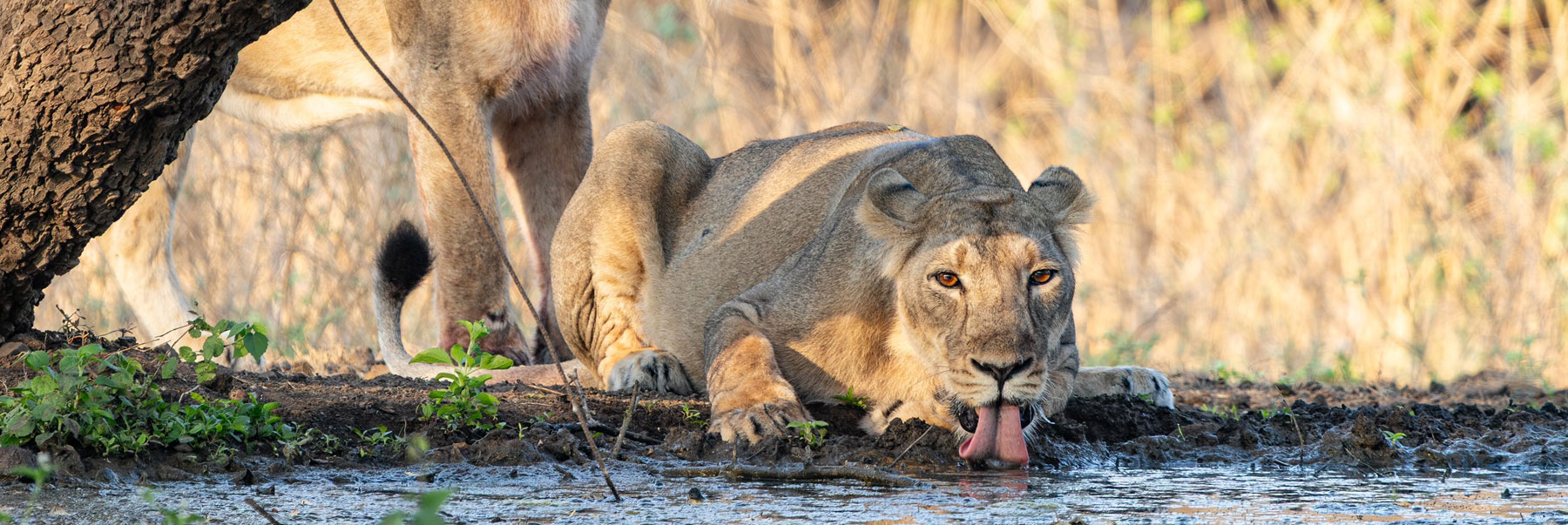
Begin before sunrise with tea or coffee at the resort and proceed to the designated reporting point for your scheduled Gir wildlife safari. After completing the required formalities, enter the permitted tourism zone in an authorised open safari vehicle accompanied by the assigned forest guide or naturalist. Gir's dry deciduous forest, scrubland, rocky terrain and seasonal watercourses create an ecosystem quite different from the salt flats encountered earlier in the Little Rann of Kutch. The principal attraction is the Asiatic lion, whose remaining wild population is centred in the greater Gir landscape, although sightings can never be guaranteed in a natural habitat.
During the safari, remain attentive not only to lions but also to the wider wildlife of the forest. Depending on luck, season and assigned route, there may be opportunities to see spotted deer, sambar, nilgai, wild boar, langurs and other native species. Birdwatchers can also look for a variety of woodland and wetland birds occurring across the Gir ecosystem. Your guide will help identify species, interpret tracks and explain aspects of the forest habitat while maintaining the regulations governing wildlife tourism. Photography is welcome within applicable park rules, but the morning is equally rewarding for travellers interested in understanding conservation and ecology.
Return to the resort after the safari for breakfast followed by time to relax. Later, a carefully arranged rural visit or nature-oriented activity can introduce the human landscape surrounding Gir, subject to local permissions and availability. Travellers may learn about village life, agriculture and communities that have long lived around the forest region without turning the interaction into a staged tourist visit. An optional second safari can also be requested in advance and remains dependent on permit availability. Return to the resort for dinner and spend another quiet evening near the forest.
Overnight: Sasan Gir
Important: Gir safari operations are subject to forest-department regulations, permit availability, weather and seasonal closure. The main Gir safari season generally excludes the annual monsoon closure period, so travel dates should be checked before confirming the programme.
After breakfast, check out from the wildlife resort and leave the Gir region for Somnath, travelling towards Gujarat's Arabian Sea coastline. The relatively comfortable road journey provides a gradual transition from wildlife country to one of India's prominent pilgrimage centres. On arrival in Somnath, check into your hotel and take time for lunch and refreshments. The atmosphere here is markedly different from the forest and craft destinations covered earlier, with the town's identity closely linked to pilgrimage, mythology and the long history of the Somnath temple.
Later, visit the Somnath Temple, dramatically positioned close to the Arabian Sea. The temple is revered as one of the twelve Jyotirlinga shrines associated with Shiva and has been rebuilt at different points during its long and complex history. Your guide will provide historical and cultural context before you enter the temple precinct, while all current security procedures, dress requirements and restrictions must be respected. Visitors should also be aware that rules regarding mobile phones, cameras, bags and foreign visitors can change, so the day's arrangements will follow the regulations applicable at the time of travel.
Continue to Triveni Sangam, traditionally regarded as the meeting place of sacred rivers and an important part of Somnath's pilgrimage landscape. Spend some time observing the religious activity and understanding the significance of the site before returning towards the seafront. Where schedules and local arrangements permit, the evening may include time around the temple surroundings or an appropriate cultural activity. Dinner can be arranged at the hotel or a suitable local restaurant. Retire for the night after a day combining the natural landscape of Gir with the spiritual traditions of coastal Gujarat.
Overnight: Somnath
Leave Somnath after breakfast and follow the coastal route towards Porbandar, a port city best known internationally as the birthplace of Mahatma Gandhi. The drive introduces another section of Gujarat's western coastline and allows the journey towards Dwarka to be broken with a historically significant stop. On reaching Porbandar, proceed to the old part of the city and visit Kirti Mandir, the memorial complex associated with Gandhi and his family. The visit complements the earlier time spent at Sabarmati Ashram in Ahmedabad, connecting two important places in his life.
Spend time learning about Gandhi's connection with Porbandar and the family residence associated with his birth. Displays and preserved spaces provide context to his early background before the political and philosophical developments represented more extensively at Sabarmati Ashram. Depending on the schedule, take a short orientation through parts of Porbandar and stop for lunch before resuming the road journey. Today's drive is intentionally planned as a cultural route rather than simply a direct transfer, allowing travellers to see more of the settlements and coastal geography of the Saurashtra peninsula.
Continue to Dwarka, one of India's important pilgrimage cities and a place strongly associated with Krishna in Hindu tradition. After checking into your hotel, proceed in the evening towards the Dwarkadhish Temple area. The streets surrounding the temple become particularly atmospheric around worship times as pilgrims, priests, vendors and local residents move through the old quarter. Subject to current temple regulations, enter the complex for a first visit or attend the evening atmosphere around the shrine. Return to the hotel afterwards for dinner and overnight stay.
Overnight: Dwarka
Begin the morning with a more detailed visit to the Dwarkadhish Temple, subject to opening hours and local regulations. The temple is one of the principal religious landmarks of Dwarka and forms the centre of the city's pilgrimage life. Your guide will explain the traditions associated with Krishna and the significance of Dwarka before entering, as guiding and interpretation may be restricted within certain temple areas. Allow time to observe the architecture, surrounding lanes and movement of pilgrims rather than treating the visit purely as a brief sightseeing stop.
Continue towards Nageshwar, home to a temple associated with the Jyotirlinga tradition, and then travel onwards for the excursion towards Bet Dwarka. Depending on current transport arrangements, access may involve the applicable road, bridge or locally regulated transfer in operation at the time of travel. Bet Dwarka has long been associated with Krishna traditions and occupies an important position in the pilgrimage geography surrounding Dwarka. The excursion also gives international travellers another perspective on the coastal environment and settlement patterns of this western edge of Gujarat.
Later, visit the Rukmini Devi Temple, dedicated to Krishna's consort Rukmini and notable for its carved exterior. Return towards Dwarka and keep the latter part of the afternoon relatively relaxed after the day's temple visits. If conditions permit, spend time at an appropriate coastal location as the sun begins to descend over the Arabian Sea. The final evening in Dwarka can be used for a leisurely walk, shopping for locally available handicrafts or simply resting at the hotel. Enjoy dinner before your final road journey to Ahmedabad the following morning.
Overnight: Dwarka
After an early breakfast, check out from your hotel and begin the journey from Dwarka to Ahmedabad by private air-conditioned vehicle. This is a substantial road transfer, so the departure time will be planned according to your onward flight schedule and required airport reporting time. The route crosses a considerable section of Gujarat and suitable comfort, refreshment and meal stops will be made during the drive. Guests should ideally book an evening or late-night flight, or an additional Ahmedabad night can be arranged where flight timings make a same-day airport transfer impractical.
As you travel eastwards, the final drive brings together the contrasting landscapes covered during the previous twelve days. The journey began among Ahmedabad's historic neighbourhoods before moving through Patan's stepwell heritage, the architecture of Modhera, the salt country of the Little Rann and the craft communities of Kutch. It then crossed the Saurashtra peninsula through royal Gondal, the lion habitat of Gir and the sacred coastal centres of Somnath and Dwarka. The long return journey therefore serves as a natural conclusion to a route that has covered a broad geographical cross-section of Gujarat.
On reaching Ahmedabad, transfer directly to Sardar Vallabhbhai Patel International Airport according to your confirmed departure arrangements. Your driver will drop you at the appropriate terminal for your onward or international flight. Guests extending their stay can instead be transferred to an Ahmedabad hotel, with additional accommodation and sightseeing arranged separately. The Gujarat Heritage, Wildlife & Kutch Tour concludes after thirteen days of architecture, textiles, artisan communities, desert landscapes, wildlife, regional cuisine and sacred sites across western India.
Tour Ends
 Inclusions
 Exclusions
Tell us about your
Travel Plans
Share your travel preferences and our destination specialists will create a personalized itinerary along with the best travel recommendations and pricing. Most inquiries receive a detailed response within 24 hours with no obligation.
Have a Question?
Whether you're planning a private tour, luxury holiday, family vacation, chauffeur-driven journey, hotel booking, or a customized India itinerary, our travel experts are ready to assist you.
Share your requirements and we'll provide the best travel options, recommendations, and pricing tailored to your needs.
Begin your
India journey
From the palaces of Rajasthan to the backwaters of Kerala - tell us where you wish to go. Our luxury travel experts at India Fortune Journey craft every itinerary to your pace, taste, and story.
Plan My Tour