Golden Triangle Tour Cost for Foreign Tourists: Real Price Breakdown by Hotel Category
When Mark and Julia sat at their kitchen table in Manchester with three quotes for the same Delhi, Agra and Jaipur route, the numbers made no sense. One operator asked for USD 480 per person, another wanted USD 1,450, and a third sent a figure close to USD 4,000. All three promised a private car, a guide and the Taj Mahal at sunrise. The difference, as they later found out, came down almost entirely to the hotels, the vehicle and the season.
That confusion is common. The Golden Triangle tour cost for foreign tourists can range from modest to lavish on the exact same road, because the route itself is short and the variables sit inside it. This guide breaks down the real numbers by hotel category, from clean three-star stays to the palace suites of Oberoi and Taj, so you can read any quote with confidence and know what a fair price looks like before you pay a deposit.
All prices below are per person on twin sharing for a six-day, five-night private tour, with two nights in Delhi, one in Agra and two in Jaipur, unless stated otherwise. Figures are kept on the higher side so there are no surprises, and they assume around ₹85 to ₹90 to one US dollar.
What Really Decides the Golden Triangle Tour Cost
The route between Delhi, Agra and Jaipur covers roughly 720 kilometres in a loop, and almost all of it runs on good expressways. Delhi to Agra on the Yamuna Expressway takes three to three and a half hours, Agra to Jaipur about four and a half to five hours with a stop at Fatehpur Sikri, and Jaipur back to Delhi around five to six hours depending on traffic at the Delhi border. Because the distances are fixed, the fuel and toll portion of any quote barely changes between operators. What changes is everything wrapped around the drive.
Hotels are the single biggest line item, usually 45 to 70 percent of the total. A comfortable three-star room in Jaipur might cost ₹5,000 a night, while a garden-view room at a palace hotel in the same city can cost twenty times that. The Golden Triangle tour price per person therefore swings mainly on where you sleep, not on how far you drive.
The vehicle is the second factor. A private car with driver on this circuit is charged per day, and the daily rate already includes fuel, tolls, state permits, parking and the driver's food and lodging allowance. An air-conditioned sedan such as a Swift Dzire runs around ₹3,800 to ₹4,500 per day. A Toyota Innova Crysta, which most families and couples with large suitcases prefer, costs ₹5,500 to ₹6,500 per day. A Mercedes E-Class or BMW 5 Series with a uniformed chauffeur moves into the ₹16,000 to ₹22,000 range per day.
Guides come third. A government-licensed English-speaking guide charges by city and by duration, and the rate rises sharply for Italian, Spanish, French or German speakers because there are fewer of them. Monument tickets for foreigners are fixed by the Archaeological Survey of India and the Rajasthan government, so they are identical whoever books them.
Season is the quiet multiplier. Between mid-October and March, hotel rates climb, and the ten days around Christmas and New Year can add another 20 to 40 percent at upscale properties, plus compulsory gala dinners. From May to August, when daytime temperatures in Agra and Jaipur pass 42°C, the same rooms often fall by 30 percent or more.
Finally, the operator's own margin, service charges and 5 percent GST on tour packages sit on top of the raw costs. A fair operator will show you an itemised quote. When one company's figure looks dramatically cheaper than the rest, the saving usually comes from a smaller car, a hotel far from the city centre, a guide shared with other groups, or monument tickets quietly left out of the inclusions. Asking which hotels are named, which vehicle model is booked and whether entry fees are covered will tell you far more than the headline number ever will.
Three-Star Hotel Category: Golden Triangle Tour Price Breakdown
Claire and Antoine, a couple in their late twenties from Lyon, wanted privacy on the road but had no interest in pools or spas. They needed a clean room, hot water, reliable Wi-Fi and a decent breakfast, and they would be out sightseeing until evening. That profile fits the three-star category perfectly, and it remains the most popular choice for younger couples, solo travellers on longer trips and anyone who would rather spend money on experiences than on thread counts.
In this category, the realistic choice is branded mid-scale properties such as Lemon Tree, Ibis or similar business hotels. In Delhi they sit around Connaught Place, the leafy residential south or Aerocity near the airport. In Agra, look for properties within two or three kilometres of the Taj Mahal's East Gate. In Jaipur, C-Scheme, MI Road or Bani Park are the most practical areas. Room rates run ₹4,500 to ₹6,500 per night for a double room with breakfast in peak season, so five nights come to roughly ₹30,000 per room, or about ₹15,000 per person.
For the car, a sedan such as a Swift Dzire or Toyota Etios is enough for two people with medium suitcases. Over six days, including airport pickup and drop, expect around ₹27,000 for the vehicle, or ₹13,500 per person. If you have two large hard-shell cases each, upgrade to an Innova Crysta, because squeezing luggage into a sedan for five hours on the road between Agra and Jaipur is a false economy.
Guides in this tier are usually licensed English speakers hired city by city. A full day in Delhi costs about ₹2,500, the Agra guide for the Taj Mahal, Agra Fort and Fatehpur Sikri about ₹3,000, and a full day in Jaipur another ₹2,500. With small extras, the guide bill lands near ₹10,000 for the couple, or ₹5,000 each. Monument tickets add about ₹6,500 per person, broken down later in this guide.
Adding it up, the raw cost sits close to ₹40,000 per person, or about USD 460. Once an operator adds service, support and GST, a budget private Golden Triangle tour in the three-star category is realistically priced at USD 550 to USD 750 per person on twin sharing. A solo traveller pays roughly 60 to 70 percent more, around USD 950 to USD 1,250, because the room and car are not shared.
The trade-off is consistency. Three-star quality in India varies widely, so insist on named hotels in your quote rather than "or similar", and check recent guest photos before you confirm. Claire and Antoine paid about USD 640 each. They described the hotels as simple but spotless, and their single splurge was a rooftop dinner in Jaipur overlooking the Nahargarh hills.
Four-Star and Boutique Category: Mid-Range Golden Triangle Tour Price
The four-star tier is where most first-time visitors from the United States, the United Kingdom, Germany and Australia end up. Rooms are larger, breakfast buffets are generous, and there is usually a pool for a late-afternoon swim after a dusty day at Amber Fort. In Jaipur, this tier also opens the door to heritage boutique hotels, the converted residences of noble families with courtyards, painted ceilings and a far stronger sense of place than a standard chain.
Typical choices include Radisson Blu, Crowne Plaza or Novotel properties in Delhi, Courtyard by Marriott or Crystal Sarovar Premiere in Agra, and Holiday Inn, Radisson Blu or heritage boutique properties such as Shahpura House and Alsisar Mahal in Jaipur. Expect ₹8,000 to ₹12,000 per night for a double room with breakfast between October and March. Five nights average about ₹50,000 per room, or ₹25,000 per person.
Most travellers at this level move to a Toyota Innova Crysta at around ₹6,000 per day, or ₹36,000 for the six days, which is ₹18,000 per person for a couple. The extra legroom and captain seats make the long stretches far more comfortable. Some operators can now offer the newer Toyota Hycross at a similar rate, which is quieter on the expressway.
Guides here tend to be senior licensed professionals with ten or more years of experience and a sound command of history rather than memorised scripts. Budget about ₹12,000 for the three cities, or ₹6,000 per person. Monument fees stay the same at roughly ₹6,500 per person, because ticket prices do not change with hotel category.
The raw cost works out to about ₹55,500 per person, close to USD 640. With operator costs and taxes, a mid-range Golden Triangle tour package price usually lands between USD 850 and USD 1,200 per person on twin sharing. Solo travellers should expect USD 1,450 to USD 1,900. Extending the tour to eight days, with an extra night in Delhi and one more in Jaipur, typically adds USD 250 to USD 350 per person.
Families with children benefit most from this tier. Interconnecting rooms and family rooms are easier to find, and the pools give younger travellers something to look forward to after long monument days. One Australian family of four paid about USD 3,900 in total for six days in this category, including a 12-seater Tempo Traveller instead of a car, because the parents wanted room for everyone to stretch out.
The best value in this band comes from mixing tiers. Many guests take a standard four-star hotel in Delhi and Agra, where they mostly sleep, and spend more on a characterful heritage boutique hotel in Jaipur, where the property itself becomes part of the memory. That single decision often lifts the whole trip far more than upgrading every night evenly.
Five-Star Hotel Category: Premium Golden Triangle Tour Price
Five-star hotels change the rhythm of the trip. Check-in happens with a cold towel and a welcome drink rather than a queue, breakfasts include live counters and regional dishes, and concierge teams can arrange a late checkout before an evening flight. For travellers who want polish without stepping into palace-hotel pricing, this category is the sweet spot of a premium Golden Triangle tour.
In Delhi, ITC Maurya, Taj Palace and Shangri-La Eros are reliable choices, priced around ₹16,000 to ₹25,000 per night. In Agra, ITC Mughal, Trident Agra and the Taj Hotel and Convention Centre range from about ₹13,000 to ₹22,000, and all of them sit within a ten to fifteen minute drive of the Taj Mahal gates, which matters for a 5:45 am sunrise departure. In Jaipur, ITC Rajputana, Trident Jaipur, Fairmont Jaipur near Amber Fort and Le Meridien charge between ₹14,000 and ₹28,000. Averaged out, five nights cost about ₹95,000 per room, or ₹47,500 per person.
The vehicle is usually an Innova Crysta or Hycross, or a Toyota Camry for couples who prefer a sedan's ride quality, at about ₹7,000 per day. That is ₹42,000 for six days, or ₹21,000 each. Senior guides, sometimes with art history or archaeology backgrounds, add about ₹12,000 for the couple, and monument tickets remain near ₹6,500 per person.
The raw total sits around ₹81,000 per person, roughly USD 930. Operators in this category usually add airport assistance at Delhi, a welcome kit, bottled water and sometimes a dinner or two, so a five-star Golden Triangle tour price per person realistically falls between USD 1,400 and USD 2,200 on twin sharing. Solo travellers pay about USD 2,300 to USD 3,400.
One detail often missed is the meal basis. Many five-star rates include only breakfast, and dinner at a speciality restaurant can easily cost ₹4,500 to ₹7,000 per person with a drink. At the best-known North Indian restaurant inside ITC Maurya, two people can spend ₹15,000 or more. If you prefer dining in, ask whether a half-board rate is cheaper than paying separately. Often it is, by 15 to 20 percent.
Another detail is the view. No five-star hotel in Agra other than the Oberoi offers rooms facing the Taj Mahal directly. Some offer partial views from rooftop restaurants or upper-floor rooms at a supplement of ₹3,000 to ₹6,000. A partial view from a rooftop at sunset is usually enough, and the saving is significant.
David, a retired surgeon from Boston, travelled in this category with his wife and paid about USD 1,850 each. His feedback was practical: the hotels felt consistently excellent without feeling showy, and the extra spend on a senior guide in Delhi was the decision he valued most, because it turned a crowded Old Delhi morning into a genuinely fascinating history lesson.
Palace and Luxury Hotel Category: Oberoi, Taj and Leela Price Breakdown
At the top end, the hotel stops being a place to sleep and becomes the reason for the trip. A luxury Golden Triangle tour with Oberoi, Taj and Leela properties brings butler-style service, private dining in courtyards and, in Agra, the rare chance to see the Taj Mahal from your balcony at first light. Prices climb steeply, so it helps to know exactly where the money goes.
In Delhi, The Oberoi New Delhi, The Leela Palace and the Taj Mahal Hotel on Mansingh Road charge about ₹35,000 to ₹55,000 per night for an entry-level deluxe room in peak season. In Agra, The Oberoi Amarvilas stands about 600 metres from the Taj Mahal, every room faces the monument, and rates range from roughly ₹75,000 to ₹130,000 per night, with suites far higher. In Jaipur, Rambagh Palace, the former residence of the Maharaja of Jaipur now run by Taj, costs ₹60,000 to ₹110,000 per night, while The Oberoi Rajvilas, with its private villas and pools, sits between ₹60,000 and ₹100,000.
Using mid-points, two nights in Delhi at ₹45,000, one night at Amarvilas at ₹100,000 and two nights at Rambagh Palace at ₹85,000 come to about ₹360,000 per room, or roughly ₹180,000 per person for accommodation alone.
The vehicle usually upgrades to a Mercedes E-Class, a BMW 5 Series or a Toyota Vellfire for those who like to stretch out, at about ₹18,000 per day. That is ₹108,000 over six days, or ₹54,000 each. Senior guides with specialist knowledge, or guides who speak Italian, French or Spanish, add about ₹20,000 for the couple. Tickets stay at about ₹6,500 per person, because the Archaeological Survey of India does not charge luxury guests any differently.
The raw total reaches about ₹250,000 per person, close to USD 2,900. With dedicated trip support, airport meet-and-assist at Delhi, curated dinners and taxes, the luxury Golden Triangle tour price per person generally falls between USD 3,500 and USD 6,000 on twin sharing. During Christmas and New Year, the same tour can run from USD 5,500 to USD 8,000 or more, because gala dinners at palace hotels on 24 and 31 December are usually compulsory and can cost ₹25,000 to ₹45,000 per person on their own.
Value at this level depends on what you will actually use. Amarvilas is worth every rupee if you want to see the Taj from bed at dawn and take afternoon tea facing it, but one night is usually enough. Rambagh Palace rewards slow mornings on its lawns and an evening in the Polo Bar, so two nights suit it better. In Delhi, many luxury travellers save money with The Leela or the Taj Mahal Hotel rather than the costliest suite in the city, since they spend most of the day out sightseeing.
Booking timing matters here more than in any other tier. Amarvilas and Rambagh Palace often sell out of their standard rooms 90 to 120 days ahead for December and February dates, leaving only premier categories at rates 30 to 50 percent higher.
Monument Tickets, Opening Hours and Guide Fees on the Golden Triangle
Every quote in every hotel category shares one fixed block: entry fees and guides. Knowing these numbers makes it easy to check whether a package is honest about its inclusions.
The Taj Mahal ticket price for foreigners is ₹1,100 for entry to the complex, plus ₹200 for the main mausoleum where the cenotaphs of Shah Jahan and Mumtaz Mahal lie, so the full visit costs ₹1,300 per person. Booking online through the official portal is usually around ₹50 cheaper and avoids the ticket counter. The monument opens 30 minutes before sunrise and closes 30 minutes before sunset, and it is closed every Friday, a detail that quietly wrecks many self-made schedules. Shoe covers and a small bottle of water come free with the foreigner ticket. Night viewing on full-moon nights and the two nights either side costs about ₹750 for foreigners and must be booked a day in advance in Agra.
Agra Fort costs ₹650 for foreigners and is open from about 6:00 am to 6:00 pm. Fatehpur Sikri, on the road to Jaipur, costs ₹610 and is open from sunrise to sunset, and it deserves at least 90 minutes.
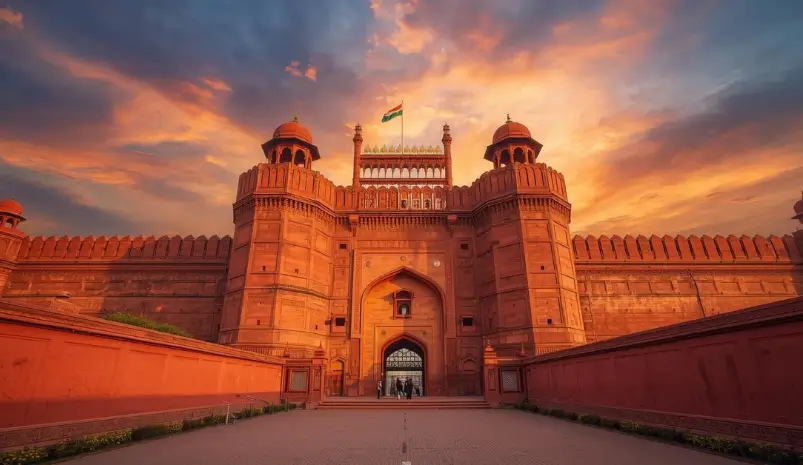
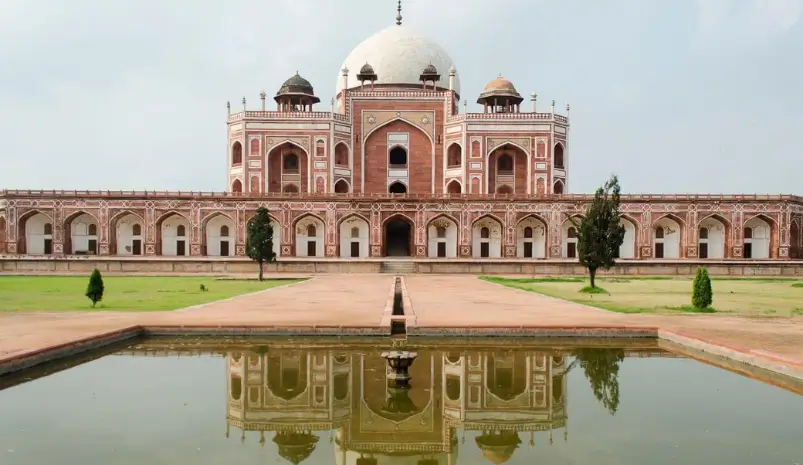
In Delhi, Red Fort, Humayun's Tomb and Qutub Minar each cost around ₹600 for foreigners when you count the higher counter rates. Red Fort opens from 9:30 am to 4:30 pm and is closed on Mondays, while Humayun's Tomb and Qutub Minar are open from sunrise to sunset all week.
In Jaipur, a composite ticket of about ₹1,000, valid for two days, covers Amber Fort, Hawa Mahal, Jantar Mantar, Albert Hall Museum and Nahargarh Fort. Amber Fort opens from 8:00 am to 5:30 pm, and arriving before 8:30 am avoids most tour-bus crowds. Hawa Mahal opens around 9:00 am, and Jantar Mantar from 9:00 am to 4:30 pm. City Palace is privately managed and sits outside the composite ticket. Its standard foreigner entry is around ₹1,000, with access to the royal apartments priced far higher, and it is open from about 9:30 am to 5:00 pm.
Altogether, a typical Golden Triangle sightseeing route costs around ₹6,500 per person in entry fees, roughly USD 75. If your quote says entrances are excluded, add this amount yourself.
Guide fees in India are just as predictable. A licensed English-speaking guide charges around ₹1,800 to ₹2,500 for a half day and ₹2,500 to ₹3,500 for a full day, per group rather than per person. Guides who speak Italian, Spanish, French or German charge ₹3,500 to ₹4,500 per day, and they need to be booked early, because only a handful work each city in peak season. One Italian group in Jaipur last winter waited three days for their preferred Italian-speaking guide simply because they asked late.
Extra Expenses, Seasonal Prices and Booking a Private Golden Triangle Tour with India Fortune Journey
Beyond hotels, car, guides and tickets, a handful of smaller costs complete the real picture. Meals outside the hotel range from ₹1,500 to ₹3,000 per person per day at good restaurants, and ₹6,000 to ₹10,000 per person per day if you dine at luxury hotel restaurants. Tips are customary: drivers usually receive ₹600 to ₹800 per day from the group, local guides ₹500 to ₹1,000 per city, and hotel porters ₹100 to ₹200 per bag.
Some travellers swap one road leg for a train or flight. The Gatimaan Express between Delhi and Agra costs about ₹1,500 to ₹2,000 in Executive Chair Car and takes around 100 minutes. A one-way flight from Jaipur to Delhi costs ₹4,000 to ₹8,000 depending on how early you book. Credit card payments to many operators carry a fee of around 3 percent, while international bank transfers usually cost USD 20 to USD 40 in bank charges.
Season changes the bill more than any single upgrade. From mid-October to March, prices sit at full rate, and the Christmas and New Year window adds 20 to 40 percent, especially at five-star and palace hotels. April and September offer shoulder-season savings of 10 to 20 percent with warm but manageable weather. Between May and August, luxury hotels in Agra and Jaipur often discount by 30 to 45 percent, but the heat makes sightseeing practical only in the early morning and late evening.
To compare quotes fairly, ask every operator the same four questions. Which named hotels are included, and in what room category? Which vehicle model will you get? Are the guides licensed, and in which language? Are monument tickets inside or outside the price? A quote that answers all four clearly is worth more than a cheaper one that dodges them.
India Fortune Journey is based in Jaipur and arranges private Golden Triangle tours in every hotel category covered here, from three-star comfort and heritage boutique stays to full palace itineraries with Oberoi and Taj. Each quote names the exact hotels, the vehicle model and the guide language, with monument fees shown as a separate line, so you can see where every dollar goes. Italian, Spanish and French-speaking guides can be arranged on request, which is one of the most frequent reasons European guests get in touch.
For a fair, itemised quote, share your travel dates, group size, preferred hotel category and any must-see sights by calling or messaging on WhatsApp at +91-8000722302, or by email at info@indiafortunejourney.com. Most enquiries receive a detailed price breakdown within 24 hours, with no obligation to book.

15 Jun 2026

15 Jun 2026

15 Jun 2026

16 Jun 2026
06 Oct 2026
07 Oct 2026
08 Oct 2026
09 Oct 2026
10 Oct 2026
12 Oct 2026
Tell us about your
Travel Plans
Share your travel preferences and our destination specialists will create a personalized itinerary along with the best travel recommendations and pricing. Most inquiries receive a detailed response within 24 hours with no obligation.
Have a Question?
Whether you're planning a private tour, luxury holiday, family vacation, chauffeur-driven journey, hotel booking, or a customized India itinerary, our travel experts are ready to assist you.
Share your requirements and we'll provide the best travel options, recommendations, and pricing tailored to your needs.
Frequently asked questions
Everything foreign travellers usually ask an India tour. Still unsure? Just send us a message.
For a six-day private tour on twin sharing, expect USD 550 to 750 per person in three-star hotels, USD 850 to 1,200 in four-star, USD 1,400 to 2,200 in five-star and USD 3,500 to 6,000 in Oberoi or Taj palace hotels.
It depends on the operator, so always check the inclusions. The Taj Mahal costs ₹1,300 for foreigners including the main mausoleum, and total monument fees on the route come to about ₹6,500 per person.
A sedan costs around ₹3,800 to ₹4,500 per day, an Innova Crysta ₹5,500 to ₹6,500, and a Mercedes E-Class ₹16,000 to ₹22,000, including fuel, tolls, parking and driver allowances.
No. Solo travellers usually pay 60 to 70 percent more per person, because the hotel room and the car are not shared.
Friday, because the Taj Mahal is closed to visitors every Friday. Red Fort in Delhi is closed on Mondays.
Around ₹600 to ₹800 per day for the driver from the whole group, and ₹500 to ₹1,000 per city for each local guide, are common amounts.
Between May and August, when hotel rates drop by 30 to 45 percent, although the heat limits sightseeing to early mornings and evenings.
Expect 20 to 40 percent higher hotel rates, plus compulsory gala dinners at palace hotels costing ₹25,000 to ₹45,000 per person.
Six days covers the main sights comfortably. Eight days allows a slower pace and adds roughly USD 250 to 350 per person in the mid-range category.
Yes. Italian, Spanish and French-speaking guides can be arranged on request, and booking early is advised during the October to March peak.
Begin your
India journey
From the palaces of Rajasthan to the backwaters of Kerala - tell us where you wish to go. Our luxury travel experts at India Fortune Journey craft every itinerary to your pace, taste, and story.
Plan My Tour