Golden Triangle Tour with Oberoi vs Taj Hotels: Which Luxury Package to Book
Two couples from Singapore met over breakfast on the terrace of a Jaipur hotel and fell into a friendly argument. One pair was halfway through an Oberoi itinerary and swore nothing could match the hush and precision of Amarvilas. The other was travelling with Taj and insisted that sleeping inside a real maharaja's palace at Rambagh was the whole point of coming to Rajasthan. Both were right, and both had paid very different amounts for what looked like the same route.
The Golden Triangle tour with Oberoi vs Taj hotels is the most common question in luxury travel to North India, and it does not have a single answer. The two groups approach luxury from opposite directions. Oberoi builds new properties with obsessive attention to service and design. Taj, through its palace collection, restores historic royal residences and lets the history do much of the talking. Your choice depends on what you value most, and on how the prices line up city by city.
This guide compares the two brands property by property across Delhi, Agra and Jaipur, sets out realistic peak-season rates, and shows how a mixed package often gives the best of both.
Oberoi and Taj on the Golden Triangle: The Properties Side by Side
On a classic six-night luxury Golden Triangle tour, you will stay in three cities, and each brand has a flagship in each.
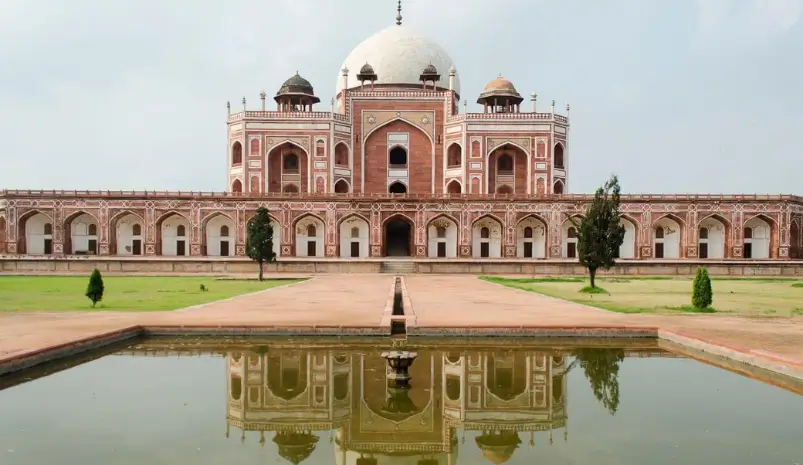
In Delhi, The Oberoi New Delhi reopened after a full renovation and now ranks among the most polished city hotels in Asia. Rooms overlook the Delhi Golf Club or the dome of Humayun's Tomb, the spa is excellent, and service runs with quiet precision. Expect around ₹38,000 to ₹55,000 per night for a deluxe room between October and March. On the Taj side, the Taj Mahal Hotel on Mansingh Road offers a more classic, old-world style with a loyal following among diplomats, at roughly ₹28,000 to ₹45,000. The Taj Palace in the diplomatic enclave is larger and more business-oriented, at ₹22,000 to ₹35,000.
In Agra, the difference between the brands is starkest. The Oberoi Amarvilas sits about 600 metres from the Taj Mahal, and every single room looks directly at the monument. Rates run around ₹75,000 to ₹130,000 per night. Taj does not have a palace hotel in Agra. Its property there, the Taj Hotel and Convention Centre, is a comfortable modern five-star with Taj views from upper floors and the rooftop, priced at about ₹14,000 to ₹22,000.
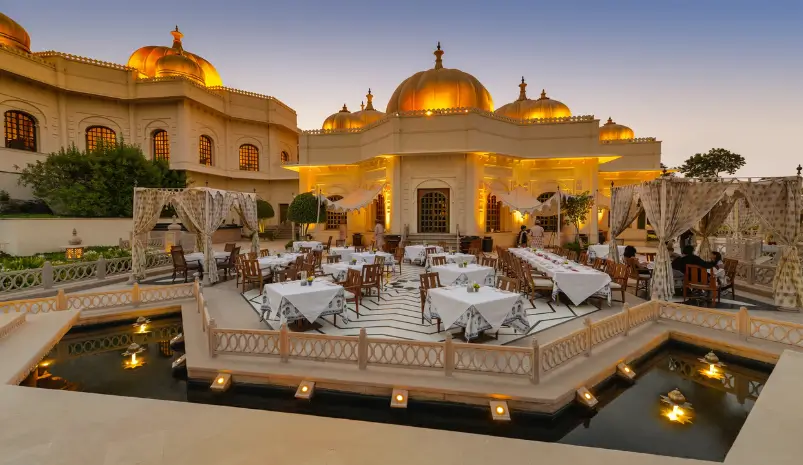
In Jaipur, the comparison turns the other way. Rambagh Palace, run by Taj, was the residence of the Maharaja of Jaipur until the middle of the last century. It sits on 47 acres of lawns with peacocks, and it has corridors lined with royal portraits and a bar themed around the family's polo history. Rooms start around ₹60,000 to ₹110,000 per night. Taj also runs Jai Mahal Palace, a smaller and more affordable 18th-century property at ₹28,000 to ₹45,000. The Oberoi Rajvilas, by contrast, was built only a few decades ago in the style of a Rajput fort, with 32 acres of gardens, luxury tents, private pool villas and a restored temple within the grounds. Its rooms cost around ₹60,000 to ₹100,000, and the pool villas often exceed ₹200,000.
The pattern is clear. Oberoi wins on consistency and design, especially in Agra, where nothing else comes close. Taj wins on authenticity in Jaipur, where Rambagh Palace offers something no newly built hotel can copy. Delhi is close to a draw and comes down to personal taste: a sleek, quiet contemporary hotel or a grand old institution with decades of history.
Service styles differ too. Oberoi staff tend to anticipate requests before you make them, with butler service in many categories. Taj teams bring warmer, more theatrical hospitality, such as welcome rituals, evening heritage walks and in-house storytellers at the palace properties. Neither is better in absolute terms, and many travellers find they prefer one brand simply because of how it makes them feel at check-in.
Agra Decides the Debate: Amarvilas Against the Alternatives
If you remember one thing from this comparison, make it this: the Agra night shapes the whole luxury Golden Triangle experience. You are in the city to see one building, and only one hotel lets you see it from your bed.
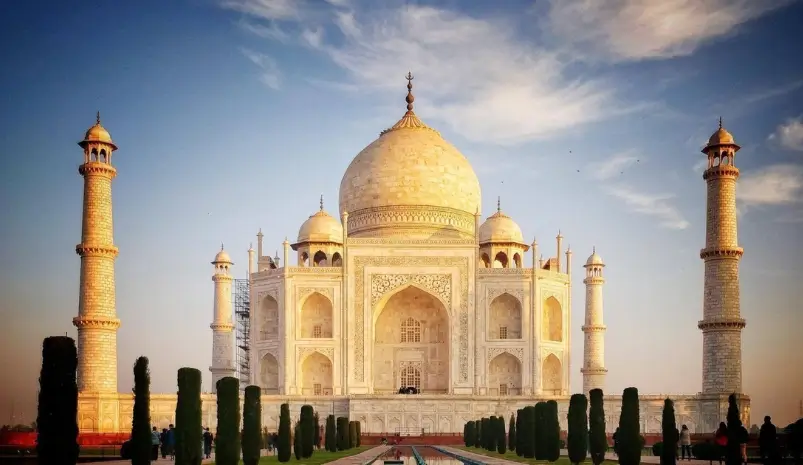
At Oberoi Amarvilas, the Taj Mahal fills the view from every room's balcony. Guests often wake at 5:30 am simply to watch the white marble turn from grey to pink as the sun rises, before walking or riding the hotel's electric buggy to the East Gate. The hotel sits within the restricted zone around the monument, where petrol vehicles are not allowed, so the buggy saves a long walk. Afternoon tea on the terrace faces the dome, and the main restaurant serves dinner with views of the floodlit skyline. For most travellers, one night here feels like the emotional centre of the entire trip.
That experience comes at a cost. A standard premier room in peak season costs around ₹75,000 to ₹95,000. A room with a balcony costs ₹95,000 to ₹130,000, and suites start well above ₹200,000. Over Christmas and New Year, rates rise again, and a gala dinner of ₹30,000 to ₹45,000 per person is added.
The Taj alternatives in Agra are very different in character. The Taj Hotel and Convention Centre is a well-run modern five-star with a rooftop restaurant facing the monument and a spa, at roughly a fifth of Amarvilas pricing. It is excellent value, but it is not a palace and does not pretend to be. Other non-Oberoi luxury options include ITC Mughal, a sprawling low-rise resort with gardens and a respected spa, at ₹15,000 to ₹22,000, and the Trident Agra, run by the Oberoi group, which offers Oberoi-style service at a far lower price of ₹12,000 to ₹18,000, though without monument views.
So what should you book? If the budget allows, one night at Amarvilas is the single most valuable upgrade on the entire circuit. Two nights are rarely needed, because the Taj is a morning and evening attraction rather than an all-day one. If Amarvilas is beyond reach, an excellent compromise is to stay at the Taj Hotel and Convention Centre or ITC Mughal, then book a sunset dinner at Amarvilas instead. A meal for two with drinks costs ₹18,000 to ₹25,000, and you still get the view.
Travellers who choose a Taj-branded package for Delhi and Jaipur often slot Amarvilas into the Agra night anyway. That is perfectly normal. Very few operators would advise building an entire tour around brand loyalty when the best property in a city belongs to the other group.
Booking timing is critical. Amarvilas has just over 100 rooms and fills quickly for December, February and early March. Confirming 90 to 120 days ahead usually secures the standard premier category before only higher-priced rooms remain.
Jaipur Decides the Second Round: Rajvilas Villas or Rambagh Palace Grandeur
If Agra tilts towards Oberoi, Jaipur often tilts back towards Taj. The two flagship properties offer completely different evenings, and choosing between them depends on what kind of luxury feels right to you.
Rambagh Palace is history you can sleep in. Built in the early nineteenth century as a garden house, then expanded into a royal hunting lodge and finally the official residence of Maharaja Sawai Man Singh II, it opened as a hotel in the middle of the last century and still carries the feel of a royal home. Walking its corridors feels like visiting a living museum. There are period photographs of polo matches, inlaid marble floors and a dining hall with chandeliers and painted ceilings. Peacocks wander the lawns at dusk, and the evening ceremony of lamp lighting and folk music gives a strong sense of place. Rooms vary widely, because the building was never designed as a hotel. Palace rooms start around ₹60,000, while historical suites can reach ₹300,000 or more.
The Oberoi Rajvilas offers a quieter, more private kind of luxury. Rooms are spread across low buildings around courtyards, reflection pools and orange orchards. The luxury tents have teak floors and clawfoot bathtubs, and the private pool villas have their own walled gardens. The spa sits in a restored 200-year-old mansion. There is less history on show, but far more privacy. Couples on a honeymoon or anniversary often prefer Rajvilas for exactly that reason. Premier rooms cost around ₹60,000 to ₹80,000, luxury tents ₹80,000 to ₹110,000, and pool villas from about ₹200,000.
Location matters too. Rambagh Palace sits close to the city centre, about 15 minutes from City Palace and Hawa Mahal, which makes short trips back for an afternoon rest easy. Rajvilas lies about 25 to 35 minutes outside the centre, which gives it peace and space, but every sightseeing run takes a little longer.
For travellers wanting the Taj palace feel at a lower price, Jai Mahal Palace is an excellent alternative. It is an 18th-century residence with Mughal-style gardens, at ₹28,000 to ₹45,000 per night. On the Oberoi side, there is no cheaper Jaipur alternative, since the group runs only Rajvilas in the city.
A practical tip from experienced travellers is to split two Jaipur nights between both properties when the budget allows. Spend the first night at Rambagh Palace for the history, the second at Rajvilas for the calm, and the driver moves your bags between them during the day's sightseeing. The extra cost of the split is usually minimal, because both properties charge similar entry-level rates, and you leave Jaipur having slept in two of the most admired hotels in the country rather than one.
Price Comparison: Six-Night Oberoi Package Versus Taj Package
To make the Oberoi vs Taj price comparison concrete, here are two realistic six-night itineraries with two nights in Delhi, one in Agra and three in Jaipur, priced at peak-season rates per person on twin sharing.
An all-Oberoi package would include two nights at The Oberoi New Delhi at about ₹45,000 per night, one night at Amarvilas in a premier balcony room at about ₹110,000, and three nights at Rajvilas in a premier room at about ₹70,000. Accommodation alone comes to roughly ₹410,000 per room, or ₹205,000 per person.
An all-Taj package would include two nights at the Taj Mahal Hotel in Delhi at about ₹36,000, one night at the Taj Hotel and Convention Centre in Agra at about ₹18,000, and three nights at Rambagh Palace in a palace room at about ₹80,000. That comes to roughly ₹330,000 per room, or ₹165,000 per person.
Adding a chauffeur-driven Mercedes E-Class at around ₹18,000 per day for seven days (₹63,000 per person), senior licensed guides in each city (about ₹10,000 per person), monument fees of about ₹6,500 per person and operator costs, the totals land at roughly USD 4,500 to USD 6,500 per person for the Oberoi package and USD 3,600 to USD 5,500 per person for the Taj package. Over Christmas and New Year, add 25 to 40 percent, plus compulsory gala dinners at both groups.
The Taj package is cheaper mainly because of Agra. Swap the Taj Agra night for Amarvilas, and the gap almost disappears. That is why the most popular choice among luxury travellers is the mixed Oberoi and Taj Golden Triangle package: The Oberoi New Delhi or Taj Mahal Hotel in Delhi, Amarvilas in Agra and Rambagh Palace in Jaipur. It typically costs USD 4,300 to USD 6,200 per person and puts each night in the strongest property in its city. It also spreads risk: if one hotel is sold out for your dates, the other brand's flagship in that city is usually still available, so the overall itinerary rarely needs to change.
India Fortune Journey arranges all three versions from its Jaipur office, with confirmed named rooms, a chauffeur-driven luxury car and senior licensed guides, including Italian, French and Spanish speakers on request. Because peak-season inventory at Amarvilas and Rambagh Palace disappears early, sending your dates at least three months ahead gives the widest choice. Reach the team by phone or WhatsApp at +91-8000722302 or by email at info@indiafortunejourney.com for an itemised comparison of both brands for your exact dates.

15 Jun 2026

15 Jun 2026

15 Jun 2026

16 Jun 2026
06 Oct 2026
07 Oct 2026
08 Oct 2026
09 Oct 2026
10 Oct 2026
12 Oct 2026
Tell us about your
Travel Plans
Share your travel preferences and our destination specialists will create a personalized itinerary along with the best travel recommendations and pricing. Most inquiries receive a detailed response within 24 hours with no obligation.
Have a Question?
Whether you're planning a private tour, luxury holiday, family vacation, chauffeur-driven journey, hotel booking, or a customized India itinerary, our travel experts are ready to assist you.
Share your requirements and we'll provide the best travel options, recommendations, and pricing tailored to your needs.
Frequently asked questions
Everything foreign travellers usually ask an India tour. Still unsure? Just send us a message.
Oberoi is stronger in Agra with Amarvilas, Taj is stronger in Jaipur with Rambagh Palace, and Delhi is close to a draw. Many travellers book a mix of both.
Yes. Every room and suite at Amarvilas faces the Taj Mahal, which is about 600 metres away.
In peak season, expect around ₹75,000 to ₹130,000 per night for premier and balcony rooms, with suites priced far higher.
Yes. It was the residence of the Maharaja of Jaipur before becoming a hotel, and it is now run by Taj.
No. Taj operates the Taj Hotel and Convention Centre in Agra, a modern five-star rather than a palace property.
Roughly USD 4,500 to USD 6,500 per person on twin sharing in peak season, including a luxury car, guides and monument fees.
Yes. The most popular luxury combination is a Delhi hotel of either brand, Amarvilas in Agra and Rambagh Palace in Jaipur.
The Oberoi Rajvilas usually suits couples best because of its privacy, luxury tents and pool villas, while Rambagh Palace suits history lovers.
At least 90 to 120 days ahead for December to March dates, because standard room categories sell out early.
Usually yes at both Oberoi and Taj palace properties, with charges of roughly ₹25,000 to ₹45,000 per person.
Begin your
India journey
From the palaces of Rajasthan to the backwaters of Kerala - tell us where you wish to go. Our luxury travel experts at India Fortune Journey craft every itinerary to your pace, taste, and story.
Plan My Tour