Private Golden Triangle Tour with Driver and Guide
Helen, a 62-year-old retired teacher from Vancouver, had wanted to see the Taj Mahal for most of her adult life. What kept her from booking was not the cost or the flight. It was the fear of standing alone outside Delhi airport at midnight, negotiating with taxi drivers and guessing which guide at a monument gate was genuine. A friend who had travelled the same route the year before gave her one piece of advice: book it private, with your own driver and a licensed guide in every city, and let someone else handle the logistics.
That advice sums up why the private Golden Triangle tour with driver and guide has become the default choice for first-time visitors to India. You get a vehicle that belongs to your group alone, a driver who stays with you from the first airport pickup to the final drop, and a local expert waiting at each set of monuments. Nothing is shared with strangers, and the schedule bends around your energy levels rather than a group timetable.
Yet the phrase "private tour" covers a wide range of what actually gets delivered. This guide walks through the real inclusions, the route with honest drive times, the different jobs of the driver and the guide, and the booking steps that protect your money.
What a Private Golden Triangle Tour with Driver and Guide Actually Includes
A well-built private package has four core blocks: transport, guiding, accommodation and arrival support. Each block has details that separate a smooth trip from a stressful one, so it pays to read the inclusions line by line.
Transport means an air-conditioned vehicle assigned only to your group for the full duration, usually a sedan such as a Swift Dzire for one or two travellers with light luggage, a Toyota Innova Crysta or Hycross for two to five people, and a Tempo Traveller for larger families. The daily rate should already cover fuel, highway tolls, interstate permits between Delhi, Uttar Pradesh and Rajasthan, parking at monuments and hotels, and the driver's food and overnight allowance. If any of these appear as extras, the quote is incomplete. Bottled water in the car is standard, and many operators also keep wet wipes and a phone charger on board.
Guiding should name the language and confirm that the guide holds a government licence, either from the Ministry of Tourism or the state tourism department. On a classic six-day tour, you would normally have a full-day guide in Delhi covering Old and New Delhi, a guide in Agra for the Taj Mahal, Agra Fort and Fatehpur Sikri, and a full-day guide in Jaipur for Amber Fort, City Palace, Jantar Mantar and Hawa Mahal.
Accommodation should list named hotels with the room category and meal basis, typically breakfast only. "Or similar" leaves room for downgrades, so ask for confirmed names before paying a deposit.
Arrival support is the piece that would have calmed Helen's nerves. A good private Golden Triangle tour package includes a meet-and-greet at Delhi International Airport, where a representative stands outside the arrivals hall with a placard bearing your name, helps with a local SIM card if needed and escorts you to the car. International flights often land between 11 pm and 3 am, so the late-night pickup should be confirmed in writing.
What is usually not included matters just as much. Monument entry fees, which come to about ₹6,500 per person for foreigners across the route, are left out by some operators to keep the headline price low. Lunches and dinners, camera fees at a few Rajasthan sites, tips, and optional add-ons such as a sunrise hot air balloon ride or an evening cooking class are normally extra. A transparent quote lists every one of these so that nothing appears for the first time on the road.
The Route Day by Day: Distances, Drive Times and Sightseeing Hours
The classic Golden Triangle route forms a loop of roughly 720 kilometres between Delhi, Agra and Jaipur. Most private tours run six days and five nights, which balances sightseeing with rest. Here is how those days typically unfold, with realistic hours rather than brochure promises.
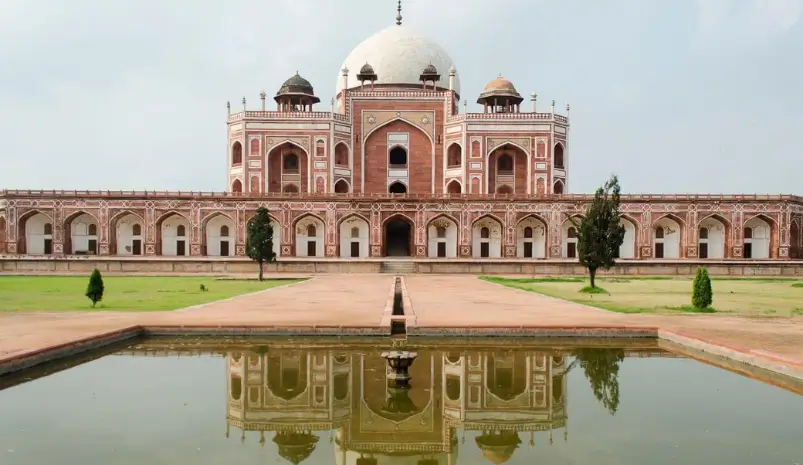
Day one is arrival in Delhi. After a late-night landing, the drive from the airport to central Delhi hotels takes 40 to 60 minutes. The rest of the day is kept light, perhaps an afternoon visit to Humayun's Tomb, which is open from sunrise to sunset and sits in beautiful Mughal gardens.
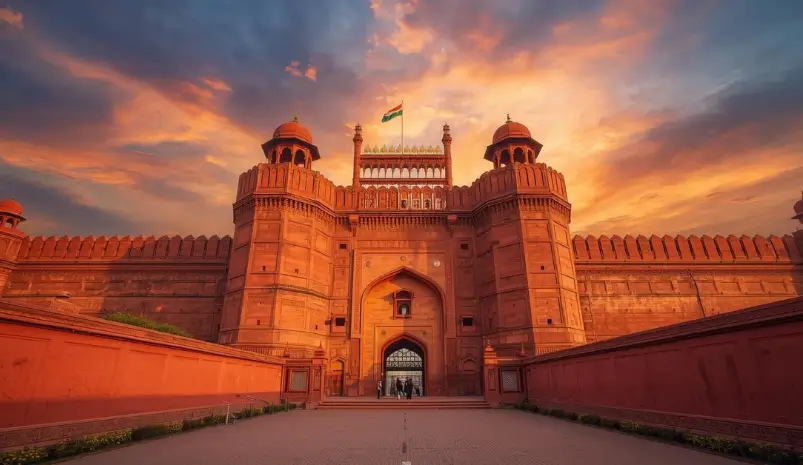
Day two covers Delhi in full. The morning usually goes to Old Delhi: Jama Masjid, the spice market lanes around Khari Baoli and a drive past Red Fort, which opens from 9:30 am to 4:30 pm and is closed on Mondays. The afternoon covers New Delhi, with Qutub Minar, India Gate and the government buildings along the ceremonial avenue. Allow eight hours of touring with a lunch break, and expect Delhi traffic to add an hour.
Day three is the drive to Agra on the Yamuna Expressway, about 230 kilometres and three to three and a half hours. Leaving Delhi at 8 am puts you in Agra before noon. The afternoon is ideal for Agra Fort, open from about 6:00 am to 6:00 pm, followed by sunset views of the Taj from the Moonlight Garden across the river.
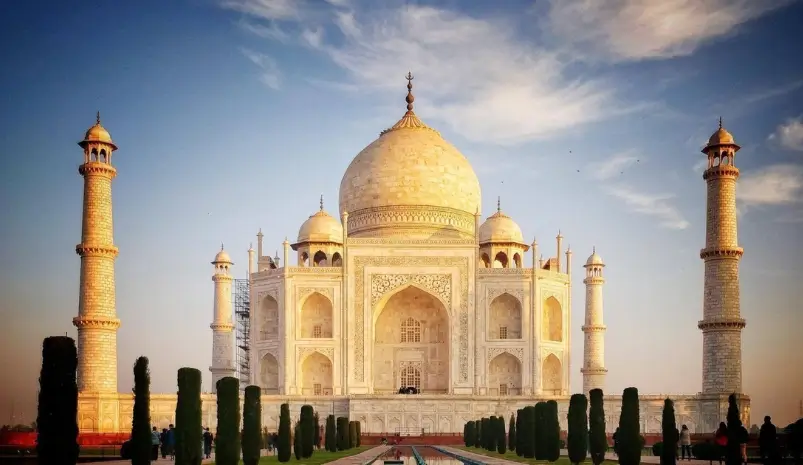
Day four begins before dawn. The Taj Mahal opens 30 minutes before sunrise, so a 5:45 am departure from the hotel is common between November and February. After two to three hours inside, you return for breakfast, check out and drive towards Jaipur. Fatehpur Sikri lies 40 minutes from Agra and deserves 90 minutes. From there, Jaipur is another four hours, so expect to arrive by late afternoon.
Day five is Jaipur's full sightseeing day. Amber Fort opens at 8:00 am, and arriving early avoids both the heat and the tour-bus queues. The afternoon covers City Palace, open from about 9:30 am to 5:00 pm, Jantar Mantar and a photo stop at Hawa Mahal, finishing with the bazaars around Johari Bazaar.
Day six is the return to Delhi, about 270 kilometres and five to six hours by road, timed to meet an evening international flight. Travellers with an early flight often take the 1 hour 10 minute domestic flight from Jaipur instead.
Remember that the Taj Mahal is closed on Fridays. A good operator arranges your Agra day around that rule without being asked.
The Driver and the Guide: Two Different Roles on the Road
Many first-time visitors assume the driver will also explain the monuments. In reality, the driver and guide on a private tour have separate jobs, and knowing the difference sets the right expectations from day one.
Your driver is your constant companion for the whole tour. He collects you at the airport, waits outside every hotel and monument, keeps the car clean and cool, and handles the long highway stretches. Most drivers on the Golden Triangle circuit have between five and fifteen years of experience with foreign guests, and the better ones speak workable English. They know which roadside stops have clean washrooms, when to leave Agra to beat the evening traffic into Jaipur, and which restaurants serve food that gentle stomachs can handle. However, they are not licensed to guide inside monuments, and monument security staff will not allow them to act as guides at sites such as the Taj Mahal.
The guide is a city specialist who joins you for a half or full day in each location. Licensed guides go through government training and examinations, carry an identity card issued by the Ministry of Tourism or the state department, and can enter monuments with you to explain architecture, history and the stories behind each building. In Agra, a good guide will time your Taj visit around the light, steer you towards the quieter East Gate entrance and show you the details of the inlaid semi-precious stones that most visitors walk past. In Jaipur, a guide can explain how Jantar Mantar's giant sundial measures local time to within two seconds.
Guide fees for a licensed English-speaking professional run around ₹1,800 to ₹2,500 for a half day and ₹2,500 to ₹3,500 for a full day, per group. Guides speaking Italian, Spanish, French or German charge ₹3,500 to ₹4,500 per day and should be requested at the time of booking, since only a handful work in each city.
Some travellers prefer a single escort guide who travels with them for the entire tour rather than a fresh guide in each city. This works well for those who value continuity and a personal connection, and it typically costs ₹4,500 to ₹6,500 per day plus the guide's accommodation and meals. City guides, on the other hand, tend to have deeper local knowledge of their own monuments.
Helen chose city guides and later said the contrast was part of the pleasure. Her Delhi guide was a history scholar who spoke about Mughal succession battles, while her Jaipur guide was the grandson of a palace craftsman and spent half an hour showing her how the mirror work at Amber Fort was set by hand.
How Booking Works: Deposits, Documents and Confirmations
Booking a private Golden Triangle tour from abroad feels uncertain the first time, but the process is straightforward when you know the usual steps.
It starts with an enquiry. Share your arrival and departure dates and flight times, the number of travellers and their ages, your preferred hotel category, any mobility needs or dietary requirements, and the language you want your guides to speak. The more precise the enquiry, the more accurate the first quote. Ask for a day-wise itinerary along with the price, so you can see exactly what each day includes.
Next comes the quote. A clear quote names every hotel and room type, specifies the vehicle model, confirms whether monument tickets are included, and breaks the price down per person on twin sharing, with a separate figure for any single traveller. If anything is described as "similar" or "as per availability", ask for clarification before you go further.
Once you are happy with the itinerary, a deposit secures the booking. Most reputable Indian operators ask for 20 to 30 percent at confirmation and the balance either 30 days before arrival or on arrival in India. Payments are usually accepted by international bank transfer, which costs USD 20 to USD 40 in bank charges, or by credit card through a payment link, typically with a 3 percent processing fee. Avoid paying the full amount months in advance to an operator you cannot verify.
You will then receive a booking confirmation, followed closer to the date by hotel vouchers, the driver's name and mobile number, and a 24-hour emergency contact. Your own documents should include a valid passport with at least six months' validity, an approved India e-Visa, a printed copy of your hotel list, and travel insurance that covers medical treatment.
Cancellation terms matter more than people expect, particularly over Christmas, New Year and February, when hotels apply strict non-refundable windows. Read the cancellation policy before paying and keep it saved in writing.
India Fortune Journey handles private Golden Triangle tours with driver and guide from its base in Jaipur.

15 Jun 2026

15 Jun 2026

15 Jun 2026

16 Jun 2026
06 Oct 2026
07 Oct 2026
08 Oct 2026
09 Oct 2026
10 Oct 2026
12 Oct 2026
Tell us about your
Travel Plans
Share your travel preferences and our destination specialists will create a personalized itinerary along with the best travel recommendations and pricing. Most inquiries receive a detailed response within 24 hours with no obligation.
Have a Question?
Whether you're planning a private tour, luxury holiday, family vacation, chauffeur-driven journey, hotel booking, or a customized India itinerary, our travel experts are ready to assist you.
Share your requirements and we'll provide the best travel options, recommendations, and pricing tailored to your needs.
Frequently asked questions
Everything foreign travellers usually ask an India tour. Still unsure? Just send us a message.
It usually includes a private air-conditioned car with driver for the full tour, licensed guides in Delhi, Agra and Jaipur, named hotels with breakfast, airport meet-and-greet, fuel, tolls, parking and driver allowances.
Not always. Many operators exclude them, so check the quote. Foreigner entry fees across the route come to about ₹6,500 per person.
About three to three and a half hours on the Yamuna Expressway, covering roughly 230 kilometres.
No. Only licensed guides are allowed to guide inside protected monuments such as the Taj Mahal.
Six days and five nights is the most comfortable length. Five days is possible but rushed, while eight days allows a relaxed pace.
Yes, with a reputable operator. Licensed guides, a vetted driver and a 24-hour contact number make solo travel comfortable for most women.
Most reputable operators ask for 20 to 30 percent at confirmation, with the balance paid 30 days before arrival or on arrival.
A Toyota Innova Crysta or Hycross, because a sedan boot fits only two medium suitcases comfortably.
Yes. Italian, Spanish, French and German-speaking guides are available but limited, so request them at the time of booking.
A good operator confirms a late-night airport pickup in writing, with a representative waiting outside the arrivals hall regardless of the hour.
Begin your
India journey
From the palaces of Rajasthan to the backwaters of Kerala - tell us where you wish to go. Our luxury travel experts at India Fortune Journey craft every itinerary to your pace, taste, and story.
Plan My Tour