Jaipur Trip Cost for Foreigners: Hotels, Tickets, Guide and Shopping Budget
Emma, a nurse from Dublin, set aside three days in Jaipur with her twenty-four-year-old daughter Lily as the centrepiece of a mother-daughter trip. Emma set a careful budget for hotels and sightseeing. What she did not budget for was the moment Lily walked into a block-printing workshop in Sanganer and fell in love with hand-stamped cotton. By the end of the trip, the shopping bill rivalled the hotel bill, and Emma was secretly delighted, because those bedcovers and scarves now decorate both their homes.
That story is typical of Jaipur. The Jaipur trip cost for foreigners has two halves. The first is the predictable part: hotels, monument tickets, transport, guides and food. The second is the unpredictable part: textiles, jewellery, pottery, carpets and the experiences that tempt every visitor to the Pink City. Knowing the realistic numbers for both makes it much easier to enjoy the city without worrying about money.
This guide sets out Jaipur hotel rates at every level, monument tickets and timings, car and guide costs, food and experience prices, and a sensible shopping budget, finishing with three sample budgets for a three-day stay. All prices are per person unless stated, for the October to March season, and kept on the higher side.
Hotels in Jaipur: What a Night Costs at Every Level
Accommodation is the largest single cost of a Jaipur trip, and the city offers some of the best-value heritage hotels in India alongside some of the most famous palace hotels in the world.
At the budget comfort level, branded properties such as Ginger, Lemon Tree and Ibis, along with well-reviewed boutique guesthouses in Bani Park and C-Scheme, cost about ₹3,000 to ₹5,500 per night for a double room with breakfast. Rooms are clean and simple, with reliable Wi-Fi and hot water. Location matters more than stars at this level. Hotels within 15 minutes of the old city save time and taxi fares every day.
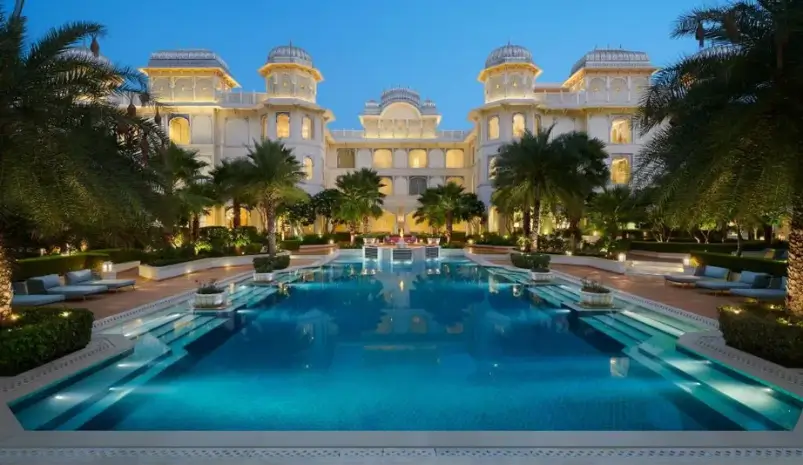
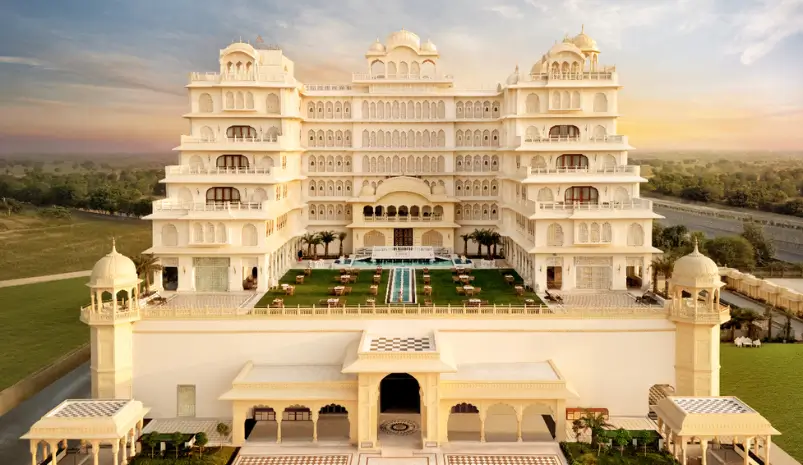
At the mid-range and heritage boutique level, Jaipur really shines. The city has dozens of converted residences of noble families, many still run by the same families. They have courtyards, painted ceilings, rooftop restaurants and pools. Properties such as Alsisar Mahal, Shahpura House, Narain Niwas Palace and Bissau Palace cost around ₹8,000 to ₹16,000 per night. Four-star chains such as Holiday Inn, Radisson Blu and Hilton fall in the same range. For many visitors, this level offers the most memorable stay for the money in all of India.
At the five-star level, ITC Rajputana, Trident Jaipur overlooking Jal Mahal, Fairmont Jaipur near Amber Fort and Le Meridien cost about ₹14,000 to ₹28,000 per night. These offer large pools, spas, multiple restaurants and polished service.
At the palace level, Jaipur has three world-class choices. Rambagh Palace, the former residence of the Maharaja of Jaipur, costs ₹60,000 to ₹110,000 per night for palace rooms. The Oberoi Rajvilas, with private villas and luxury tents, costs ₹60,000 to ₹100,000, with pool villas from about ₹200,000. Jai Mahal Palace, a smaller historic palace with Mughal-style gardens, costs ₹28,000 to ₹45,000. Samode Palace, about an hour outside Jaipur, is a spectacular painted palace in the hills, at around ₹30,000 to ₹45,000 per night, ideal for a final night of quiet before leaving.
Prices rise during the Jaipur Literature Festival in late January, during the wedding peaks of November and February, and over Christmas and New Year, when rates can climb 25 to 50 percent and gala dinners become compulsory at upscale properties.
Emma and Lily chose a heritage boutique hotel in Bani Park at ₹11,500 per night. Their room overlooked a courtyard with a fountain, and breakfast was served on a rooftop with views of Nahargarh Fort. Over three nights, that came to ₹34,500 for the room, or about ₹17,250 each.
Most visitors spend two to three nights in Jaipur. Two nights cover the main monuments. Three nights allow a slower pace, a cooking class, a workshop visit and time for shopping without rushing.
Plan Your Jaipur Trip with a Clear Budget
Planning a visit to Jaipur from overseas? Discover the Pink City with a travel plan tailored to your budget, preferred hotels, sightseeing interests and comfort level. From heritage stays and iconic forts to private transportation and guided experiences, make every part of your Jaipur journey easier to plan.
Monument Tickets and Timings Across Jaipur
Jaipur's monuments are managed partly by the Rajasthan government and partly by the royal family's trust, so tickets come in two types.
The Jaipur composite ticket for foreigners costs about ₹1,000 and is valid for two days. It covers five major sights: Amber Fort, Hawa Mahal, Jantar Mantar, Albert Hall Museum and Nahargarh Fort, plus smaller sites such as Sisodia Rani Garden and Vidyadhar Garden. Buying these sights individually costs more. Amber Fort alone costs about ₹500 for foreigners, so the composite ticket is almost always the better choice.
Amber Fort opens from 8:00 am to 5:30 pm, and the evening light and sound show adds about ₹300 to ₹500 per person. Arriving before 8:30 am beats the tour buses and the heat. Allow two and a half to three hours, including the famous mirror palace and the ramparts. Visitors usually walk up the ramp or take a jeep from the lower parking area for about ₹600 to ₹1,000 per jeep. Elephant rides are not recommended on welfare grounds.
Hawa Mahal opens around 9:00 am to 5:00 pm. The best photographs of its façade come from the cafes across the road in the morning light. Jantar Mantar opens from 9:00 am to 4:30 pm and deserves an hour with a guide. Albert Hall Museum opens from 9:00 am to 5:00 pm and again for evening hours, when the building is beautifully lit. Nahargarh Fort opens from 10:00 am to 5:30 pm and is famous for sunset views over the city.
City Palace is run by the royal family's trust and is not covered by the composite ticket. A standard foreigner ticket costs around ₹1,000, and it is open from about 9:30 am to 5:00 pm. Guided access to the private royal apartments, including the famous blue room and the upper floors of the seven-storey palace, costs significantly more, from about ₹3,000 to ₹10,000 per person depending on the tour.
Smaller sights add little cost. Panna Meena stepwell near Amber Fort is free. The monkey temple at Galta, in the hills east of the city, is free, with a small camera fee. Jal Mahal, the water palace, is viewed from the lakeside promenade at no cost.
Altogether, a thorough two-day sightseeing programme costs about ₹2,000 to ₹2,500 per person in entry fees. Adding the City Palace royal apartments or the Amber Fort light show raises that to ₹5,000 to ₹13,000.
Emma and Lily bought the composite ticket and the standard City Palace ticket, and added the Amber Fort light show on their second evening. Their total sightseeing cost was ₹2,400 each. Lily later said that sitting on the stone steps of Amber Fort as the narration filled the courtyard was the moment she understood why her mother had chosen Jaipur.
Getting Around and Guiding: Car, Driver and Local Experts
Jaipur's sights are spread out. Amber Fort is 11 kilometres from the old city, Nahargarh sits on a hilltop, and the craft villages of Sanganer and Bagru lie 15 to 30 kilometres away. That makes transport an important part of the Jaipur travel budget.
The most comfortable option is a private car with driver. For local sightseeing, a sedan such as a Swift Dzire costs about ₹2,500 to ₹3,200 for an 8 hour and 80 kilometre package, and an Innova Crysta about ₹3,800 to ₹4,800. For three days in Jaipur, that comes to roughly ₹7,500 to ₹14,500 for the vehicle, or ₹3,750 to ₹7,250 each for two travellers. Luxury cars such as a Mercedes E-Class cost ₹14,000 to ₹20,000 per day.
App-based taxis such as Uber and Ola are widely available and cheap. Most rides within the city cost ₹150 to ₹400, and the trip to Amber Fort costs ₹350 to ₹600 one way. They suit independent travellers, although waiting times at Amber Fort and outlying sites can be long, and drivers rarely speak much English. Auto-rickshaws cost less but require bargaining and are uncomfortable on longer stretches.
A licensed guide in Jaipur costs about ₹1,800 to ₹2,500 for a half day and ₹2,500 to ₹3,500 for a full day, per group. Guides speaking Italian, Spanish, French or German charge ₹3,500 to ₹5,000 per full day. A good guide transforms Jantar Mantar from a confusing collection of shapes into one of the most fascinating places in the city, and at Amber Fort, explains the history behind the mirror palace, the hidden passages and the queens' quarters.
Specialist guides add depth for travellers with particular interests. Craft guides who take visitors to block printers, blue pottery studios and gem cutters charge about ₹3,500 to ₹5,000 for a half day, plus workshop fees of ₹500 to ₹1,500 per person for hands-on sessions. Food walks in the old city, with tastings at old sweet shops and street stalls, cost about ₹3,000 to ₹5,000 per person.
For most visitors, the best combination is a car with driver for all three days, a licensed guide for the first full day covering Amber Fort and the old city, and a specialist craft or food guide for a half day later in the stay. Over three days, that totals about ₹18,000 to ₹26,000 for a couple, or ₹9,000 to ₹13,000 each.
Emma and Lily used a Swift Dzire with driver for all three days and a licensed guide for the first day. On the third morning, they booked a craft guide for Sanganer, which is how the textile shopping began.
Experience Jaipur Without the Planning Stress
Explore Jaipur’s magnificent forts, royal palaces, colourful markets and rich Rajasthani culture with a thoughtfully planned private tour. Whether you prefer comfortable hotels or a luxurious heritage experience, we can help tailor your trip to your travel style and budget.
Food, Experiences and the Shopping Budget
Food in Jaipur is excellent value and one of the city's great pleasures. Breakfast is usually included at hotels. A good lunch at a local restaurant serving Rajasthani or North Indian dishes costs ₹400 to ₹800 per person. Dinner at a popular mid-range restaurant or rooftop costs ₹1,000 to ₹2,000 per person with a soft drink. Dinner at a five-star or palace restaurant costs ₹4,500 to ₹8,000 per person. A realistic daily food budget is ₹1,500 to ₹2,500 per person for mid-range travellers and ₹6,000 to ₹10,000 for luxury travellers.
Experiences in Jaipur are varied and memorable. A sunrise hot air balloon flight over the Aravalli hills and Amber Fort costs about ₹16,000 to ₹20,000 per person and runs from October to March. A cooking class with a local family, including market shopping and a full meal, costs ₹3,000 to ₹4,500 per person. A block-printing workshop in Sanganer or Bagru, where you print your own scarf, costs ₹1,000 to ₹2,500. A polo match at the Rambagh grounds during the winter season is sometimes open to spectators for free or a small fee. An evening at Nahargarh Fort for sunset views and dinner costs ₹1,500 to ₹3,000 per person.
Then there is shopping in Jaipur, which deserves its own budget. Jaipur is one of the great craft cities of the world, and most visitors buy far more than expected.
Block-printed textiles are the most popular purchase. Scarves cost ₹400 to ₹1,500, tablecloths ₹1,200 to ₹3,500, and hand-printed double bedcovers ₹1,500 to ₹5,000. The famous lightweight quilted cotton blankets of Jaipur cost ₹1,800 to ₹6,000. Blue pottery, a Persian-influenced craft unique to Jaipur, costs ₹300 for small bowls and ₹3,000 to ₹10,000 for large vases and plates. Silver jewellery ranges from ₹1,000 to ₹15,000, depending on weight and craftsmanship. Hand-knotted carpets cost ₹40,000 for small pieces and ₹300,000 or more for large wool and silk carpets. Reputable shops arrange international shipping for ₹6,000 to ₹15,000.
A word of caution on gemstones. Jaipur is a major gem-cutting centre, but gemstone scams aimed at tourists are common. These include offers to buy gems to resell abroad at a profit, and "export" schemes using your credit card. Buy only from established shops that give certificates from recognised gem testing laboratories, and never agree to any resale scheme.
A realistic shopping budget for Jaipur is ₹10,000 to ₹25,000 per person for modest buyers and ₹40,000 to ₹100,000 or more for those buying carpets, jewellery or large textile collections. Emma and Lily spent about ₹38,000 between them, most of it on bedcovers, scarves and two blue pottery bowls.
Three Sample Jaipur Budgets and Booking with India Fortune Journey
With every component priced, here is what a three-day Jaipur trip realistically costs per person, sharing with one other traveller and excluding shopping.
At the budget comfort level, three nights in a branded budget hotel at about ₹4,500 come to ₹6,750 each. Entry fees are about ₹2,000, app taxis and one day of car hire about ₹3,000, a half-day guide about ₹1,250, food about ₹4,500 and one experience such as a cooking class about ₹3,500. The total is roughly ₹21,000 per person, or USD 240.
At the mid-range heritage level, three nights in a heritage boutique hotel at ₹12,000 come to ₹18,000 each. Entry fees are about ₹2,500, a car with driver for three days about ₹5,000, a guide and craft specialist about ₹4,500, food about ₹6,000 and two experiences about ₹6,000. The total is roughly ₹42,000 per person, or USD 480.
At the luxury level, three nights at Rambagh Palace or Rajvilas at ₹80,000 come to ₹120,000 each. Add a luxury car at about ₹27,000, senior and specialist guides at ₹7,000, City Palace royal apartments and the light show at ₹8,000, palace dining at ₹25,000 and a hot air balloon flight at ₹18,000. The total is roughly ₹205,000 per person, or USD 2,350.
To each of these, add your chosen shopping budget, which, as Emma and Lily found, can easily match the hotel cost.
A few habits keep the Jaipur budget under control. Buy the composite ticket on the first day and use it over two days. Visit Amber Fort first thing in the morning. Agree on shopping preferences with your guide and driver at the start. And book the hot air balloon and cooking class early in peak season, because both sell out. Finally, keep some cash in small notes for tips, rooftop cafes and small purchases in the bazaars, since many smaller craft sellers still prefer cash even though cards and mobile payments are now widely accepted in Jaipur's established shops and restaurants.
India Fortune Journey is based in Jaipur, so the city is home ground. The team arranges hotels at every level, cars with driver, licensed English and foreign-language guides, specialist craft and food guides, and experiences such as balloon flights and cooking classes, either as a short Jaipur stay or as part of a longer Rajasthan or Golden Triangle tour. Every quote names the hotel and vehicle and lists entry fees separately.

15 Jun 2026

15 Jun 2026

15 Jun 2026

16 Jun 2026
06 Oct 2026
07 Oct 2026
08 Oct 2026
09 Oct 2026
10 Oct 2026
12 Oct 2026
Tell us about your
Travel Plans
Share your travel preferences and our destination specialists will create a personalized itinerary along with the best travel recommendations and pricing. Most inquiries receive a detailed response within 24 hours with no obligation.
Have a Question?
Whether you're planning a private tour, luxury holiday, family vacation, chauffeur-driven journey, hotel booking, or a customized India itinerary, our travel experts are ready to assist you.
Share your requirements and we'll provide the best travel options, recommendations, and pricing tailored to your needs.
Frequently asked questions
Everything foreign travellers usually ask an India tour. Still unsure? Just send us a message.
For three days excluding shopping, expect about USD 240 per person at budget comfort level, USD 480 at mid-range heritage level and USD 2,350 at luxury level, sharing a room.
About ₹1,000, valid for two days, covering Amber Fort, Hawa Mahal, Jantar Mantar, Albert Hall Museum and Nahargarh Fort.
No. City Palace is run by the royal family's trust and costs about ₹1,000 for foreigners, with royal apartment tours priced extra.
Amber Fort opens from 8:00 am to 5:30 pm, and arriving before 8:30 am avoids most crowds.
Heritage boutique hotels cost about ₹8,000 to ₹16,000 per night, while palace hotels such as Rambagh Palace cost ₹60,000 or more.
A licensed guide costs about ₹1,800 to ₹2,500 for a half day and ₹2,500 to ₹3,500 for a full day, per group.
About ₹16,000 to ₹20,000 per person for a sunrise flight, available from October to March.
Modest buyers spend ₹10,000 to ₹25,000 per person, while those buying carpets or jewellery often spend ₹40,000 to ₹100,000 or more.
Yes, from established shops with certificates from recognised gem testing laboratories. Avoid any offer to buy gems for resale abroad.
Two days cover the main monuments, while three days allow time for workshops, a cooking class and relaxed shopping.
Begin your
India journey
From the palaces of Rajasthan to the backwaters of Kerala - tell us where you wish to go. Our luxury travel experts at India Fortune Journey craft every itinerary to your pace, taste, and story.
Plan My Tour