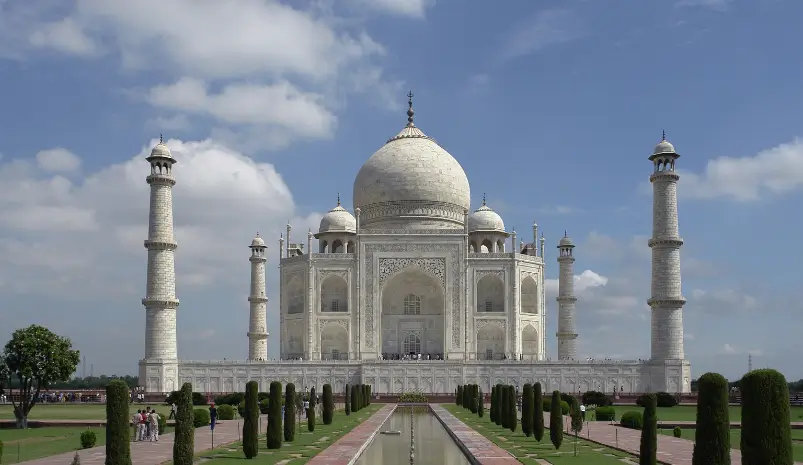
Taj Mahal Ticket Price for Foreigners: Main Mausoleum Fee, Online Booking and Rules
Sophie and Lucas had flown from Brussels, driven three hours from Delhi and woken at 5 am for their sunrise visit. At the East Gate counter, they learned three things in quick succession. Their ticket did not include entry into the main mausoleum. Their small tripod would have to go back to the car. And the queue for the security check was already forty people long. None of it ruined the morning, but all of it could have been avoided with ten minutes of reading the night before.
The Taj Mahal ticket price for foreigners is simple once you know the structure, yet it confuses thousands of visitors every day. There is a base ticket, a separate fee for the inner chamber, an online discount, different gates with different queues, a strict list of banned items and a weekly closure that catches many people out.
This guide covers every part of it. You will find the exact fees, how to book online, when to arrive, which gate to use, what you can and cannot carry, and how to see the monument by moonlight. All prices are in Indian rupees and reflect current Archaeological Survey of India rates.
Taj Mahal Ticket Price for Foreigners and What Each Ticket Covers
The Taj Mahal uses a tiered ticket system based on nationality. For foreign tourists, there are two parts to the price.
The base entry ticket for foreigners costs ₹1,100. It combines the Archaeological Survey of India's entry fee with a toll charged by the Agra Development Authority. This ticket gives access to the entire complex: the great gateway, the gardens, the mosque and guesthouse buildings on either side, the riverside terrace behind the monument and the raised marble platform on which the Taj stands. It also includes a pair of disposable shoe covers and a small bottle of water, both handed out after security. Shoe covers are needed to walk on the marble platform without removing your shoes.
The main mausoleum ticket costs an extra ₹200. This lets you enter the inner chamber, where the cenotaphs of Mumtaz Mahal and Shah Jahan sit behind a delicately carved marble screen. Without it, you can walk around the platform and admire the building from every side, but you cannot step inside. The total for a full visit is therefore ₹1,300 per person, about USD 15 to USD 16.
Is the mausoleum ticket worth it? For almost everyone, yes. The inner chamber is dimly lit and crowded at busy times, but the marble screen, the inlaid flowers made of semi-precious stones and the extraordinary echo under the dome are among the most memorable details of the whole monument. Photography is not allowed inside, so the experience stays with you rather than on your phone.
Children under 15 enter free, whatever their nationality, though they still pass through security. Visitors from SAARC and BIMSTEC countries, such as Nepal, Bangladesh, Sri Lanka, Thailand and Myanmar, pay ₹540 for the base ticket plus ₹200 for the mausoleum. Indian citizens pay ₹50 plus ₹200.
A ticket is valid for a single entry on the date of purchase, and visitors are expected to complete their visit within about three hours. Once you exit through the gates, you cannot re-enter on the same ticket.
The ticket does not include a guide, the battery-operated buses and golf carts from the parking areas, lockers or the camera bags that some visitors want to bring. Licensed guides charge about ₹1,500 to ₹2,200 per group for a two to three hour Taj visit. Battery buses from the main parking areas cost a small fee or are included for foreign ticket holders, depending on the route and gate.
A useful comparison helps with budgeting. Agra Fort costs ₹650 for foreigners and Fatehpur Sikri ₹610, so a full day of Agra's three great monuments costs about ₹2,560 per person in entry fees.
Discover the Taj Mahal with a Seamlessly Planned Private Tour
Make your visit to the Taj Mahal truly memorable with a personalised Agra tour. Enjoy flexible sightseeing, private transport and the option of a knowledgeable local guide while we help you plan your visit with confidence.
Buying Taj Mahal Tickets Online and at the Gates
You can buy tickets either online in advance or at the counters near each gate. For most foreign visitors, booking Taj Mahal tickets online is the better choice.
The official online system run by the Archaeological Survey of India sells tickets for the Taj Mahal and other protected monuments. The process is straightforward. Choose the Taj Mahal, select the visit date and the number of foreign visitors, tick the option to add the main mausoleum, enter basic details and pay by international card. The e-ticket arrives by email with a QR code, which is scanned at the gate from your phone. Online tickets are usually around ₹50 cheaper per person than counter tickets, and they let you skip the ticket queue entirely, joining only the security line.
Be careful with lookalike websites. Several private sites sell "Taj Mahal tickets" at two or three times the official price, sometimes bundled with unnecessary services. Use only the official government portal, or let a reputable tour operator handle tickets for you. Many private tour packages include tickets, or your guide can buy them on arrival.
Buying at the gate is still possible. Ticket counters operate at the West Gate, at the Shilpgram complex near the East Gate and near the South Gate. Counters accept cash in rupees and, at most windows, cards, though card machines occasionally fail, so carry enough cash as a backup. In peak season between November and February, counter queues at the West Gate can reach thirty to forty minutes by mid-morning. The East Gate counter is generally quieter, especially at sunrise.
Carry your original passport. Foreigners may be asked to show it at the ticket counter or the entry gate to confirm the foreigner rate, especially when buying at the counter. A photograph of your passport usually works for online tickets, but having the original avoids any argument.
Sophie and Lucas had bought base tickets online the evening before but had not added the mausoleum option. They paid the ₹200 supplement at a separate counter inside, a five-minute fix. The lesson is to tick the mausoleum box when booking online, because it saves a second queue on the day.
For groups travelling with a private guide, the guide often manages ticket purchase for you, but it is still worth confirming in advance whether tickets are included in your tour price. Over the full Golden Triangle, foreigner entry fees total about ₹6,500 per person, and some operators leave them out of their headline price.
Opening Hours, Friday Closure and the Best Time to Enter
The Taj Mahal opening hours follow the sun. The gates open 30 minutes before sunrise and close 30 minutes before sunset, every day except Friday.
In practice, that means opening between about 5:45 am and 6:45 am depending on the season. In December and January, sunrise is around 7:00 am, so gates open close to 6:30 am. In April and May, sunrise comes around 5:30 am, so gates open close to 5:00 am. Closing time ranges from about 5:00 pm in winter to 6:30 pm in summer. Ticket counters stop selling about an hour before closing.
The single most important rule is this: the Taj Mahal is closed every Friday. The mosque inside the complex is used for Friday prayers by local worshippers, and the monument remains closed to tourists for the entire day. Many self-arranged schedules accidentally place Agra on a Friday, which forces either a rushed alternative or a lost day. Always check your Agra date before booking hotels.
Which time is best? Sunrise is the favourite for good reasons. The light turns the white marble soft pink and gold, the gardens are cool and quiet, and the reflecting pool is calm enough for photographs. Arriving at the gate 20 to 30 minutes before opening puts you near the front of the security queue. From November to February, the morning mist sometimes hides the monument completely for the first hour, though when it lifts, the effect can be magical.
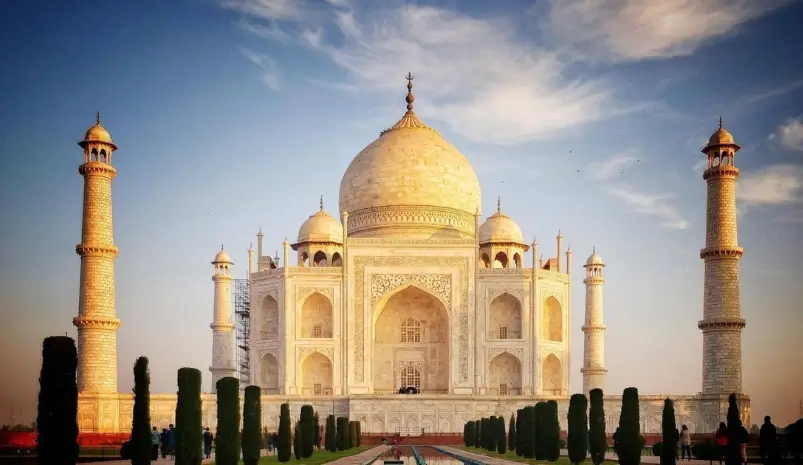
Late afternoon is the second-best option. The marble warms to amber in the last two hours before closing, and crowds thin slightly after the morning tour groups leave. Midday is the least pleasant time. The marble glare is harsh, the platform becomes hot underfoot even through shoe covers, and the crowds peak between 10 am and 2 pm, especially on weekends and Indian holidays.
Gate choice affects your morning too. The East Gate is generally the quietest and is closest to the luxury hotels such as Amarvilas, Trident and ITC Mughal. The West Gate is the busiest, used by most tour buses and day-trippers from Delhi. The South Gate, closest to the old market lanes, has shorter opening hours and is mainly used by visitors staying nearby. Electric vehicles carry visitors from the parking areas, because petrol vehicles are not allowed within 500 metres of the monument.
Allow at least two and a half to three hours for a relaxed visit, including the mausoleum, the mosque, the riverside terrace and the small museum in the western garden pavilion, which is free with your ticket.
Explore the Taj Mahal Beyond the Ticket Price
Turn your visit into a richer cultural experience with a customised Agra itinerary, private chauffeur and optional guided sightseeing at the city’s iconic heritage landmarks.
Rules at the Gates: Banned Items, Security and Photography
The Taj Mahal has some of the strictest security rules of any monument in India, and every visitor passes an airport-style security check with separate lines for men and women. Knowing the rules before you arrive saves time and frustration.
The list of banned items is long. Food and snacks are not allowed, apart from the small water bottle provided with foreigner tickets. Tobacco, cigarettes, lighters and matches are banned. Knives, scissors and any sharp objects cannot be carried. Tripods and selfie sticks are prohibited, as are drones, which are strictly forbidden in the area. Large backpacks and luggage cannot enter, and books other than small guidebooks are sometimes stopped. Electrical items other than mobile phones and cameras, such as chargers, power banks and earphones, are often refused. Religious materials and political items are also not permitted.
If you arrive with banned items, the cloakrooms near each gate store them for a small fee or free of charge, but the queue to use them can be long. The simplest approach is to leave everything unnecessary in your car or hotel and carry only your phone, a camera, your passport, a small bag and sunglasses.
Photography is allowed throughout the gardens, the platform and the outer buildings, without an extra camera fee for still photographs. Professional video equipment needs separate permission. Photography inside the main mausoleum is strictly prohibited, and guards actively enforce the rule. Respect it, partly because it is a tomb and partly because guards can escort repeat offenders out.
Dress and behaviour follow common courtesy for a funerary monument with a working mosque. There is no strict dress code for tourists, but shoulders and knees covered is respectful and avoids unwanted attention. Loud music, eating, climbing on structures or touching the inlay work are not allowed. Shoe covers must be worn on the marble platform.
Accessibility is reasonable. Wheelchairs are available on request at the main gates, ramps lead to parts of the complex, and electric carts help with the distance from the parking areas. The steps up to the main platform are steep, so travellers with mobility issues should mention this to their guide in advance.
The security check usually takes 5 to 15 minutes, longer at the West Gate on weekends. Women's queues are often shorter, which is worth knowing when you agree where to meet afterwards. Agree on a meeting point, such as the left side of the great gateway, before you split into separate lines, because phone signal can be weak in the crowd near the entrance.
Night Viewing, the Moonlight Garden and a Smooth Taj Visit with India Fortune Journey
For travellers wanting something special, the Taj Mahal night viewing is one of the most unusual experiences in India. It runs on five nights each month: the night of the full moon and two nights on either side. It does not run on Fridays or during the month of Ramadan. Viewing takes place in eight batches of 30 minutes between 8:30 pm and 12:30 am, with a maximum of 50 people per batch. Visitors see the monument from the red sandstone platform near the main gate rather than walking up to the marble terrace.
Night viewing tickets cost ₹750 for foreigners, ₹510 for Indian adults and ₹500 for children. They must be bought at least 24 hours in advance at the Archaeological Survey of India office on Mall Road in Agra, with your passport. They cannot be bought online. Security rules are even stricter at night, and only small cameras are allowed. The experience depends heavily on the sky. On a clear night, the marble glows silver under the moon. On a hazy night, especially in December and January, visibility can be poor.
An easier alternative for sunset is the Moonlight Garden, a restored Mughal garden directly across the Yamuna River from the Taj. Entry costs about ₹300 for foreigners, and it is open from sunrise to sunset. From here, you see the monument's full reflection in the river without the crowds, and it is particularly lovely on the evening before a sunrise visit. It is also a good option if you arrive in Agra on a Friday.
Putting it all together, a smooth Taj Mahal visit means checking your date is not a Friday, booking tickets online with the mausoleum option, arriving at the East Gate before sunrise with only essentials, and booking a licensed guide in advance.
India Fortune Journey, based in Jaipur, arranges Taj Mahal visits as part of private Golden Triangle tours, same-day trips from Delhi or Jaipur, and luxury itineraries. Tickets, including the mausoleum, can be bought in advance. Licensed guides meet you at the hotel, sunrise timings are arranged around the right gate, and every Agra day is scheduled around the Friday closure. Night viewing tickets can also be arranged on eligible dates, subject to availability.
For help with your Taj visit, contact the team by phone or WhatsApp at +91-8000722302, or by email at info@indiafortunejourney.com. Share your travel dates, the number of travellers and whether you prefer sunrise or late afternoon, and a complete arrangement with tickets, guide and transfers usually follows within 24 hours.

15 Jun 2026

15 Jun 2026

15 Jun 2026

16 Jun 2026
06 Oct 2026
07 Oct 2026
08 Oct 2026
09 Oct 2026
10 Oct 2026

12 Oct 2026
Tell us about your
Travel Plans
Share your travel preferences and our destination specialists will create a personalized itinerary along with the best travel recommendations and pricing. Most inquiries receive a detailed response within 24 hours with no obligation.
Have a Question?
Whether you're planning a private tour, luxury holiday, family vacation, chauffeur-driven journey, hotel booking, or a customized India itinerary, our travel experts are ready to assist you.
Share your requirements and we'll provide the best travel options, recommendations, and pricing tailored to your needs.
Frequently asked questions
Everything foreign travellers usually ask an India tour. Still unsure? Just send us a message.
The base ticket costs ₹1,100, and entry to the main mausoleum costs an extra ₹200, so a full visit costs ₹1,300 per person.
No. The inner chamber with the cenotaphs requires the additional ₹200 mausoleum ticket.
No. The Taj Mahal is closed to tourists every Friday because of prayers at its mosque.
It opens 30 minutes before sunrise and closes 30 minutes before sunset, roughly 5:45 am to 6:45 am opening depending on season.
Yes. The official Archaeological Survey of India portal sells e-tickets with a QR code, usually about ₹50 cheaper than counter tickets.
Children under 15 enter free, regardless of nationality.
No. Tripods, selfie sticks, drones, food, tobacco and most electrical items other than phones and cameras are banned.
No. Photography inside the main mausoleum is strictly prohibited.
₹750 for foreigners. Tickets must be bought at least 24 hours in advance at the Archaeological Survey of India office in Agra.
The East Gate is usually the quietest at sunrise and is closest to most luxury hotels in Agra.
Begin your
India journey
From the palaces of Rajasthan to the backwaters of Kerala - tell us where you wish to go. Our luxury travel experts at India Fortune Journey craft every itinerary to your pace, taste, and story.
Plan My Tour