
- /
- Fair & Festivals
- / Baisakhi Festival in Amritsar
Baisakhi Festival in Amritsar
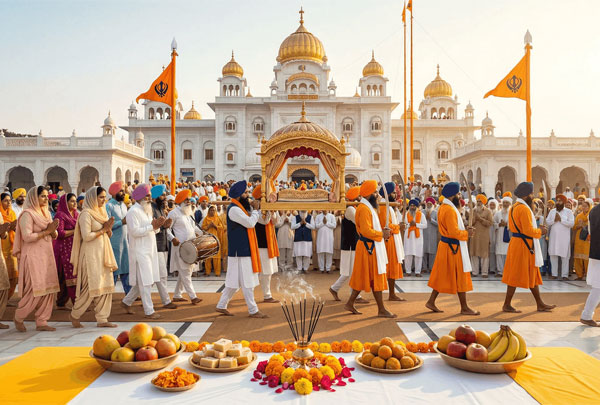
Every April, Baisakhi in Amritsar brings together religious devotion, Sikh history, Punjab’s agricultural heritage, community gatherings, traditional food, music, and a festive atmosphere that can be seen across the city and surrounding countryside. The occasion holds particular importance for Sikhs because of its connection with the establishment of the Khalsa by Guru Gobind Singh in 1699, while in Punjab it is also closely associated with the spring harvest season. These different layers make Baisakhi far more significant than a public celebration or cultural performance.
For an international traveler, Amritsar is one of the most meaningful places to understand Baisakhi because it is home to Sri Harmandir Sahib, commonly known as the Golden Temple, Sikhism’s most revered gurdwara. During the festival period, pilgrims arrive from different parts of India and overseas to pray, listen to sacred hymns, bathe in the holy sarovar, volunteer in community service, and spend time within the temple complex. The atmosphere combines large crowds with a strong sense of devotion, making the religious side of Baisakhi immediately visible.
Outside the gurdwaras, the wider region reflects another side of the celebration. Punjab’s farming communities mark the harvest period, cultural programs may feature traditional Punjabi music and dance, markets become busy, and families gather for the occasion. A carefully planned Baisakhi Festival tour in Amritsar can therefore include religious traditions, Sikh history, Punjabi cuisine, local markets, rural landscapes, and major historical sites.
International visitors should avoid treating Baisakhi simply as a colorful festival for photographs. Understanding the relationship between Sikh faith, the Khalsa, community service, agriculture, and Punjabi identity provides a much deeper reason to visit Amritsar during this period.
What Is Baisakhi?
Baisakhi, also commonly written as Vaisakhi, is celebrated each year in April and has both religious and seasonal significance. In Punjab, the festival has long been associated with the harvesting of the winter crop and the agricultural cycle. For farming communities, the period represents the results of months of work and traditionally provides an occasion for gratitude and celebration.
For Sikhs, Baisakhi carries profound religious importance because of events associated with Guru Gobind Singh, the tenth Sikh Guru. In 1699, at Anandpur Sahib, Guru Gobind Singh established the Khalsa, creating a formally initiated community committed to Sikh principles, discipline, courage, equality, and service.
This historical connection transformed Baisakhi into one of the most important dates in the Sikh religious calendar. Gurdwaras organize prayers and religious gatherings, sacred scripture is recited, processions may take place, and devotees participate in seva, or voluntary service.
For foreign visitors, understanding both the agricultural and Sikh dimensions is important because Baisakhi in Punjab cannot be adequately explained by only one of them.
Why Amritsar Is Important During Baisakhi
Amritsar occupies a central position in Sikh history and religious life. The Golden Temple attracts pilgrims throughout the year, but important Sikh occasions bring even larger gatherings and a particularly devotional atmosphere.
The city itself contains layers of history extending beyond the Golden Temple. The old streets, traditional markets, historic gurdwaras, Jallianwala Bagh, and Punjabi food culture make Amritsar one of North India’s most rewarding destinations for travelers interested in religion and history.
During Baisakhi, these elements come together naturally. A visitor can spend time observing religious activities at the Golden Temple, learn about Sikh history, eat in the community kitchen, walk through old Amritsar, and then travel outside the city to see Punjab’s agricultural landscape.
This combination makes Amritsar particularly suitable for international travelers who want to understand Baisakhi rather than merely attend an organized festival show.
The Historical Importance of Baisakhi and the Khalsa
The most important Sikh historical association with Baisakhi dates to 1699, when Guru Gobind Singh gathered followers at Anandpur Sahib. Sikh tradition records that he called for individuals willing to demonstrate complete commitment to their faith. Five men came forward and became known as the Panj Pyare, or Five Beloved Ones.
Guru Gobind Singh initiated them into the Khalsa, and the Khalsa tradition subsequently became fundamental to Sikh identity. The Guru also received initiation from the Panj Pyare, emphasizing principles of equality within the community.
The establishment of the Khalsa reinforced ideals including courage, discipline, equality, defense of justice, service to others, and devotion to God. Initiated Sikhs follow a particular religious discipline and maintain visible articles of faith.
Foreign visitors do not need an extensive knowledge of Sikh theology before traveling, but understanding the basic history of the Khalsa changes the meaning of what they see during Baisakhi. Religious processions, the Panj Pyare, prayers, and gatherings become connected parts of a historical tradition rather than isolated festival activities.
The Golden Temple During Baisakhi
The Golden Temple in Amritsar becomes one of the principal destinations for Sikh pilgrims during Baisakhi. The complex surrounds the sacred pool known as the Amrit Sarovar, from which the city derives its name. The gold-covered sanctum appears to rise from the water, connected to the surrounding marble walkway by a causeway.
During Baisakhi, large numbers of devotees arrive to pay their respects. Sacred hymns known as kirtan are performed, passages from the Guru Granth Sahib are heard, pilgrims walk around the sarovar, and many participate in seva.
For international travelers, the atmosphere can be deeply moving even without prior knowledge of Sikhism. The sound of devotional music, reflections in the water, constant flow of pilgrims, and community activity continue throughout the day.
Festival crowds can create long waits to enter the central sanctum. Visitors should decide whether entering the inner shrine is essential or whether spending more time observing the wider complex provides a more comfortable experience.
Visiting the Golden Temple Early in the Morning
Early morning is one of the most atmospheric times to visit the Golden Temple. Before the surrounding city reaches its busiest period, the complex has a quieter rhythm, with pilgrims walking around the sarovar and devotional music carrying across the water.
During Baisakhi, even early hours can be busy, but the changing light around sunrise provides a beautiful perspective on the temple. Photographers may find the reflections and softer light particularly rewarding.
Foreign visitors who want to see both the religious and festive sides of Baisakhi can visit the Golden Temple early, return to the hotel for breakfast, and then continue with other activities later in the day.
A second visit after sunset is also worthwhile because the illuminated temple creates a completely different atmosphere.
Gurdwara Etiquette for International Visitors
A gurdwara is a Sikh place of worship, and visitors of all religions are generally welcome. This openness is one of the most important characteristics foreign travelers encounter in Sikh religious spaces. However, visitors must follow basic rules of respect.
Shoes must be removed before entering the main religious complex, and both men and women must cover their heads. Scarves or head coverings may be available at major gurdwaras, but travelers can also carry their own clean scarf. Hats are not always considered an appropriate substitute, so visitors should follow local instructions.
Feet may need to be washed at the entrance, and visitors should maintain respectful behavior around the Guru Granth Sahib. Smoking, tobacco, alcohol, and intoxicants are not appropriate within the religious complex.
Clothing should cover shoulders and knees. Visitors should also avoid loud conversations and should never treat the gurdwara merely as an architectural attraction.
Langar – The Community Kitchen at the Golden Temple
One of the most meaningful parts of a visit to the Golden Temple is seeing or participating in langar, the community kitchen. Sikh gurdwaras provide free meals to visitors regardless of religion, nationality, caste, gender, or social background.
At the Golden Temple, the scale of this operation is remarkable. Large numbers of volunteers prepare vegetables, make bread, cook food, serve meals, wash utensils, clean dining areas, and assist visitors throughout the day.
People sit together in rows to eat the same vegetarian meal. For foreign visitors, this provides a practical demonstration of Sikh principles of equality and service rather than simply an explanation in a guidebook.
Travelers are welcome to accept a meal respectfully. Food should not be wasted, and visitors should follow the directions of volunteers. Those interested in seva may be able to help with suitable tasks, provided they follow the guidance of the gurdwara.
Seva and the Importance of Voluntary Service
Seva, meaning selfless service, is a central principle in Sikh life and becomes particularly visible at major gurdwaras. Volunteers contribute their time without expecting payment or recognition.
At the Golden Temple, visitors may see people cleaning floors, serving water, preparing food, washing dishes, managing shoes, and assisting pilgrims. Individuals from very different economic and social backgrounds can work side by side.
For international travelers, observing seva can provide a deeper understanding of Sikhism than focusing only on the Golden Temple’s architecture. The religious site functions not merely as a place for prayer but also as a large community institution built around participation and service.
Visitors who want to volunteer should ask how they can help rather than simply beginning a task without instruction.
Nagar Kirtan and Sikh Religious Processions
Around major Sikh occasions, visitors may encounter Nagar Kirtan, a religious procession involving devotional singing and the ceremonial presence of the Guru Granth Sahib. The exact Baisakhi program should always be confirmed for the intended travel year because schedules and routes can vary.
The Panj Pyare, often dressed in distinctive traditional clothing, may lead important Sikh processions. Devotees follow while singing hymns, and volunteers may provide water or food along the route.
For foreign visitors, a Nagar Kirtan should be approached as a religious procession rather than a street parade. Photographers should avoid blocking participants or standing directly in the route.
A guide familiar with Sikh traditions can explain the significance of the Guru Granth Sahib, Panj Pyare, flags, music, and acts of service seen during the procession.
Nishan Sahib and Sikh Identity
International visitors will notice a tall flagpole bearing the Nishan Sahib outside gurdwaras. The saffron-colored Sikh flag marks the presence of a gurdwara and has strong religious and community significance.
Around Baisakhi, ceremonies connected with the Nishan Sahib may take place at some gurdwaras. The flagpole covering may be renewed, and the occasion can involve prayers and community participation.
Understanding small details such as the Nishan Sahib helps foreign travelers recognize Sikh religious spaces as they travel through Punjab. Gurdwaras range from internationally famous institutions such as the Golden Temple to modest community places of worship in villages and towns.
The same principles of hospitality, prayer, equality, and community service can be encountered across many of them.
Baisakhi and Punjab’s Harvest Season
Although Sikh religious history is central to Baisakhi, the festival also has deep roots in Punjab’s agricultural cycle. April is associated with the harvesting of important winter crops, and farming communities traditionally celebrate the completion of a major agricultural season.
Travelers leaving Amritsar and driving through the countryside can see the agricultural landscape that has shaped Punjab’s economy and identity. Fields, villages, tractors, irrigation systems, and farming communities provide context that is impossible to gain from city sightseeing alone.
A responsible rural visit can help international travelers understand why harvest celebrations hold such importance. Visits should be arranged respectfully rather than entering private farmland without permission.
Travelers interested in food, agriculture, rural culture, or photography may find a countryside excursion particularly valuable during the Baisakhi period.
Bhangra and Giddha During Baisakhi
Punjab is internationally associated with Bhangra, a lively dance tradition with historical connections to agricultural and harvest celebrations. During cultural Baisakhi programs, visitors may see Bhangra performed to energetic drum rhythms, particularly the sound of the dhol.
Giddha, traditionally associated with Punjabi women, is another important folk dance form. It combines rhythmic movement with traditional verses and group participation.
Foreign visitors should understand that stage performances represent one aspect of Punjabi culture and are separate from the religious ceremonies at the Golden Temple. Both can be included in a Baisakhi itinerary, but they should not be confused with one another.
A balanced journey can therefore include solemn religious observances as well as lively folk performances, providing a broader picture of Punjabi culture.
Punjabi Food During Baisakhi
Food is an important part of any journey through Punjab, and Amritsar is particularly well known for its culinary traditions. Visitors can try dishes such as Amritsari kulcha, chole, paneer dishes, dal, seasonal vegetables, lassi, and a variety of sweets.
Punjab’s cuisine is often rich and filling, so international travelers may prefer smaller portions when trying several dishes. Established restaurants and busy local eateries are usually more appropriate than randomly selecting street stalls solely because they look popular online.
Vegetarian food is particularly easy to find. At the Golden Temple langar, the meal is vegetarian so it can be shared by people from different backgrounds.
Travelers with dairy, gluten, nut, or other allergies should explain restrictions clearly because many Punjabi dishes contain butter, ghee, cream, wheat, or nuts.
Jallianwala Bagh and the History of Baisakhi 1919
A Baisakhi visit to Amritsar also carries a serious historical connection. Jallianwala Bagh, located near the Golden Temple, is associated with one of the most tragic events of British colonial rule in India.
On April 13, 1919, during the Baisakhi period, a large crowd had gathered at Jallianwala Bagh. British troops under Brigadier-General Reginald Dyer opened fire on the people assembled there, causing extensive loss of life and injuries.
The massacre became a major event in the history of India’s independence movement. Visiting the memorial during a Baisakhi trip provides important historical context and introduces a very different dimension to the date.
International visitors, particularly those interested in colonial history, should allow enough time to understand the memorial rather than treating it as a quick stop between the Golden Temple and shopping.
Partition Museum and Amritsar’s Modern History
The Partition Museum in Amritsar helps visitors understand another major chapter in the history of Punjab. The partition of British India in 1947 caused enormous population movements and violence, and Punjab was one of the regions most deeply affected.
Museum collections and personal accounts help explain the human impact of Partition. For international travelers, this context is particularly useful before visiting the India-Pakistan border area.
Combining Sikh history, Jallianwala Bagh, the Partition Museum, and Baisakhi provides a much deeper understanding of Amritsar than visiting only its most photographed sites.
The historical content can be emotionally heavy, so travelers should allow adequate time rather than compressing all these visits into a rushed schedule.
Wagah-Attari Border Ceremony
Many visitors to Amritsar include the Attari-Wagah border ceremony in their itinerary. The border lies outside the city and hosts a daily ceremonial lowering of the flags by Indian and Pakistani security forces.
The atmosphere is energetic and patriotic, with large crowds often arriving well before the ceremony begins. For foreign travelers, the event can be interesting when understood in the wider context of India-Pakistan history.
Traffic becomes busy around popular travel periods, so sufficient time should be allowed for the drive from Amritsar.
The border ceremony is not directly part of Baisakhi, but it can be included on another afternoon during a multi-night Amritsar stay.
Photography During Baisakhi in Amritsar
Baisakhi provides excellent opportunities for documentary, religious, architectural, street, and cultural photography. The Golden Temple at sunrise and after dark offers particularly strong architectural images, while processions, pilgrims, markets, food preparation, and rural Punjab provide varied subjects.
Photography around the Golden Temple must follow current rules. Restrictions can apply in particular areas, and travelers should never assume that cameras are permitted everywhere simply because other visitors are using phones.
People praying, bathing, or participating in private religious moments deserve sensitivity. Close portraits should be taken with permission whenever possible.
Photographers should also avoid turning langar into a spectacle. Images of volunteers and community service can be meaningful, but the work should not be obstructed for a better photograph.
What to Wear During Baisakhi in Amritsar
April in Amritsar can be warm during the day, so lightweight breathable clothing is practical. International visitors should still carry modest clothing suitable for gurdwara visits.
Both men and women need to cover their heads inside the Golden Temple and other gurdwaras. Carrying a simple scarf can make repeated visits more convenient.
Shoulders and knees should be covered, and footwear should be easy to remove because shoes are left outside gurdwara areas. Visitors will walk barefoot through parts of the Golden Temple complex, although arrangements are made for cleanliness.
Sun protection, sunglasses, and a reusable water bottle where practical can be useful during daytime sightseeing.
Safety and Crowds During Baisakhi
Baisakhi brings substantial numbers of pilgrims to Amritsar, especially around the Golden Temple. Visitors should expect dense crowds, queues, and slower movement than on ordinary sightseeing days.
Passports and unnecessary valuables should remain securely at the hotel. Carry only essential money and belongings, and keep phones and cameras secure in crowded areas.
Foreign visitors should remain patient in religious queues and avoid pushing for faster access. Families with young children and travelers with mobility limitations should discuss the busiest periods with their guide before entering heavily crowded areas.
Amritsar is accustomed to international tourism, but normal precautions regarding traffic, personal belongings, food, and crowded public spaces remain appropriate.
Best Time to Arrive for Baisakhi
Baisakhi is generally observed around April 13 or 14, although travelers should confirm the relevant annual schedule and any specific local events before finalizing their trip.
International visitors should ideally arrive at least one or two days before Baisakhi. This provides time to settle into the city, understand the Golden Temple complex, complete some historical sightseeing, and avoid having the entire visit depend on one extremely busy day.
Staying after Baisakhi also allows travelers to return to the Golden Temple under slightly calmer conditions and visit attractions such as the Partition Museum, Jallianwala Bagh, or the border ceremony.
A three-night stay is workable, while four nights provides a more comfortable pace.
Where to Stay in Amritsar During Baisakhi
Amritsar has accommodation ranging from international hotel brands and upscale properties to boutique hotels and budget guesthouses. The right location depends on the traveler’s priorities.
Hotels near the Golden Temple provide convenient access to the old city and make early-morning visits easier, but roads can be congested and vehicle access may be limited. Hotels farther from the old city can offer quieter surroundings, easier parking, and larger facilities.
Foreign visitors should consider cleanliness, air conditioning, breakfast, vehicle access, noise levels, and distance from the Golden Temple when selecting a hotel.
Because Baisakhi attracts substantial numbers of visitors, preferred accommodation should be booked well ahead.
How to Reach Amritsar
Amritsar has an airport with domestic and selected international connections, making it relatively accessible for overseas visitors. Many travelers connect through Delhi, which also allows Amritsar to be combined with a longer North India itinerary.
Rail services connect Amritsar with Delhi and numerous other Indian cities. Train travel can be practical when suitable services and confirmed reservations are available.
A private vehicle is useful for local sightseeing, rural excursions, and the Attari-Wagah border. Within the old city, however, walking or local transport may sometimes be more efficient because of traffic and pedestrianized areas.
Festival days can increase travel times, so schedules should include adequate flexibility.
Combining Baisakhi with Rural Punjab
Foreign travelers interested in seeing the agricultural side of Baisakhi can include a carefully arranged visit to the Punjab countryside. Fields and villages surrounding Amritsar provide an entirely different perspective from the Golden Temple and old city.
A rural visit can introduce travelers to farming practices, village homes, agricultural machinery, local food, and the importance of land to Punjabi life. During the harvest period, this context becomes especially relevant.
Such visits should be arranged through appropriate local contacts. Travelers should not enter farms, photograph workers at close range, or treat village homes as attractions without permission.
When handled respectfully, rural Punjab can become one of the most informative parts of a Baisakhi itinerary.
Combining Baisakhi with Anandpur Sahib
Travelers interested specifically in the religious history of Baisakhi can consider including Anandpur Sahib, the place most closely associated with the creation of the Khalsa in 1699.
Anandpur Sahib is an important Sikh pilgrimage center and provides historical context that complements Amritsar. The two destinations should not be compressed into a rushed day if the traveler wants to understand their significance.
A longer Punjab itinerary can include Amritsar, rural areas, and Anandpur Sahib before continuing toward Chandigarh or Himachal Pradesh.
For international travelers with a strong interest in Sikh history, this route provides considerably greater depth than limiting the trip to the Golden Temple alone.
Combining Baisakhi with Delhi, Agra and Jaipur
Amritsar can be incorporated into a wider North India journey. One practical route is:
Delhi – Amritsar – Delhi – Agra – Jaipur
Depending on transportation preferences, the itinerary can be adjusted using flights, trains, and private road transfers.
This combination allows first-time international visitors to see Sikh religious traditions in Amritsar before continuing to the Mughal heritage of Agra and the Rajput architecture of Jaipur.
The Baisakhi date should be treated as the fixed point of the itinerary, with the other cities arranged around it. This reduces the risk of transport delays causing the traveler to miss the principal festival day.
How Many Days Should Foreign Travelers Spend in Amritsar?
A stay of three to four nights works well for many international visitors during Baisakhi. This allows time for the Golden Temple during both daylight and evening hours, Baisakhi religious activities, Jallianwala Bagh, the Partition Museum, local food, markets, and the Attari-Wagah border ceremony.
Travelers interested in rural Punjab, photography, or Sikh history may benefit from additional time. Those adding Anandpur Sahib should extend the itinerary rather than trying to fit it into an already crowded Amritsar schedule.
Baisakhi itself should not be treated as the only reason to visit. Amritsar has enough religious, historical, and culinary interest to justify several days.
Planning a Baisakhi Festival Tour with India Fortune Journey
A thoughtfully designed Baisakhi Festival tour in Amritsar should combine religious understanding with practical festival planning. Golden Temple crowds, processions, local events, hotel demand, road traffic, and sightseeing schedules all need to be considered before arrival.
India Fortune Journey can arrange private transportation, accommodation, guided Amritsar sightseeing, Golden Temple visits, historical sites, Punjabi food experiences, rural excursions, and suitable Baisakhi activities for international travelers. The trip can also be connected with Delhi, Agra, Jaipur, Chandigarh, Himachal Pradesh, or other North India destinations.
For travelers with a particular interest in Sikh history, additional time can be included for Anandpur Sahib and other significant sites. Visitors primarily interested in culture can combine the religious celebrations with village life, Punjabi cuisine, traditional dance, markets, and regional handicrafts.
The value of Baisakhi in Amritsar lies in these different layers. The Golden Temple demonstrates devotion and equality, langar shows the principle of community service in practice, the history of the Khalsa explains the religious importance of the date, Punjab’s fields connect Baisakhi with agriculture, and the city’s historical sites introduce visitors to some of the most important events in modern Indian history. Together, they make Baisakhi much more than a one-day festival stop.
Fair Festivals
Personalized Travel Experiences Across India

Tell us about your
Travel Plans
Share your travel preferences and our destination specialists will create a personalized itinerary along with the best travel recommendations and pricing. Most inquiries receive a detailed response within 24 hours with no obligation.
Have a Question?
Whether you're planning a private tour, luxury holiday, family vacation, chauffeur-driven journey, hotel booking, or a customized India itinerary, our travel experts are ready to assist you.
Share your requirements and we'll provide the best travel options, recommendations, and pricing tailored to your needs.