
- /
- Fair & Festivals
- / Dev Deepawali in Varanasi
Dev Deepawali in Varanasi
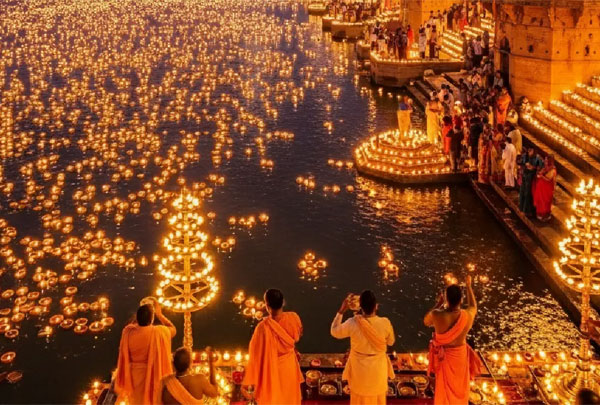
Varanasi takes on an extraordinary appearance during Dev Deepawali, when the historic ghats along the River Ganges are illuminated with vast numbers of earthen lamps. Stone steps, temples, riverside buildings, shrines, and narrow lanes glow after sunset as residents, devotees, and volunteers light rows of diyas along the riverfront. Boats gather on the Ganges, religious ceremonies take place at several ghats, and thousands of pilgrims and visitors arrive to witness one of the most important annual celebrations in Varanasi.
For an international traveler, Dev Deepawali in Varanasi offers much more than an evening of decorative lights. The festival brings together religious traditions, river rituals, pilgrimage, music, prayer, historic architecture, and community participation. Seeing the illuminated ghats from the river provides one perspective, while walking through the old city and spending time near the ghats provides another. Travelers who understand the religious importance of the occasion are likely to find the visit far more meaningful than those who see it only as a photography event.
Dev Deepawali should also not be confused with the main Diwali Festival celebrated across India. It takes place after Diwali and has a particularly strong association with Varanasi and the sacred Ganges. For overseas visitors planning a cultural journey through North India, it can be combined with Delhi, Agra, Jaipur, Khajuraho, or other destinations to create a broader heritage and spiritual itinerary.
What Is Dev Deepawali?
The name Dev Deepawali is commonly understood as the “Diwali of the Gods.” The festival is celebrated on Kartik Purnima, the full-moon day of the Hindu month of Kartik. In Varanasi, this occasion is marked by extensive lamp lighting along the Ganges and religious activities at the ghats and temples. The visual spectacle has become internationally recognized, but the festival remains deeply connected with Hindu faith and the spiritual identity of Varanasi.
According to Hindu traditions associated with the occasion, the gods are believed to descend to the sacred city and the Ganges during this auspicious period. Devotees light lamps as an act of devotion, visit temples, offer prayers, and take part in ceremonies along the river. The full moon, sacred river, ancient temples, and thousands of lamps together give the festival a character that differs considerably from ordinary sightseeing in Varanasi.
Foreign travelers should remember that the illuminated riverfront is not simply a staged tourism event. Many people attending are there for religious reasons. Respectful behavior around prayers, bathing areas, temples, offerings, and ceremonies is therefore particularly important.
Why Varanasi Is the Most Important Place for Dev Deepawali
Varanasi, also known as Kashi or Banaras, is among the oldest continuously inhabited cities in the world and one of Hinduism’s most sacred pilgrimage destinations. The city’s spiritual life is closely tied to the River Ganges, and its long sequence of ghats forms the setting for daily rituals, cremations, bathing, prayer, meditation, and religious ceremonies.
During Dev Deepawali, this already important riverfront becomes the center of a much larger celebration. Diyas are arranged across numerous ghats, creating long lines of light along the river. Temples are decorated, people gather on the steps, and boats move along the Ganges carrying visitors who want a wider view of the illuminated waterfront.
The setting is one of the main reasons Dev Deepawali Varanasi appeals strongly to international travelers. The festival does not take place inside a modern event venue. It unfolds against centuries-old ghats, historic buildings, temples, narrow lanes, and the flowing Ganges, giving visitors a direct connection with the religious and architectural character of the city.
The Lighting of the Ghats
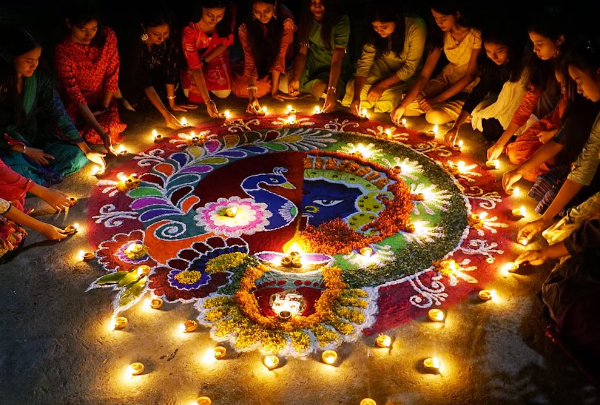
The lighting of thousands of traditional earthen lamps is the most recognizable feature of Dev Deepawali in Varanasi. Before darkness falls, lamps are arranged along steps, platforms, temple entrances, walls, and other parts of the ghats. As evening approaches, volunteers, residents, and devotees begin lighting them, gradually transforming the riverfront.
Rather than arriving only after everything is illuminated, international visitors may find it worthwhile to reach the ghats before sunset. Watching the preparations gives a better understanding of the amount of community participation involved. The transition from daylight to sunset and then to a fully illuminated riverfront is one of the most rewarding parts of the evening.
Different sections of the riverfront offer different perspectives. Some ghats become extremely crowded, while others may provide a slightly calmer atmosphere. A knowledgeable local guide can help travelers understand which areas are suitable depending on whether their priority is photography, religious ceremonies, walking along the ghats, or viewing the lights from a boat.
Dashashwamedh Ghat and the Ganga Aarti
Dashashwamedh Ghat is one of Varanasi’s best-known ghats and a major location for the daily evening Ganga Aarti. The ceremony involves priests performing synchronized rituals using lamps, incense, bells, and devotional chants. Even on ordinary evenings, the aarti attracts substantial crowds, but Dev Deepawali brings considerably greater visitor numbers to the riverfront.
For international travelers, seeing the Ganga Aarti during the festival period can provide an important religious context for the illuminated ghats. However, it should not be assumed that visitors can simply arrive shortly before the ceremony and find a good position. Access routes can become congested and viewing areas fill quickly.
A private itinerary should account for additional walking time, traffic restrictions, security arrangements, and crowd density. Travelers with mobility difficulties should discuss these factors in advance, as reaching some riverfront areas may involve narrow lanes, steps, uneven surfaces, and significant walking.
Dev Deepawali Boat Ride on the Ganges
A boat ride during Dev Deepawali is one of the most sought-after activities for visitors because the river provides a broad view of the illuminated ghats. From the water, travelers can see long sections of the historic waterfront rather than being limited to a single crowded location.
The experience changes as the boat moves along the river. Rows of diyas appear across the steps, temples and historic buildings rise behind them, and the full moon may be visible above the city. Other boats fill the river, creating a busy but memorable scene.
Advance arrangements are strongly recommended. Demand for boats increases substantially around the festival, and prices, boarding points, boat types, and operating arrangements may differ from normal days. International travelers should use a reliable operator and confirm where they will board, where they will finish, how long the ride will last, and what type of boat has been arranged.
Safety should take priority over obtaining the closest possible view. Boats can become crowded during major events, so travelers should avoid poorly managed arrangements and follow local safety instructions.
Morning Rituals on Kartik Purnima
Dev Deepawali is not limited to the evening illumination. Kartik Purnima has religious importance from early morning, when pilgrims gather along the Ganges for ritual bathing and prayers. Visitors who wake before sunrise can see a quieter but deeply significant side of the festival.
The early-morning atmosphere differs completely from the evening celebration. Boats move across the river in softer light, pilgrims descend the steps to bathe, priests perform rituals, and temple bells can be heard from different parts of the old city. For travelers interested in religion and documentary photography, this can be as valuable as the evening event.
A sunrise boat ride followed by a walk through the old city can therefore form an important part of a Dev Deepawali tour in Varanasi. Travelers who attend both morning and evening activities gain a broader understanding of the festival than those who visit only for the illuminated ghats.
Dev Deepawali and Diwali – What Is the Difference?
International visitors frequently confuse Dev Deepawali with the better-known Diwali Festival. Although both involve lamps and religious traditions, they are separate occasions.
Diwali is celebrated throughout much of India and is associated with different religious traditions depending on the region. Homes, markets, temples, businesses, and streets are decorated, and families celebrate together. Dev Deepawali, on the other hand, takes place on Kartik Purnima after the main Diwali celebrations and is particularly famous for the large-scale illumination of Varanasi’s ghats.
Travelers planning an India festival tour should therefore check dates carefully. Visiting India during Diwali does not automatically mean they will also see Dev Deepawali. Those wanting both celebrations need an itinerary covering the period between the two events.
Best Time to Visit Varanasi for Dev Deepawali
Dev Deepawali generally falls in November, although the exact date changes because it follows the Hindu lunar calendar. Travelers should verify the confirmed festival date for the year of travel before booking international flights.
Arriving at least one or two days before the main event is preferable. This allows travelers to understand the city layout, visit major sites, arrange boat boarding points, and see Varanasi under more normal conditions before the festival crowds reach their peak.
Staying after the main event can also be worthwhile. Varanasi has enough cultural and historical interest to justify several nights even without the festival. A well-paced itinerary might include Sarnath, morning and evening boat rides, old-city walks, temples accessible to visitors, silk weaving areas, local markets, and other heritage sites.
Photography During Dev Deepawali
For photographers, Dev Deepawali Varanasi offers unusual combinations of architecture, religion, portraiture, river scenes, lamps, reflections, boats, and night photography. The hours around sunset are especially useful because changing light conditions provide several different photographic moods within a relatively short period.
A boat can provide wide views of the illuminated riverfront, while walking along selected ghats allows photographers to capture details such as rows of lamps, hands lighting diyas, flowers, religious offerings, and architectural elements. Carrying excessive equipment is not advisable because of dense crowds and long walking distances.
A fast lens, spare batteries, sufficient memory cards, and a secure camera strap are useful. Tripods may be impractical or restricted in very crowded locations, so photographers should prepare for handheld low-light photography.
Religious sensitivity remains essential. Cremation ghats, private rituals, bathing pilgrims, and close portraits should never be photographed casually. Travelers should ask their guide about local etiquette and restrictions.
What Foreign Travelers Should Wear
November weather in Varanasi is generally suitable for sightseeing, but early mornings and evenings can feel cooler, particularly on the river. Layered clothing is therefore practical. A light jacket, sweater, or shawl can be useful during sunrise boat rides and late-evening activities.
Modest clothing is recommended throughout Varanasi, particularly around temples, ghats, and religious ceremonies. Clothing covering the shoulders and knees is a sensible choice for both men and women.
Comfortable walking shoes are extremely important. The old city includes narrow lanes, stone steps, uneven surfaces, crowded passages, and areas where vehicles cannot enter. Travelers should expect to spend considerable time walking.
Safety and Crowd Management During Dev Deepawali
Dev Deepawali attracts very large numbers of visitors, and crowd management should be treated as an important part of travel planning. Main ghats, narrow lanes, approach roads, and boat boarding areas can become heavily congested.
International visitors should carry only essential belongings. Passports and unnecessary valuables are generally better left securely at the hotel. Phones, wallets, and cameras should remain in secure bags or pockets, particularly when moving through dense crowds.
Travelers should remain with their guide or group and agree on a meeting point in case they become separated. Mobile phone networks can become less reliable when large numbers of people gather in a small area.
Visitors who dislike heavy crowds should discuss alternative viewing locations and boat arrangements rather than attempting to stand at the busiest ghats.
Food and Drinking Water in Varanasi
Varanasi has a rich vegetarian food culture, and visitors can try local dishes, snacks, sweets, lassi, kachori, chaat, and other North Indian specialties. However, festival days are not necessarily the best time for an international traveler to experiment with every available street-food stall.
Choose clean, busy establishments and eat food that is freshly prepared and served hot. Drink sealed bottled water or properly filtered water. Staying hydrated is important because travelers may spend many hours walking or waiting around the ghats.
Those with dietary restrictions should inform their hotel, guide, or tour operator in advance. Vegetarian meals are widely available, while specific allergies or gluten-free requirements may require clearer planning.
How to Reach Varanasi
Varanasi is accessible by air, rail, and road. For international travelers, flights from Delhi and other major Indian cities are often the most convenient option when Varanasi forms part of a longer India itinerary.
The city also has extensive railway connections, although travelers unfamiliar with Indian rail travel may prefer flights or pre-arranged train journeys with confirmed transfers.
During Dev Deepawali, normal travel times within the city can increase substantially. Road closures and traffic restrictions may affect access to the old city and riverfront. A private vehicle can take travelers to the nearest practical access point, after which part of the journey may need to be completed on foot.
Where to Stay During Dev Deepawali
Varanasi offers everything from heritage-style accommodation and luxury hotels to mid-range properties and guesthouses. During Dev Deepawali, location becomes particularly important.
Some travelers prefer accommodation close to the ghats because it reduces dependence on road transport. Others choose higher-category hotels outside the old city for larger rooms, easier vehicle access, and more extensive facilities.
A river-facing room may sound ideal, but travelers should verify the exact view, accessibility, noise levels, and distance from the ghats they intend to visit. Properties in the old city may involve walking through narrow lanes where vehicles cannot reach the entrance.
Because Dev Deepawali is a high-demand period, preferred hotels and room categories should be reserved well in advance.
Sarnath and Other Places to Visit in Varanasi
International visitors should allow enough time to see Varanasi beyond the festival. Sarnath, located outside the main city, is one of Buddhism’s most important pilgrimage sites and is associated with the place where the Buddha delivered his first sermon after attaining enlightenment.
Within Varanasi, travelers can take an early-morning boat ride, walk through the old lanes, visit suitable temples, see traditional silk weaving, spend time around the ghats, and visit local markets.
The contrast between ancient Hindu traditions in Varanasi and Buddhist heritage at Sarnath makes the destination particularly rewarding for travelers interested in religion and history.
Combining Dev Deepawali with a North India Tour
Varanasi can be included easily in a larger North India itinerary. A popular journey for first-time international visitors is:
Delhi – Jaipur – Agra – Varanasi
This combines the Golden Triangle Tour with one of India’s most important spiritual cities. Depending on flight schedules and the number of available days, travelers can also add Khajuraho or continue to other parts of India.
Another option is to focus more strongly on religious and cultural destinations by combining Delhi, Agra, Varanasi and Bodh Gaya.
The final route should be designed around the confirmed Dev Deepawali date rather than trying to fit the festival into a fixed itinerary afterward.
Planning a Dev Deepawali Varanasi Tour with India Fortune Journey
Planning a Dev Deepawali Varanasi tour requires more preparation than a standard visit to the city. Hotels become busy, river traffic increases, boats are in high demand, security arrangements may change access routes, and the most famous ghats can become extremely crowded.
India Fortune Journey can arrange a private itinerary based on the confirmed festival date, preferred hotel category, transportation requirements, sightseeing interests, and suitable boat arrangements. International travelers can combine the festival with Delhi, Agra, Jaipur, Rajasthan, or other destinations according to the length of their India journey.
A carefully planned itinerary should include more than the evening illumination. Seeing the Ganges at sunrise, walking through the old city, understanding the religious meaning of Kartik Purnima, attending appropriate ceremonies, visiting Sarnath, and viewing the illuminated ghats from the river together provide a much fuller picture of Varanasi.
For travelers looking for a cultural festival tour in India, Dev Deepawali brings together several elements that define Varanasi: the sacred Ganges, ancient ghats, Hindu rituals, pilgrimage traditions, historic architecture, and a living religious culture that continues to shape everyday life in the city.
Fair Festivals
Personalized Travel Experiences Across India
Tell us about your
Travel Plans
Share your travel preferences and our destination specialists will create a personalized itinerary along with the best travel recommendations and pricing. Most inquiries receive a detailed response within 24 hours with no obligation.
Have a Question?
Whether you're planning a private tour, luxury holiday, family vacation, chauffeur-driven journey, hotel booking, or a customized India itinerary, our travel experts are ready to assist you.
Share your requirements and we'll provide the best travel options, recommendations, and pricing tailored to your needs.