
- /
- Fair & Festivals
- / Hornbill Festival Nagaland – India's Festival of Festivals
Hornbill Festival Nagaland – India's Festival of Festivals
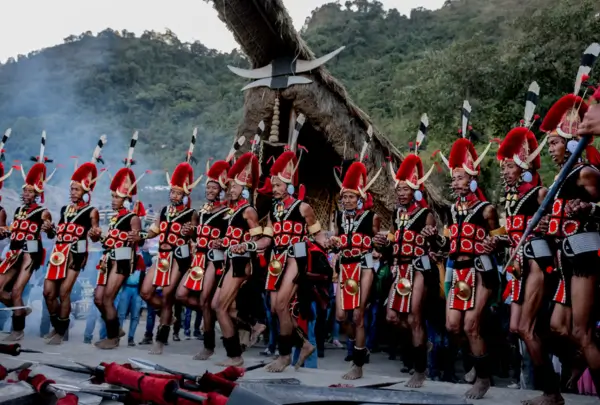
Every December, the hills surrounding Kohima become a gathering place for the diverse communities of Nagaland as the Hornbill Festival brings traditional music, indigenous customs, regional cuisine and cultural performances together at Kisama Heritage Village. Recognised as one of Northeast India's most prominent cultural celebrations, the festival provides a platform for Naga communities to present aspects of their heritage through traditional dances, ceremonial clothing, folk songs, crafts and community activities. Its setting among the green hills of Nagaland creates an atmosphere quite different from the palace festivals, religious processions and desert fairs found elsewhere in India.
Commonly referred to as the Festival of Festivals, the Hornbill Festival is organised as a major annual cultural event that brings together traditions associated with different Naga communities. The celebration reflects the region's considerable cultural diversity, including distinctive languages, clothing, artistic practices, food traditions and social customs. Visitors can observe cultural presentations, visit traditional-style community structures, learn about local handicrafts and attend music programmes that connect older artistic traditions with contemporary creativity. For international travellers interested in indigenous cultures and lesser-visited Indian destinations, the festival offers an introduction to the cultural landscape of Nagaland.
The event is generally held from 1 to 10 December, with Kisama Heritage Village serving as its principal venue. The festival takes place during a period when the weather is usually dry and cool, making it suitable for outdoor cultural programmes and travel through the surrounding hill country. A visit can be combined with sightseeing in Kohima, excursions to nearby villages and longer journeys through Northeast India. However, travellers should plan carefully because accommodation demand increases during the festival, road travel can be slow in mountainous areas and certain travel permissions may apply to foreign visitors.
History and Origins of the Hornbill Festival
The Hornbill Festival was introduced by the Government of Nagaland in December 2000 as an initiative to promote the state's cultural heritage and encourage tourism. The festival was developed to provide a common platform where different Naga communities could present their traditions to visitors and to one another. Before its establishment, many communities already maintained their own seasonal festivals connected with agriculture, harvest cycles, religious beliefs and social customs. The Hornbill Festival did not replace these individual celebrations but created a shared event through which selected elements of the state's diverse cultural traditions could be presented in one location.
The festival takes its name from the hornbill, a bird that holds cultural significance in several Naga traditions. Hornbill imagery has historically appeared in ceremonial ornaments, traditional attire and community symbolism, although its meaning and use vary among different groups. The choice of name reflects the bird's place in regional cultural memory and artistic expression. It also draws attention to the relationship between Naga communities and the natural environment, including the forests and wildlife of Northeast India. Conservation awareness has become an important part of contemporary discussions surrounding the hornbill and its cultural importance.
Over the years, the Hornbill Festival has developed into a major tourism event, attracting visitors from across India and overseas. The programme has expanded beyond traditional cultural presentations to include music concerts, food activities, craft exhibitions, sporting competitions and other events. Despite its growth, the festival continues to emphasise the distinctive heritage of Nagaland's communities. Its importance lies not simply in bringing tourists to the state but also in providing opportunities for cultural exchange, artistic presentation and the continued visibility of traditional practices within a changing society.
Why Hornbill Festival Is Called the Festival of Festivals
Nagaland is home to numerous Naga communities, each with its own historical background, language varieties, social customs and cultural practices. Many communities traditionally celebrate festivals associated with agriculture, harvests, seasonal transitions and community relationships. These occasions can involve songs, dances, feasts, ceremonies and gatherings that reflect local beliefs and historical experiences. Because these celebrations take place at different times of the year and in different parts of the state, travellers would normally need considerable time to encounter even a small selection of them in their original community settings.
The Hornbill Festival brings selected cultural presentations from multiple communities into a shared venue, which explains its popular description as the Festival of Festivals. Visitors can observe differences in traditional clothing, dance formations, musical instruments, ceremonial objects and styles of community presentation. Each participating group contributes elements associated with its cultural identity, allowing audiences to appreciate the diversity within Nagaland. The event is particularly valuable for first-time visitors because it provides a broad introduction to the region without requiring travel to numerous remote villages during separate festival seasons.
However, the performances at Kisama should be understood as organised cultural presentations rather than exact reproductions of every community's traditional festivals. Some ceremonies have specific social or religious meanings that cannot be fully recreated outside their original settings. A respectful visitor recognises this distinction and treats the festival as an introduction to living cultures rather than a complete representation of Naga society. The event can encourage deeper interest in the history, languages, crafts and contemporary lives of the communities represented.
Kisama Heritage Village – The Main Venue of Hornbill Festival
Kisama Heritage Village, situated approximately 12 kilometres from central Kohima, is the principal location associated with the Hornbill Festival. Developed as a cultural venue, it contains traditional-style structures, community exhibition areas, performance spaces and facilities used during the annual celebrations. Its hillside location provides a scenic setting for cultural activities, with the surrounding landscape reflecting the mountainous character of Nagaland. During the festival, Kisama becomes a busy gathering place where artists, craftspeople, local residents and visitors participate in a varied programme of events.
One of the distinctive features of Kisama is the presence of community-specific structures commonly referred to as morungs. These buildings draw inspiration from traditional Naga architectural forms and serve as spaces for cultural representation during the festival. Visitors can observe decorative woodwork, symbolic carvings, traditional objects and displays associated with different communities. The structures also provide locations for food stalls, cultural demonstrations and interactions with participating groups. Their design offers an introduction to the architectural diversity of Nagaland, although the buildings at Kisama are part of a purpose-developed heritage venue rather than an untouched historic village.
The festival grounds contain walking paths, performance areas and gathering spaces spread across uneven terrain. Visitors should wear comfortable footwear and allow sufficient time to move between different sections. Because several activities may take place simultaneously, it is useful to review the daily programme before arrival and identify particular performances or demonstrations of interest. A full day at Kisama can include traditional dance presentations, craft exhibitions, regional food and informal cultural encounters, while travellers staying for several days can attend different programmes without rushing.
Naga Communities and Their Cultural Heritage
Nagaland's cultural identity is shaped by the histories and traditions of numerous communities, including Angami, Ao, Sumi, Lotha, Konyak, Chakhesang, Rengma, Phom, Chang and others. These communities are not culturally identical, and their languages, ceremonial practices, clothing and artistic traditions reflect distinct historical developments. The Hornbill Festival provides an opportunity to encounter this diversity through organised presentations and cultural displays. Visitors may notice differences in textile patterns, ornaments, headgear, musical instruments and dance styles, each of which can carry meanings associated with community identity, status or particular occasions.
Traditional Naga societies have historically maintained strong relationships with agriculture, village institutions, customary practices and community celebrations. Social structures and cultural expressions have changed over time through education, Christianity, urbanisation, migration and wider economic developments. Contemporary Nagaland therefore includes both inherited traditions and modern lifestyles. The festival reflects this combination by presenting folk performances alongside contemporary music, design, food enterprises and creative activities. Understanding this wider context helps visitors avoid the mistaken impression that Naga communities exist only through traditional costumes and historical customs.
The most rewarding cultural encounters often involve learning directly from community representatives about the meaning of particular objects or performances. A textile pattern, ceremonial ornament or dance movement may have a specific significance that is not immediately apparent to an outside observer. Visitors should ask questions respectfully and avoid assuming that a custom associated with one community applies to every Naga group. Taking time to understand these differences helps visitors appreciate the festival as a celebration of diverse living cultures rather than a single uniform tradition.
Traditional Food and Local Cuisine at Hornbill Festival
Food is an important part of the Hornbill Festival experience, offering visitors an introduction to the ingredients, cooking methods and culinary preferences found across Nagaland. Festival food stalls often showcase regional specialities alongside everyday dishes prepared by local vendors. Visitors may encounter rice, smoked meats, seasonal vegetables, fermented ingredients and preparations featuring locally grown chillies.
Different communities have their own food traditions, shaped by local agriculture, available ingredients and family cooking practices. Exploring the food stalls can therefore become a cultural experience in itself. International travellers who are unfamiliar with certain ingredients can ask vendors about the dishes before ordering. Vegetarian visitors should confirm the ingredients and cooking methods, while those with food allergies should communicate their requirements clearly.
Beyond the food itself, the festival provides opportunities to support local producers and small businesses. Visitors can explore regional food products, learn about traditional preparation methods and discover flavours that may be less familiar than those found in India's major tourist cities.
Music, Dance and Cultural Performances
Music and dance remain central attractions of the Hornbill Festival. Performances bring together traditional songs, community dances, rhythmic movements and ceremonial clothing associated with different Naga groups. The combination of music, costumes and storytelling gives visitors a glimpse into cultural practices that have developed over generations.
The programme also reflects contemporary artistic influences. Modern music performances and entertainment events introduce a different dimension to the celebrations, attracting younger audiences and visitors with varied interests. This combination of traditional and contemporary culture illustrates how Nagaland's artistic identity continues to develop.
Since performance schedules may change each year, visitors should check the official festival programme before travelling. Arriving early for popular events and allowing enough time between performance areas can help travellers enjoy the experience without rushing.
Best Time to Visit the Hornbill Festival Nagaland
The Hornbill Festival is traditionally held from 1 to 10 December each year. This period generally offers favourable conditions for exploring Kohima and the surrounding hill country, although temperatures and weather can vary.
December mornings and evenings can be chilly, particularly in elevated areas. Visitors should carry warm clothing, comfortable walking shoes and layers suitable for spending several hours outdoors. It is also sensible to check local weather forecasts before travelling.
For international travellers, arriving in Kohima before the festival begins can make the journey more comfortable. An additional day provides time to settle into the accommodation, arrange transport and become familiar with the local area. Travellers who stay for several days can experience a wider selection of performances and explore the region at a more relaxed pace.
How to Reach the Hornbill Festival
Kohima is the main base for visitors attending the Hornbill Festival, while Kisama Heritage Village is the principal festival venue. International travellers generally reach Nagaland through an Indian gateway and continue to Kohima by air and road connections or by train and road.
Dimapur is an important transport gateway for Nagaland. From Dimapur, visitors can arrange a taxi or private road transfer to Kohima. Dimapur also has a railway station connecting it with other parts of India. Travellers should check current flight and train schedules before booking their onward journey.
Road journeys through Nagaland's hilly terrain can take longer than expected, especially during busy travel periods. Private transfers may provide greater convenience for visitors carrying luggage or travelling with family. Booking transport in advance during the festival can help reduce uncertainty and make it easier to reach Kisama Heritage Village.
Accommodation Options for Hornbill Festival Visitors
Accommodation planning is important because the Hornbill Festival attracts visitors from different parts of India and overseas. Hotels and guesthouses in Kohima can experience increased demand during the event, making early reservations advisable.
Hotels may suit travellers looking for private rooms, established facilities and assistance with transport. Guesthouses and homestays can provide a more locally connected experience, depending on the property and services offered. Visitors should compare location, amenities, meal arrangements and cancellation policies before confirming a booking.
Travellers who want to attend the festival every day should consider the time required to reach Kisama Heritage Village. A property that appears close on a map may still involve a longer journey because of road conditions and festival traffic. Confirming transport arrangements with the accommodation provider can help make daily travel easier.
Travel Tips for International Visitors
International visitors can make their Hornbill Festival experience more enjoyable by planning transport, accommodation and entry requirements in advance. The following considerations are particularly useful when visiting Nagaland for the first time.
Travellers should check the latest official guidance on Indian visa requirements and any applicable travel permissions for Nagaland. Requirements can vary according to nationality and the regulations in force, so information should be confirmed before departure.
Booking accommodation early is recommended, especially for visitors with fixed travel dates. It is also useful to keep digital and printed copies of important travel documents, accommodation confirmations and transport bookings.
Comfortable footwear is important because the festival grounds include uneven paths and multiple performance areas. Warm layers are advisable for December, while carrying some cash can be useful for small purchases where card or digital payment facilities may not be available.
Respectful cultural behaviour is equally important. Visitors should ask permission before taking close-up photographs of individuals, follow instructions at cultural events and avoid entering restricted or private spaces without authorisation. Supporting local craftspeople, food vendors and accommodation providers can also contribute to a more responsible travel experience.
Exploring Kohima Beyond the Hornbill Festival
Travellers who have additional time can explore Kohima and its surrounding areas to gain a broader understanding of Nagaland. The city offers opportunities to learn about regional history, local communities and contemporary life in the state.
The Kohima War Cemetery is an important historical site associated with the Second World War and the Battle of Kohima. Visitors interested in military history can include it in their sightseeing plans. Local markets and cultural attractions can also provide opportunities to observe everyday life and discover regional products.
Village visits may offer further insight into traditional architecture, community customs and local history. However, visitors should arrange such excursions respectfully, confirm access with appropriate local contacts and follow any community-specific guidelines. The experience is most rewarding when travellers approach local communities with genuine curiosity and an understanding that customs differ between places.
Why Include the Hornbill Festival in a Northeast India Tour?
The Hornbill Festival is a distinctive addition to a Northeast India itinerary because it brings together cultural performances, regional food, handicrafts and contemporary music in one destination. For travellers who have already explored India's major cities and heritage attractions, Nagaland offers a different perspective on the country's cultural diversity.
The festival can be combined with a stay in Kohima and further travel through Northeast India, depending on available time, transport connections and applicable entry requirements. Visitors should avoid planning an overly rushed itinerary, as road journeys between destinations can take considerable time.
For international travellers, a well-planned visit can balance festival activities with opportunities to learn about local history, explore regional landscapes and interact respectfully with local communities. Checking the festival schedule and transport availability before departure helps create a more practical and rewarding journey.
Conclusion: Experience the Cultural Diversity of Nagaland
The Hornbill Festival Nagaland offers a memorable introduction to the traditions, artistic expressions and contemporary cultural life of the Naga communities. From the performances and community structures at Kisama Heritage Village to regional cuisine, handicrafts and music, the festival provides a rich cultural experience for visitors interested in discovering a different side of India.
With suitable preparation, advance accommodation bookings and an understanding of local customs, international travellers can make the most of their time in Kohima. Confirming the official festival dates, travel arrangements and applicable entry requirements before departure will help ensure a smoother journey.
For travellers seeking a cultural experience beyond India's more familiar tourist destinations, the Hornbill Festival can be a valuable addition to a Northeast India travel itinerary.
Fair Festivals
Personalized Travel Experiences Across India
Tell us about your
Travel Plans
Share your travel preferences and our destination specialists will create a personalized itinerary along with the best travel recommendations and pricing. Most inquiries receive a detailed response within 24 hours with no obligation.
Have a Question?
Whether you're planning a private tour, luxury holiday, family vacation, chauffeur-driven journey, hotel booking, or a customized India itinerary, our travel experts are ready to assist you.
Share your requirements and we'll provide the best travel options, recommendations, and pricing tailored to your needs.