
- /
- Fair & Festivals
- / International Kite Festival – Jaipur, Rajasthan
International Kite Festival – Jaipur, Rajasthan
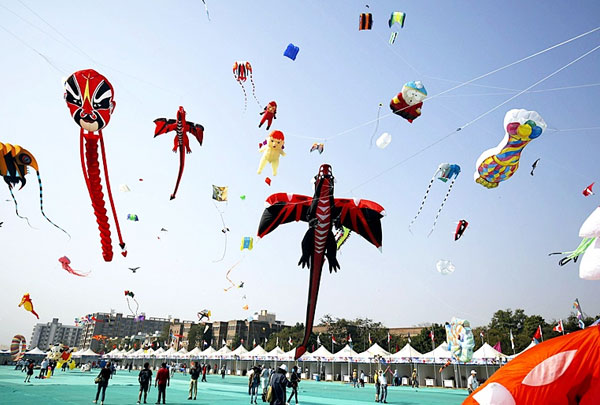
January brings a completely different character to Jaipur when thousands of kites rise above the Pink City and residents gather on rooftops for one of Rajasthan’s most energetic seasonal traditions. Closely associated with Makar Sankranti, Jaipur’s kite-flying celebrations transform the city skyline into a constantly moving field of color. Families, friends, children, experienced kite flyers, photographers, and visitors participate in or watch the activity from morning until evening, while music, food, friendly competition, and neighborhood gatherings create an atmosphere that extends far beyond an organized festival venue.
For international travelers, the International Kite Festival in Jaipur offers an unusual opportunity to see the city from above its streets. Most conventional Jaipur sightseeing takes place at Amber Fort, City Palace, Hawa Mahal, Jantar Mantar, temples, palaces, and markets. During the kite-flying period, however, much of the city’s social life moves upward onto terraces and rooftops. Looking across Jaipur from a suitable rooftop reveals hundreds or even thousands of kites at different heights, with the historic city, surrounding hills, forts, minarets, and residential neighborhoods forming the background.
The celebration should not be understood only as a formal international competition. Organized kite events can form part of the wider program, but the most distinctive Jaipur experience comes from the citywide tradition of kite flying around Makar Sankranti. Residents buy kites and string in advance, prepare food, arrange music, invite relatives and friends, and spend long periods on terraces trying to cut competitors’ kite strings while keeping their own kite in the air.
Foreign travelers planning a visit should therefore combine any official festival program with a carefully selected rooftop experience and normal Jaipur sightseeing. This approach provides a much more complete understanding of why kite flying has become such an important part of Jaipur’s January calendar.
Makar Sankranti and Jaipur’s Kite-Flying Tradition
The kite-flying celebrations are closely connected with Makar Sankranti, an important Indian festival associated with the sun’s transition into Makara, or Capricorn, and with seasonal change. Unlike many Hindu festivals whose dates shift considerably according to lunar calculations, Makar Sankranti is generally observed around the middle of January.
Different regions of India celebrate the period in different ways. Food traditions, religious customs, fairs, harvest associations, and local activities vary considerably between states. In Jaipur and several other parts of Rajasthan, kite flying has become one of the most visible features of the day.
Families often begin preparations before the festival itself. Kite shops become busy, colorful paper kites appear throughout markets, reels of string are prepared, and rooftop spaces are arranged for long hours outdoors.
For overseas visitors, understanding the Makar Sankranti connection is useful because it explains why kite flying is not merely an entertainment program arranged for tourists. It forms part of a much wider seasonal and cultural celebration.
Jaipur’s Sky During the Kite Festival
The scale of kite flying becomes clear only after reaching an elevated viewpoint. From street level, visitors see people carrying kites, shopping for string, and looking upward, but from a rooftop the entire city becomes part of the event.
Kites can appear in numerous colors and sizes, moving rapidly as flyers respond to changes in wind. Some remain high above the city while others engage in competitive encounters with nearby kites.
When one kite’s string is cut, it begins drifting across the skyline while children and other participants may attempt to retrieve it. The constant movement creates an atmosphere that continues for hours.
For photographers, wide views showing dozens of kites against Jaipur’s architecture can communicate the scale of the celebration much better than a close photograph of a single kite.
Rooftop Celebrations in Jaipur
Rooftops are central to the Jaipur kite-flying experience. Families and groups gather on terraces, often bringing food, music, chairs, and large supplies of kites for the day.
The atmosphere can be competitive but social. Experienced flyers concentrate intensely on controlling their kites, while other family members watch, eat, talk, and help prepare new kites when strings break or kites are lost.
International visitors should not climb onto random private rooftops or assume that every terrace is open to tourists. Access should be arranged legitimately through a hotel, host, restaurant, heritage property, or organized experience.
Rooftop safety is extremely important. Some traditional buildings have low parapet walls or uneven surfaces, and participants concentrating on the sky can easily lose awareness of the roof edge.
The Art of Flying a Traditional Indian Kite
Traditional Indian kite flying requires considerably more skill than simply releasing a kite into the wind. Flyers control tension through the reel and line, adjusting the kite according to wind conditions and the movement of competing kites.
The lightweight construction allows rapid changes in direction when handled by an experienced person. Beginners often discover that maintaining control is much more difficult than it appears.
Foreign visitors who want to participate should learn from an experienced local flyer rather than immediately attempting competitive kite flying. Understanding how to hold the line, release it, retrieve it, and respond to changes in tension makes the activity safer and more enjoyable.
Hands should be protected appropriately because kite string under tension can cause cuts.
Competitive Kite Flying
One of the most exciting parts of Jaipur’s tradition is competitive kite flying. Flyers maneuver their kite strings against those of other kites with the aim of cutting an opponent’s line.
When a kite is successfully cut, the winning rooftop may erupt in celebration. Calls and cheers travel between buildings, adding sound to the visual activity overhead.
For international visitors, these competitions help explain why people can remain engaged for hours. The activity combines skill, wind judgment, hand control, patience, and friendly rivalry.
Beginners should watch experienced participants before joining. Competitive kite string can move quickly, and careless handling can injure hands or other people nearby.
Kite Markets Before Makar Sankranti
The days before Makar Sankranti are particularly interesting in Jaipur’s markets because kite sellers become extremely busy. Bundles of colorful paper kites are displayed in different sizes and designs, while customers purchase reels and other kite-flying supplies.
A market visit before the main celebration gives foreign travelers an opportunity to understand the preparation behind the festival. Instead of seeing kites only after they reach the sky, visitors can examine their lightweight construction and watch residents selecting supplies for the coming day.
Photographers can find excellent subjects in shops filled with repeated geometric shapes and bright paper colors. Permission should still be requested before making close portraits of shopkeepers.
Buying a few simple kites can also be part of the experience when travelers have arranged a safe place to fly them.
Kite Making and Traditional Skills
The simple appearance of a paper kite can hide a careful balance between weight, shape, bamboo structure, paper, and attachment points. A poorly constructed kite may not respond correctly even in good wind.
Traditional kite makers develop an understanding of these proportions through repeated practice. Production can increase substantially before the January festival as local demand rises.
Travelers interested in crafts may enjoy learning how bamboo is cut and shaped into a lightweight frame before paper is attached.
This smaller craft tradition fits naturally into a Jaipur journey focused on textiles, block printing, jewelry, pottery, and other handmade products.
International Kite Festival Events
Jaipur has also hosted organized international kite-related events where skilled flyers and participants can present distinctive designs and kite-flying techniques. Such programs can add another dimension to the citywide celebration.
Large decorative or unusual kites may differ significantly from the lightweight traditional kites used on residential rooftops. International participants can introduce designs and flying styles from other countries.
The exact format, venue, dates, and scale of official events can change from year to year. Travelers should therefore confirm the current official program instead of relying on photographs or schedules from previous editions.
The organized event and neighborhood rooftop celebration should be viewed as complementary experiences rather than the same thing.
Jaipur Old City During the Festival
The Pink City provides an especially atmospheric setting during the kite-flying period. Historic façades, market streets, temples, rooftops, gates, and surrounding hills create layers of architecture beneath the moving kites.
Walking through selected old-city areas before or during the festival allows visitors to see preparations at street level. Shops sell kites, residents move supplies toward their homes, and people repeatedly look upward to follow the action.
Traffic and pedestrian movement can become busy, so visitors should avoid trying to cover too much of the old city during peak celebrations.
A combination of a morning market walk and several hours on a suitable rooftop generally provides a stronger experience than spending the entire day moving between crowded streets.
Makar Sankranti Food Traditions
Food is an important part of the January celebration. Seasonal sweets and snacks associated with sesame, jaggery, peanuts, and other winter ingredients may be eaten during Makar Sankranti, although specific traditions differ between families and regions.
In Jaipur, rooftop gatherings can include a variety of snacks and meals because people may remain outdoors for much of the day.
Foreign travelers participating through a hotel or hosted rooftop event may be served a mixture of traditional Rajasthani food and familiar Indian dishes.
Anyone with nut, sesame, dairy, or gluten allergies should communicate dietary requirements clearly because festival sweets can contain ingredients that are not obvious from appearance.
Rajasthani Food During the Jaipur Festival
A kite-festival trip also provides an opportunity to try Rajasthan’s wider culinary traditions. Visitors can include dal baati churma, gatte ki sabzi, ker sangri, kachori, regional breads, sweets, and other vegetarian dishes during their stay.
Jaipur has everything from old local eateries to luxury hotel restaurants, so meals can be adapted to different comfort levels.
Foreign visitors interested in street food should choose busy vendors preparing food freshly rather than selecting stalls only for appearance.
A guided food walk can be arranged on a different day from the main kite celebration so travelers have time to enjoy both experiences properly.
Evening Atmosphere After Kite Flying
The character of the celebration changes as daylight begins to fade. The intense daytime kite activity gradually reduces, while neighborhoods may continue with music, family gatherings, food, and other forms of celebration.
Some years and locations may feature additional evening activities, but visitors should verify current programs and safety rules rather than assuming older practices remain unchanged.
For photographers, sunset provides a final opportunity to capture kites against warmer light and the silhouette of Jaipur’s skyline.
Visitors on rooftops should become particularly cautious as visibility decreases. Stairs, roof edges, loose string, and uneven surfaces become harder to see after dark.
Photography During Jaipur Kite Festival
The Jaipur Kite Festival offers unusual photographic possibilities because the principal activity takes place both above and around the photographer. Wide-angle compositions can show people on rooftops with the city and sky behind them, while longer lenses can isolate individual kites or nearby participants.
Photographers should also look away from the sky. Hands controlling reels, stacks of unused kites, children watching experienced flyers, food being served, shopkeepers selling supplies, and the reactions after a kite is cut can produce stronger storytelling images than photographs of kites alone.
A rooftop with a clear view of historic Jaipur can be particularly valuable. The goal should be to show the relationship between the celebration and the city rather than creating images that could have been taken anywhere.
Drones should not be assumed to be permitted. Aviation, security, privacy, and local restrictions can apply, and a crowded kite-flying environment is particularly unsuitable for unauthorized drone use.
Safety Risks from Kite String
Kite string is one of the most important safety considerations. Lines can move quickly and may be difficult to see, particularly when stretched across roads or between buildings.
Travelers should never wrap active kite string around bare fingers or hands. Even ordinary line under tension can cause cuts.
Hazardous forms of sharp or prohibited string should not be purchased or used. Local regulations concerning kite string must be followed, and visitors should choose safer alternatives when participating.
Motorcyclists, cyclists, pedestrians, birds, and other animals can all be harmed by improperly managed or discarded line, making responsible use essential.
Rooftop Safety for Foreign Travelers
Rooftop safety deserves particular attention because visitors naturally spend much of their time looking upward. Traditional Jaipur buildings may have roof edges that would not meet modern safety expectations in some countries.
Foreign travelers should use a properly selected terrace with adequate boundaries and controlled access. Children should remain closely supervised.
Alcohol should not be combined with active kite flying near open roof edges. Comfortable shoes with good grip are preferable to slippery footwear.
When moving backward to maintain kite tension, participants must remain conscious of walls, steps, chairs, other people, and the roof edge.
Kite String and Bird Safety
Discarded or suspended kite string can create serious risks for birds. Jaipur and other kite-flying cities have organizations and volunteers involved in rescuing injured birds during the festival period.
Responsible travelers should never leave line scattered on rooftops or streets. Used string should be collected and disposed of appropriately.
Visitors should also avoid prohibited sharp or synthetic line that increases risks to birds and people.
Understanding this issue allows foreign travelers to enjoy the festival without ignoring its environmental impact.
What to Wear During the Kite Festival
January is winter in Jaipur. Days can be sunny and comfortable, but mornings, evenings, and shaded rooftops may feel cool, particularly when there is wind.
Layered clothing is the most practical choice. A shirt or light top can work during warmer afternoon hours, while a sweater or jacket may be required early and late in the day.
Sunglasses and sunscreen are useful because several hours on an exposed rooftop can involve substantial sun exposure even in winter.
Comfortable shoes are essential for stairs, terraces, market walks, and normal Jaipur sightseeing.
When Is the Jaipur Kite Festival?
Jaipur’s principal kite-flying celebrations are closely connected with Makar Sankranti, generally observed around January 14. Travelers should still confirm the current year’s official festival program because organized international events and associated activities can have their own schedules.
International visitors should ideally arrive in Jaipur before the main celebration. This provides time to visit kite markets, arrange a suitable rooftop location, and complete some sightseeing without trying to do everything on the festival day.
Staying after the celebration also allows travelers to visit forts and palaces at a more relaxed pace.
A minimum of three nights in Jaipur is therefore recommended.
Jaipur Weather in January
January is one of Jaipur’s most popular travel months because daytime weather is generally much more comfortable than the intense heat experienced later in the year.
Early mornings can be cold by Rajasthan standards, particularly for travelers who spend long periods outdoors. Fog or haze can occasionally affect North India during winter, although conditions vary.
Afternoons are often suitable for sightseeing and rooftop activities.
Travelers should check the short-term forecast before arrival rather than packing for Rajasthan based only on its desert reputation.
Amber Fort with the Kite Festival
Amber Fort should remain an essential part of a Jaipur festival itinerary. Located outside the main old city, the fort rises above the surrounding landscape and contains courtyards, gateways, halls, defensive structures, and palace architecture.
Visitors should allow sufficient time to explore the fort rather than rushing through it before a rooftop event.
An early morning visit works well because it can avoid some of the later crowds and leaves the afternoon available for markets or kite-related activities.
Travelers should use responsible access arrangements and avoid supporting animal experiences where welfare is a concern.
City Palace and Jaipur’s Royal Heritage
The City Palace provides valuable context for Jaipur’s history as a planned royal capital. Its courtyards, museums, architecture, collections, and continuing royal associations help visitors understand the development of the Pink City.
A visit can be combined with nearby Jantar Mantar and views of Hawa Mahal.
During the kite-flying period, the old city around these monuments feels especially lively because rooftops become part of the celebration.
Foreign travelers should reserve separate time for the palace rather than attempting to sightsee while constantly watching festival activity overhead.
Hawa Mahal and the Pink City
Hawa Mahal is one of Jaipur’s most recognizable buildings and an important stop for first-time visitors. Its façade, numerous windows, and location within the old city make it closely associated with Jaipur’s visual identity.
During the kite-flying period, the surrounding rooftops and sky create a particularly distinctive atmosphere.
Travelers should view the façade from an appropriate street-level or elevated location and also consider visiting the interior depending on their sightseeing interests.
The surrounding markets can be explored on foot with a guide, allowing visitors to connect architecture, commerce, crafts, and festival preparations.
Jantar Mantar
Located near the City Palace, Jantar Mantar contains large astronomical instruments created for observing celestial positions and measuring time.
For foreign visitors, the site becomes much more interesting with explanation because the structures can otherwise appear purely sculptural.
Its connection with astronomical observation also provides an interesting contrast with Makar Sankranti, a festival linked with the sun’s apparent movement through the zodiac.
The site can be included with City Palace and Hawa Mahal on a full Jaipur sightseeing day before or after the main kite celebration.
Jaipur Markets During the Festival Period
Jaipur’s markets are an important part of the trip even for travelers who do not intend to purchase large quantities of souvenirs. Johari Bazaar, Bapu Bazaar, Tripolia Bazaar, and surrounding areas introduce visitors to jewelry, textiles, clothing, footwear, household goods, and everyday commercial life.
Before Makar Sankranti, kite-related products add another layer to this environment.
Travelers interested in photography should visit at a time when shops are active but movement remains manageable.
Expensive jewelry or gemstones should be purchased only from reputable sellers with appropriate documentation rather than from unknown vendors making unrealistic investment claims.
Where to Stay in Jaipur During the Kite Festival
Jaipur offers luxury palace hotels, heritage havelis, boutique properties, international brands, and comfortable mid-range accommodation.
Travelers primarily interested in the kite celebration may prefer a property offering legitimate and safe rooftop access, although the quality of the view should be confirmed before booking.
Staying within or near the historic city provides atmosphere but may involve more traffic and noise. Properties farther outside the center can offer larger rooms, quieter surroundings, and resort-style facilities.
January is a busy Rajasthan travel period, so preferred hotels should be reserved well in advance.
How Many Nights Should Foreign Travelers Spend in Jaipur?
A minimum of three nights works well for travelers attending the kite celebrations, while four nights provides a more comfortable schedule.
One day can focus on Amber Fort and other major monuments, another can include City Palace, Jantar Mantar, Hawa Mahal, markets, and kite preparations, while the main Makar Sankranti day can remain dedicated primarily to rooftop celebrations.
An additional night allows more time for crafts, food, photography, or a relaxed departure.
Trying to combine the main festival with a long road transfer on the same day should be avoided.
How to Reach Jaipur
Jaipur is well connected with Delhi and other major Indian cities by air, rail, and road. International travelers frequently arrive through Delhi and continue to Jaipur as part of a private Golden Triangle itinerary.
Agra and Jaipur are also connected by road, making it straightforward to combine the Taj Mahal with the kite festival.
Travelers already touring Rajasthan can reach Jaipur from destinations such as Pushkar, Jodhpur, or Udaipur according to their route.
During the festival itself, local traffic around popular old-city areas can become busy, so sufficient time should be allowed between the hotel and planned activities.
Combining Jaipur Kite Festival with Delhi and Agra
One of the strongest first-time India itineraries is:
Delhi – Agra – Jaipur
Delhi introduces travelers to Mughal, colonial, religious, and modern India. Agra provides the Taj Mahal and Agra Fort, while Jaipur adds Rajput architecture, markets, crafts, and the kite-flying celebration.
The itinerary should be structured so the traveler reaches Jaipur at least one day before Makar Sankranti.
This allows delays in road or rail transportation to be absorbed without risking the principal festival day.
After Jaipur, travelers can return to Delhi or continue deeper into Rajasthan.
Combining the Kite Festival with Rajasthan
Travelers with additional time can extend the festival journey through Rajasthan using a route such as:
Delhi – Agra – Jaipur – Pushkar – Jodhpur – Udaipur
A longer itinerary can also include Bikaner and Jaisalmer for desert landscapes, forts, camel traditions, and western Rajasthan architecture.
The January season is well suited to this type of journey because temperatures are generally more comfortable for extensive sightseeing than during the hotter months.
The Jaipur festival date should remain the fixed point, with the rest of the route arranged around it.
Planning an International Kite Festival Tour with India Fortune Journey
A well-designed International Kite Festival Jaipur tour requires more than scheduling an organized festival event. The most memorable experience often comes from combining official activities with Jaipur’s citywide Makar Sankranti traditions, kite markets, a safe rooftop celebration, local food, and the city’s historic monuments.
India Fortune Journey can arrange private transportation, suitable hotels, guided Jaipur sightseeing, kite-market visits, appropriate rooftop experiences, and extensions through Delhi, Agra, and Rajasthan. The schedule can be adapted for photographers, families, couples, small private groups, or travelers visiting India for the first time.
Photographers may want a rooftop with clear views toward the historic city and enough room to move safely. Families require controlled terraces with suitable boundaries. Travelers interested in culture can spend additional time in markets and learn basic kite flying from experienced local participants.
The Jaipur Kite Festival is memorable because an ordinary city skyline becomes the main festival ground. Kites rise above palaces, houses, markets, temples, and the Aravalli hills while families gather on terraces below. Seen alongside Jaipur’s forts, crafts, food, markets, and royal heritage, the celebration provides international visitors with a side of Rajasthan that cannot be understood through monument sightseeing alone.
Fair Festivals
Personalized Travel Experiences Across India
Tell us about your
Travel Plans
Share your travel preferences and our destination specialists will create a personalized itinerary along with the best travel recommendations and pricing. Most inquiries receive a detailed response within 24 hours with no obligation.
Have a Question?
Whether you're planning a private tour, luxury holiday, family vacation, chauffeur-driven journey, hotel booking, or a customized India itinerary, our travel experts are ready to assist you.
Share your requirements and we'll provide the best travel options, recommendations, and pricing tailored to your needs.