
- /
- Fair & Festivals
- / Bikaner Camel Festival
Bikaner Camel Festival
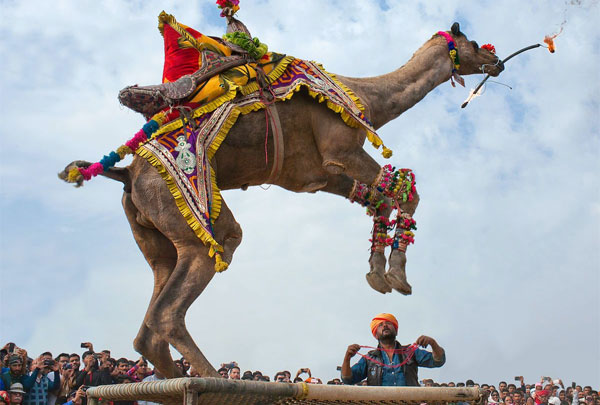
Bikaner’s long relationship with the camel becomes the center of attention during the Bikaner Camel Festival, when decorated animals, traditional musicians, folk performers, local communities, craftspeople, photographers, and travelers gather for a celebration rooted in Rajasthan’s desert identity. Bikaner lies on the edge of the Thar Desert in northern Rajasthan, where camels historically played an important role in transportation, trade, military movement, agriculture, and everyday life. The festival draws on that history while presenting visitors with cultural performances, camel-related activities, local food, traditional dress, music, dance, and the architectural heritage of one of Rajasthan’s major former princely cities.
For international travelers, the festival provides a different perspective from the better-known Pushkar Camel Fair. Pushkar combines livestock trading, pilgrimage traditions, the sacred lake, temples, and a large fairground atmosphere, whereas Bikaner Camel Festival is more directly organized around the camel’s place in Rajasthan’s desert culture. Visitors come primarily for the festival program, decorated camels, performances, processions, folk traditions, and the opportunity to combine these activities with Bikaner’s forts, palaces, old havelis, markets, and surrounding desert landscape. Travelers choosing between the two events should therefore see them as separate cultural experiences rather than interchangeable camel festivals.
Bikaner itself adds considerable value to the journey. Junagarh Fort, old merchant havelis, red sandstone architecture, local markets, traditional snacks, and the surrounding semi-desert environment give travelers enough reasons to stay beyond the main festival events. A well-planned visit should not consist of arriving for a camel performance and leaving immediately afterward. Spending several days in the city allows foreign visitors to understand why camels became so important to this part of Rajasthan and how Bikaner developed as a desert trading and military center.
The festival generally takes place during Rajasthan’s cooler winter travel season, making it practical to combine with Jaipur, Jodhpur, Jaisalmer, Mandawa, or other destinations. For photographers and travelers interested in traditional Rajasthan, Bikaner can provide a particularly rewarding addition to a longer route because it receives fewer international tourists than some of the state’s most famous cities.
Why Camels Are Important to Bikaner
The camel’s association with Bikaner developed from the realities of living and traveling in an arid region. Before modern roads, trucks, and motor vehicles transformed transportation, camels were particularly valuable because they could travel long distances through dry landscapes while carrying people and goods. Their ability to cope with heat and limited water made them well suited to the desert environment of western and northern Rajasthan. Traders, villagers, travelers, and military forces all depended on them in different ways.
Bikaner also has a significant connection with the use and breeding of camels for specialized purposes. The region’s relationship with camel husbandry developed over generations, creating knowledge concerning breeding, feeding, handling, training, and adapting animals to desert conditions. This background explains why a camel-centered festival is culturally relevant in Bikaner rather than being an artificial attraction added only for tourists.
Modern transportation has reduced the camel’s traditional economic role in many communities, which creates new challenges for camel owners and breeders. Festivals and responsible camel-related tourism can help maintain public interest in this heritage, although travelers should remain attentive to animal welfare when choosing any camel activity. Understanding the camel as part of Rajasthan’s historical economy makes the festival considerably more meaningful than viewing the animals only as decorative subjects for photographs.
What Happens During the Bikaner Camel Festival?
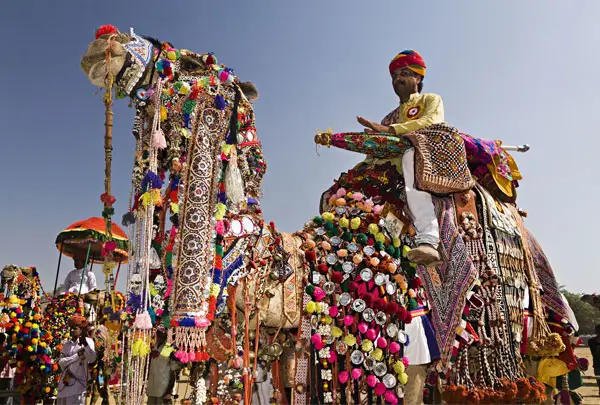
The exact annual program can change, but the Bikaner Camel Festival typically combines camel-centered events with Rajasthani cultural performances. Decorated camels are presented to spectators, and visitors may see animals wearing colorful bridles, patterned textiles, ornaments, bells, and carefully prepared decorative designs. Camel handlers and owners often spend considerable time preparing their animals, making the presentation itself an important part of the occasion.
Festival activities can include processions, camel competitions, demonstrations, folk music, traditional dance, local performances, and other public cultural programs. Some activities emphasize the appearance and decoration of the camels, while others demonstrate their training and relationship with handlers. Evening programs may introduce another side of Rajasthan through stage performances and traditional music.
Foreign travelers should check the confirmed program for their year rather than depending on an itinerary from a previous festival. Event locations, timings, performance schedules, and access arrangements can change. Building some flexibility into the itinerary helps visitors attend the strongest events without sacrificing Bikaner sightseeing.
Decorated Camels and Traditional Ornamentation
One of the festival’s strongest visual elements is the detailed decoration of the camels. Bright textiles, ornamental bridles, bells, beads, colorful patterns, and other traditional accessories transform the animals’ appearance. In some cases, considerable preparation is required before the camel enters the festival area, and observing handlers during quieter moments can be as interesting as watching the formal presentation.
For photographers, decorated camels provide strong opportunities for detailed images. Close photographs of textiles, bridles, patterns, camel features, and the relationship between the animal and its handler can complement wider images of the festival. Early or late daylight can be particularly useful because Rajasthan’s strong midday sun creates hard shadows and high contrast.
Visitors should never assume they can touch a camel or adjust its decorations for a photograph. Camels are large animals and may react unpredictably to unfamiliar people, crowds, noise, or sudden movement. Permission from the handler should always be obtained before approaching closely.
Camel Processions in Bikaner
Processional elements give the festival a sense of scale and connect the camel celebrations with Bikaner’s architectural environment. Decorated animals, handlers, musicians, performers, and traditionally dressed participants may form part of the public festivities, creating scenes that combine desert heritage with the city’s royal past.
For international visitors, the best photographs often come from showing the procession within its surroundings rather than concentrating exclusively on close-ups. Historic gateways, fort architecture, streets, and crowds can provide context that immediately identifies the event with Rajasthan.
Procession routes and timings should be checked locally for the relevant year. Roads may be temporarily closed or traffic diverted, making normal vehicle access difficult. Arriving early allows visitors to choose a sensible viewing position rather than attempting to push through the crowd after the procession begins.
A local guide can also help travelers understand who the participants are and which parts of the procession have particular cultural significance.
Camel Competitions and Festival Activities
Camel-related competitions are among the events that distinguish the Bikaner festival. Depending on the annual program, visitors may see activities highlighting decoration, handling, movement, training, or other aspects of camel culture.
The competitive element can create an energetic atmosphere as handlers present animals they have spent considerable time preparing. For foreign visitors, these events provide a closer look at the relationship between people and camels in Rajasthan.
Spectators should remain within designated areas and avoid standing too close to moving animals. A camel’s size and movement can be underestimated when visitors are concentrating through a camera viewfinder.
Travelers concerned about animal welfare should observe how animals are handled and avoid supporting activities that appear unnecessarily stressful or harmful. Responsible tourism should respect the animals that make the festival possible.
Rajasthani Folk Music at the Festival
The Bikaner Camel Festival is also an opportunity to hear traditional Rajasthani music. Rajasthan has a rich musical heritage shaped by hereditary musician communities, devotional traditions, court patronage, village celebrations, and the culture of the desert.
Performances may feature traditional string, percussion, and wind instruments along with powerful regional singing styles. The music often carries stories connected with love, devotion, local heroes, landscapes, family, and everyday life.
International visitors may not understand the lyrics, but the performance style, rhythm, and interaction between musicians remain accessible. A guide can provide context about the musical traditions and instruments, turning a stage performance into something more informative.
Travelers particularly interested in music should avoid leaving immediately after the main camel events because evening cultural programs can reveal a completely different side of the festival.
Folk Dance and Traditional Performances
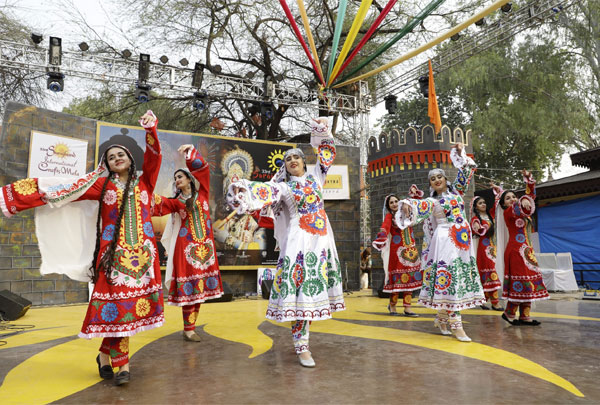
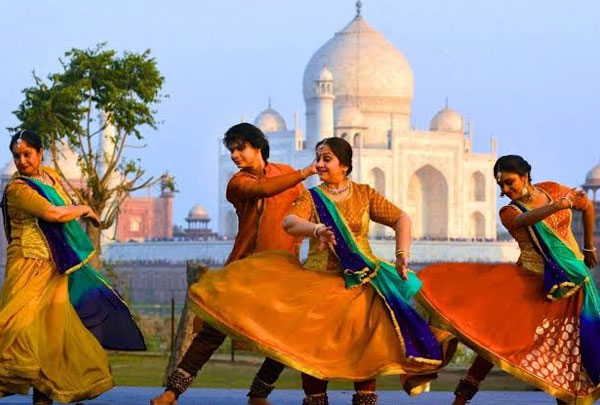
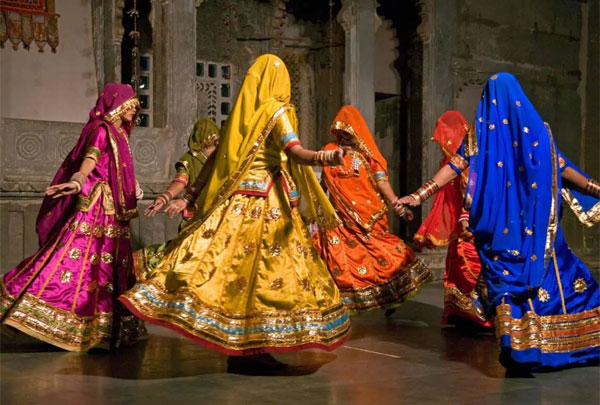
Rajasthani folk dance adds movement and color to the festival program. Depending on the scheduled performances, visitors may see regional dance traditions presented in elaborate clothing accompanied by live or recorded music.
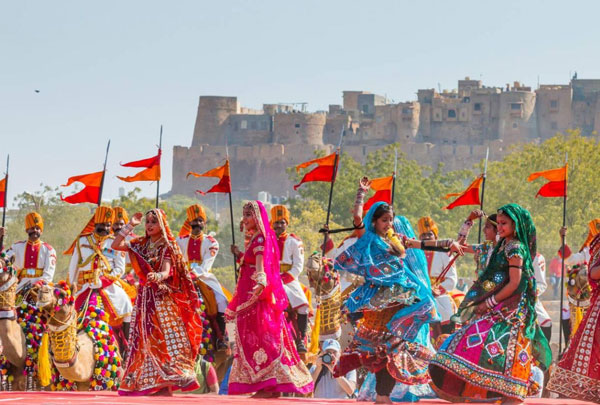
The swirling movement of traditional skirts, jewelry, rhythmic footwork, and colorful fabrics is visually striking, particularly under evening lighting. These performances also show the diversity of Rajasthan’s cultural traditions beyond the familiar image of forts and deserts.
Foreign travelers should remember that Rajasthan does not have one single folk culture. Dance, music, clothing, language, and customs differ between regions and communities. Bikaner belongs historically to the Bikaner region of northern Rajasthan, and its cultural setting differs from Mewar around Udaipur or Marwar around Jodhpur.
Learning these distinctions makes a Rajasthan journey much more meaningful.
Traditional Clothing During the Festival
The festival provides opportunities to see the strong colors and traditional clothing associated with Rajasthan. Men may wear turbans in different styles and colors, while women’s clothing can include bright ghagras, odhnis, saris, embroidery, jewelry, and regional decorative details.
For international photographers, traditional dress creates attractive portraits, but it is important not to treat local residents as props. Close portraits should be requested respectfully whenever practical.
Foreign visitors are welcome to purchase and wear Indian clothing if they wish, but there is no need to dress in a costume-like manner to attend the festival. Comfortable and respectful clothing is more important.
Anyone purchasing a turban or traditional textile should consider learning about its local significance rather than treating it solely as a souvenir.
Junagarh Fort – Bikaner’s Essential Heritage Site
No visit to Bikaner should focus only on the camel festival. Junagarh Fort is one of Rajasthan’s most impressive historic complexes and provides essential context for understanding Bikaner’s royal history.
Unlike many major Rajasthan forts built on prominent hilltops, Junagarh rises from relatively level ground. Its defensive walls contain palaces, courtyards, halls, decorative interiors, balconies, stone carving, paintings, and architectural additions created by different rulers.
The contrast between the fort’s substantial exterior and richly decorated interiors makes it particularly interesting for international visitors. Allowing enough time for the complex is important because rushing through only the most photographed rooms reduces the experience to a checklist.
Visiting the fort on a non-festival morning can work particularly well, leaving the afternoon and evening available for camel events and cultural programs.
Bikaner’s Royal and Desert History
Bikaner developed as an important princely center within Rajasthan’s desert region. Its location influenced trade, military strategy, architecture, water management, and relations with neighboring kingdoms.
The city’s rulers built forts, palaces, temples, and public structures while merchant communities constructed elaborate havelis. This combination of royal and commercial wealth remains visible in parts of the old city.
For foreign visitors, learning a little about Bikaner’s history helps connect the festival with its setting. Camels were relevant not only to village transport but also to trade and military movement across difficult desert terrain.
A guided heritage walk can therefore complement the festival particularly well, showing travelers the streets and buildings that developed within this historical environment.
Bikaner’s Old City and Merchant Havelis
Beyond Junagarh Fort, Bikaner contains old neighborhoods filled with narrow streets, temples, markets, and historic havelis built by wealthy merchant families. Elaborate façades, carved stonework, balconies, windows, and traditional street patterns provide strong architectural interest.
Walking through these areas gives travelers a slower and more intimate perspective on Bikaner. Festival crowds can be exciting, but quiet exploration of the old city reveals how local residents live around the historic buildings.
Photographers should pay attention to daily life as well as architecture. Shopkeepers opening businesses, food vendors preparing snacks, residents passing through lanes, and details of doors and façades can produce strong documentary images.
Some buildings remain private property, so visitors should never enter courtyards or residential spaces without permission.
National Research Centre on Camel
Travelers with a serious interest in camels may also hear about the National Research Centre on Camel near Bikaner, which is connected with research concerning camel breeds, health, production, and management.
A visit can provide a more educational perspective on the animal beyond festival decoration and entertainment. It can help travelers understand the different roles camels have played in desert communities and the challenges surrounding their future.
Visitor access, opening times, and available activities should be confirmed before including the center in an itinerary. It should not be assumed that all research areas are open to tourists.
Combining educational information with the festival can be particularly useful for families, students, photographers, or travelers interested in animal husbandry and desert ecology.
Responsible Camel Tourism and Animal Welfare
International travelers increasingly consider animal welfare when deciding which tourism activities to support. This is particularly relevant at festivals centered around animals.
Visitors should observe whether camels appear healthy, have access to water and rest, and are handled appropriately. Activities that involve obvious distress, excessive loading, harsh treatment, or unsafe conditions should not be supported simply because they are presented as traditional.
Travelers considering a camel ride or desert excursion should choose operators that treat animals responsibly. Shorter, well-managed activities with healthy animals and appropriate rest are preferable to experiences that prioritize tourist volume over welfare.
Respecting camel owners is also important. Many families depend economically on their animals, and responsible tourism should support better standards rather than dismissing the communities involved.
Bikaner Camel Festival vs Pushkar Camel Fair
Foreign travelers sometimes assume the Bikaner Camel Festival and Pushkar Camel Fair provide essentially the same experience. They do not.
Pushkar is a major pilgrimage destination centered on a sacred lake and temples, and its famous fair historically combines livestock trading, religious activity, markets, competitions, and tourism. The scale and atmosphere can be enormous.
Bikaner’s event is more specifically focused on celebrating camels and Rajasthan’s desert culture through organized festival activities, performances, processions, and competitions. Bikaner also offers a different urban and historical setting dominated by Junagarh Fort and the city’s desert heritage.
Travelers deeply interested in Rajasthan festivals can attend both in different trips or seasons, but one should not be treated as a substitute for the other.
Best Time to Attend the Bikaner Camel Festival
The Bikaner Camel Festival is generally held during January, when Rajasthan is in its winter season. The exact annual dates and program should always be confirmed before booking flights, hotels, or long-distance transportation.
January is one of the most comfortable months for sightseeing in Bikaner. Daytime conditions are often pleasant for outdoor activities, but desert temperatures can fall considerably after sunset and during early mornings.
The cooler weather makes it easier to spend long periods outside photographing processions and watching performances. It also makes Bikaner easy to combine with other Rajasthan destinations.
Foreign visitors should ideally arrive before the first important festival event rather than scheduling a long road transfer on the same morning.
Weather and What to Pack
Winter weather in Bikaner can surprise international visitors who associate Rajasthan only with extreme heat. Sunny afternoons may be comfortable, but early mornings and nights can feel distinctly cold.
Layered clothing works best. A light shirt or sweater may be enough during warmer daylight hours, while a jacket becomes useful after sunset. Travelers attending outdoor evening performances should prepare for dropping temperatures.
Comfortable closed shoes are recommended because festival grounds can be dusty and sightseeing involves considerable walking. Sunglasses, sunscreen, lip balm, and a hat remain useful even in winter because the desert sun can be strong.
Photographers should also carry protection for equipment against dust.
Photography at the Bikaner Camel Festival
The festival is particularly suitable for travel and documentary photographers. Decorated camels, handlers, traditional turbans, folk dancers, musicians, fort architecture, crowds, and desert landscapes provide a wide variety of subjects.
Early morning and late afternoon generally provide softer light, while midday sun can create strong contrast. Evening programs offer opportunities for performance photography but may require cameras capable of handling lower light.
A moderate telephoto lens is useful for photographing animals and handlers without standing too close. Wider lenses can capture camels against architecture or show the scale of processions and festival grounds.
Visitors should remain aware of their surroundings while looking through the viewfinder. Moving camels require space, and photographers should never step into an animal’s path to obtain a particular angle.
Food in Bikaner
Bikaner is well known in India for its snacks and sweets, making food an important part of the visit. Bikaneri bhujia is particularly famous and has become associated with the city far beyond Rajasthan.
Travelers can also try kachori, sweets, vegetarian Rajasthani dishes, breads, lentils, and regional preparations. A guided food walk can be useful for visitors who want to understand what they are eating rather than randomly choosing stalls.
Foreign travelers with sensitive stomachs should select busy, clean establishments where food is freshly prepared. Dairy-based sweets require particular attention to freshness.
Safe bottled or properly filtered water should be used throughout the trip, even during cooler winter weather when travelers may feel less thirsty.
How to Reach Bikaner
Bikaner is connected with other Rajasthan and North India destinations by road and rail. The most suitable route depends on the traveler’s wider itinerary.
Many international visitors reach Bikaner by private vehicle as part of a Rajasthan tour. It can be connected with Jaipur, Mandawa, Jodhpur, or Jaisalmer, although driving distances should be planned realistically.
Rail can also be useful depending on the route and availability. Air connectivity may vary, so current flight options should be checked rather than assumed.
A private vehicle remains valuable once in the region because festival locations, heritage attractions, and surrounding sites may not all be conveniently connected by public transport.
Where to Stay in Bikaner During the Festival
Bikaner offers heritage hotels, palace-style properties, modern hotels, guesthouses, and mid-range accommodation. For international travelers, a heritage property can complement the festival by extending the historical atmosphere beyond sightseeing hours.
Location should be considered carefully. A hotel near major attractions can reduce local travel, while properties outside the congested center may provide quieter surroundings and easier vehicle access.
During the Camel Festival, preferred rooms can sell earlier than during ordinary weeks. Travelers seeking a particular heritage hotel or higher accommodation category should reserve in advance.
It is also useful to check heating arrangements for winter nights, as visitors sometimes focus only on air conditioning when booking Rajasthan hotels.
How Many Nights Should Foreign Travelers Spend in Bikaner?
A minimum of two to three nights works well for most visitors attending the Camel Festival. Three nights provides a more comfortable schedule when the traveler wants to combine festival events with Junagarh Fort, the old city, local food, markets, and additional camel-related or heritage attractions.
Photographers may benefit from another night because festival light, positions, crowds, and schedules can change between events.
A single-night visit is generally too rushed if arrival and departure involve long drives. The traveler may spend more time reaching Bikaner than understanding the destination.
Bikaner works best when treated as a genuine Rajasthan destination rather than merely a festival stop between Jaipur and Jaisalmer.
Combining Bikaner with Jaipur
Jaipur and Bikaner can form part of a practical Rajasthan route. Jaipur introduces international travelers to the Pink City, Amber Fort, City Palace, Jantar Mantar, markets, crafts, and Rajput architecture before the journey moves farther into Rajasthan.
Bikaner then provides a different atmosphere with fewer large tourist groups, desert-region architecture, Junagarh Fort, camel traditions, and the festival.
The road journey requires adequate time, so sightseeing should not be scheduled aggressively on both ends of the transfer.
Travelers can also include Mandawa or another Shekhawati destination between Jaipur and Bikaner when enough days are available.
Combining Bikaner with Jaisalmer
Bikaner pairs naturally with Jaisalmer for travelers wanting a stronger desert-focused itinerary. After the Camel Festival, visitors can continue toward Jaisalmer for its living fort, merchant havelis, old city, desert landscapes, and Sam Sand Dunes.
The two destinations show different aspects of Rajasthan’s desert heritage. Bikaner has its camel traditions, Junagarh Fort, and northern desert culture, while Jaisalmer offers golden sandstone architecture and a landscape deeper within the Thar region.
International visitors should allow multiple nights in each city rather than treating them as quick roadside stops.
A private vehicle makes the combination particularly practical and allows for carefully selected stops along the way.
Combining Bikaner with Jodhpur
Another strong route links Bikaner with Jodhpur, the historic center of Marwar. Jodhpur’s Mehrangarh Fort, blue-painted old-city areas, markets, palaces, and regional cuisine create a strong contrast with Bikaner.
Travelers can then continue toward Udaipur or Jaisalmer depending on their overall route.
A longer itinerary might follow Jaipur – Bikaner – Jaisalmer – Jodhpur – Udaipur, providing a broad introduction to Rajasthan’s different former kingdoms and landscapes.
The Camel Festival date should be fixed first, with the rest of the journey arranged around it.
Planning a Bikaner Camel Festival Tour with India Fortune Journey
A successful Bikaner Camel Festival tour requires more than reserving a hotel for the festival dates. The strongest itinerary should account for confirmed event timings, procession locations, photography conditions, winter weather, local sightseeing, transportation, and the traveler’s wider Rajasthan route.
India Fortune Journey can arrange private transportation, suitable hotels, guided Bikaner sightseeing, festival visits, old-city walks, and onward travel to Jaipur, Jodhpur, Jaisalmer, Mandawa, Udaipur, or other Rajasthan destinations. The schedule can be adapted for photographers, families, couples, small private groups, or first-time international visitors.
Travelers particularly interested in photography can spend additional time around camel preparations and cultural programs rather than moving constantly between monuments. Visitors interested in history can devote more time to Junagarh Fort, old havelis, and Bikaner’s royal heritage. Those interested in desert culture can combine the festival with responsible camel-related experiences and a longer journey toward Jaisalmer.
The Bikaner Camel Festival in Rajasthan becomes most rewarding when the camel is understood as part of the region’s history rather than simply a festival attraction. Its role in transport, trade, military movement, rural livelihoods, and desert survival gives the celebration a cultural foundation. Combined with Bikaner’s architecture, food, folk traditions, and winter atmosphere, the festival offers international travelers a distinctive reason to include this northern Rajasthan city in a longer India journey.
Fair Festivals
Personalized Travel Experiences Across India
Tell us about your
Travel Plans
Share your travel preferences and our destination specialists will create a personalized itinerary along with the best travel recommendations and pricing. Most inquiries receive a detailed response within 24 hours with no obligation.
Have a Question?
Whether you're planning a private tour, luxury holiday, family vacation, chauffeur-driven journey, hotel booking, or a customized India itinerary, our travel experts are ready to assist you.
Share your requirements and we'll provide the best travel options, recommendations, and pricing tailored to your needs.