
- /
- Fair & Festivals
- / Hola Mohalla – Anandpur Sahib, Punjab
Hola Mohalla – Anandpur Sahib, Punjab
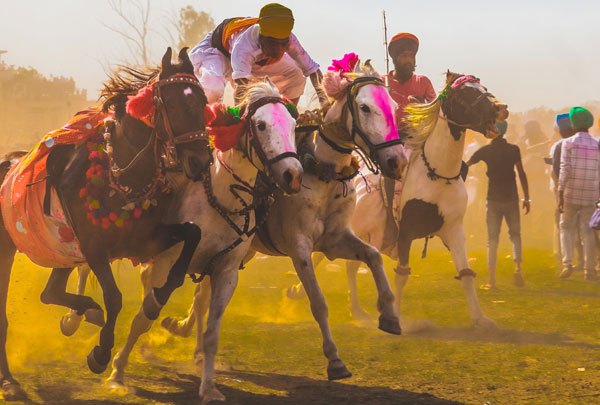
Each spring, Anandpur Sahib in Punjab becomes the center of one of the Sikh calendar’s most distinctive gatherings. Known as Hola Mohalla, the festival combines religious devotion, Sikh history, martial traditions, community service, processions, sacred music, horsemanship, traditional dress, and large gatherings of pilgrims. For international travelers, it provides an opportunity to see traditions connected with the Khalsa in the city where some of the most important events in Sikh history took place.
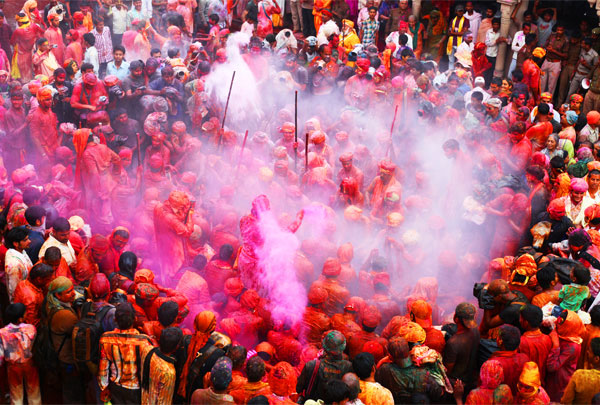
The atmosphere of Hola Mohalla differs considerably from the color-centered Holi celebrations that take place across much of North India around the same period. Although the names and timing are related historically, Hola Mohalla is primarily a Sikh religious and martial gathering. Visitors come to Anandpur Sahib to pray at important gurdwaras, listen to kirtan and religious discourse, watch martial demonstrations, participate in langar, observe Nihang Sikh traditions, and join the enormous flow of pilgrims moving through the sacred city.
For a foreign traveler seeing the festival for the first time, the scale can be surprising. Temporary kitchens feed visitors throughout the day, religious camps are established, processions move through the area, horses and traditionally dressed participants appear among modern crowds, and important Sikh shrines remain active from early morning until late at night. The festival cannot be understood properly by attending only a martial arts demonstration. Its religious, historical, and community dimensions are equally important.
A carefully planned Hola Mohalla tour should therefore allow enough time for Anandpur Sahib itself. Learning about Guru Gobind Singh, visiting Takht Sri Kesgarh Sahib, observing langar and seva, understanding the Nihang tradition, and then watching martial events provides a much more complete picture than arriving only for a few hours of photography.
What Is Hola Mohalla?
Hola Mohalla is an important Sikh festival traditionally associated with Guru Gobind Singh, the tenth Sikh Guru. It developed as an occasion for Sikhs to demonstrate physical readiness, horsemanship, martial skill, discipline, courage, and collective organization alongside religious devotion.
The festival takes place around the period of Holi, but its character is distinct. Rather than focusing primarily on colored powder and playful celebration, Hola Mohalla emphasizes the martial and spiritual traditions of the Sikh community.
Religious gatherings, prayers, kirtan, recitation, community meals, processions, martial demonstrations, and other activities take place during the festival period. Large numbers of pilgrims travel to Anandpur Sahib, turning the city and surrounding areas into a major center of Sikh religious life.
For international visitors, the best way to approach Hola Mohalla is as a combination of pilgrimage, history, martial heritage, and community participation, not simply as a cultural show.
History of Hola Mohalla
Hola Mohalla is traditionally traced to the period of Guru Gobind Singh in the early eighteenth century. Guru Gobind Singh placed strong emphasis on both spiritual discipline and the ability to defend justice and the community.
The festival developed in this historical setting as an opportunity for Sikhs to practice and demonstrate martial abilities. Mock battles, horsemanship, weapons skills, physical exercises, and organized displays helped develop discipline and preparedness.
This background remains visible in the modern festival. Martial demonstrations are not disconnected performances created for tourism; they relate to a historical Sikh tradition in which spiritual commitment and physical courage were understood as complementary qualities.
International travelers who learn this background before watching the demonstrations will have a much better understanding of what the participants represent.
Why Anandpur Sahib Is Important
Anandpur Sahib is one of Sikhism’s most important religious centers and is inseparably connected with the life of Guru Gobind Singh. The city holds particular importance because of the formation of the Khalsa in 1699.
The Khalsa represents a formally initiated Sikh community committed to religious discipline, equality, courage, service, and the defense of justice. The events associated with its creation are fundamental to Sikh history.
This makes Anandpur Sahib an especially meaningful location for Hola Mohalla. Visitors are not attending a festival in a city chosen simply for its available space; they are standing in a place deeply connected with the religious and martial traditions being celebrated.
Foreign travelers interested in history should therefore allow time to understand Anandpur Sahib outside the busiest festival events.
Takht Sri Kesgarh Sahib
At the religious heart of Anandpur Sahib stands Takht Sri Kesgarh Sahib, one of the most important seats of authority in Sikhism. It is closely associated with Guru Gobind Singh and the creation of the Khalsa.
During Hola Mohalla, enormous numbers of devotees visit the gurdwara to pray, listen to sacred hymns, and pay their respects. The flow of pilgrims can continue for long periods, particularly on the principal festival days.
International visitors are generally welcome but must follow Sikh religious etiquette. Shoes are removed before entering, heads must be covered, and visitors should dress modestly. Instructions from gurdwara volunteers should be followed without argument, particularly when crowd-control systems are operating.
Photography should never interfere with worship. Rules may differ between exterior areas and religious interiors, so visitors should check before using a camera.
Guru Gobind Singh and Hola Mohalla
Understanding Guru Gobind Singh is essential to understanding Hola Mohalla. The tenth Sikh Guru played a defining role in shaping Sikh religious and community identity.
His establishment of the Khalsa in 1699 emphasized devotion, discipline, equality, courage, and readiness to oppose injustice. The Sikh ideal that emerged from this period did not separate spiritual practice from responsibility toward society.
Hola Mohalla reflects this combination. Prayer and sacred music take place alongside martial demonstrations; community kitchens operate beside processions; and religious devotion exists alongside visible symbols of physical courage.
For foreign visitors, this relationship explains why the festival can move rapidly from a quiet gurdwara setting to the dramatic sound and movement of horses, drums, martial displays, and large processions.
Nihang Sikhs During Hola Mohalla
Among the most recognizable participants at Hola Mohalla are Nihang Sikhs, whose distinctive blue clothing, traditional turbans, weapons, horses, and martial appearance attract considerable attention from photographers and visitors.
The Nihang tradition has historical connections with Sikh warrior culture. Their appearance is not simply festival costume. Clothing, weapons, turbans, and religious practices carry meanings connected with their identity and history.
Some Nihang turbans can be particularly elaborate and may incorporate traditional Sikh symbols or weapons. For a foreign visitor unfamiliar with Sikh traditions, the visual appearance can be striking, but it should be approached with respect rather than treated as an exotic spectacle.
Photographers should ask permission before making close portraits whenever possible. Touching a person’s turban, weapons, horse, or religious items without permission is inappropriate.
Gatka and Sikh Martial Arts
Gatka is one of the martial traditions commonly associated with Sikh culture and is a major attraction for many visitors during Hola Mohalla. Participants may demonstrate coordinated movements using traditional weapons and defensive techniques.
Displays can include rapid footwork, spinning movements, mock combat, and demonstrations involving different traditional weapons. The speed and control required can be impressive, particularly when performed by experienced practitioners.
Foreign visitors should maintain a safe distance. A martial demonstration requires space, and photographers should never enter a performance area merely to obtain a closer image.
The best viewing position allows the entire movement to be seen rather than focusing only on weapons. Understanding Gatka as a disciplined martial tradition also prevents it from being misrepresented as uncontrolled fighting.
Horsemanship at Hola Mohalla
Horses have a strong historical association with Sikh martial traditions, and horsemanship is one of the most dramatic aspects of Hola Mohalla. Skilled riders may demonstrate speed, control, balance, and traditional riding techniques before large crowds.
The combination of horses, traditional clothing, turbans, dust, movement, and spectators creates powerful visual scenes. For travel photographers, these events can be among the festival’s most rewarding subjects.
They also require caution. Visitors should remain behind designated boundaries and avoid standing close to a horse’s path. Sudden crowd movement or noise can create additional risks around animals.
Photographers using longer lenses can capture action without interfering with riders or placing themselves in unsafe positions.
Martial Displays and Mock Battles
Hola Mohalla historically developed in connection with military exercises and demonstrations of readiness. Modern celebrations preserve this martial identity through displays that may include weapons skills, physical exercises, mock combat, and other demonstrations.
The exact program can vary from year to year, and visitors should check the current festival arrangements rather than depending on old schedules.
These displays are among the most popular events with spectators, so viewing areas can become crowded well before the activity begins. Arriving early is particularly important for photographers.
Foreign visitors should follow local security instructions and never enter restricted performance areas. Traditional weapons used in demonstrations should be treated seriously even when the event has a celebratory atmosphere.
Nagar Kirtan and Religious Processions
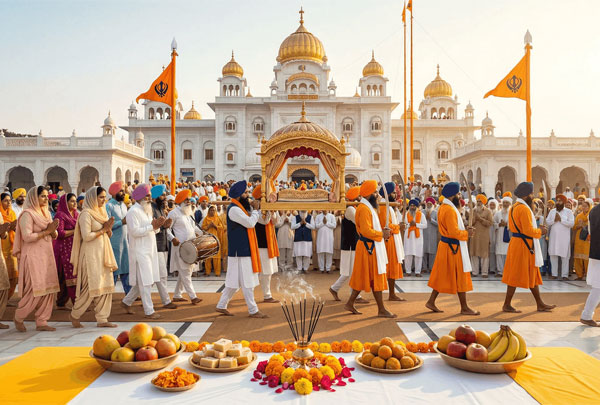
Religious processions form another important part of the festival. Nagar Kirtan involves devotional singing and the ceremonial presence of the Guru Granth Sahib, Sikhism’s sacred scripture.
The Panj Pyare, or Five Beloved Ones, may have a prominent position in important Sikh processions. Their role relates directly to the founding of the Khalsa by Guru Gobind Singh.
Devotees may walk alongside the procession while singing hymns, performing seva, distributing water, or assisting with crowd management. The atmosphere can be devotional even when enormous numbers of people are present.
International travelers should avoid referring to a Nagar Kirtan simply as a parade. It is a religious procession, and behavior should reflect that distinction.
Kirtan and the Spiritual Side of Hola Mohalla
The dramatic martial images of Hola Mohalla receive much international attention, but kirtan, or devotional singing, is equally important to understanding the festival.
Inside gurdwaras and religious gathering spaces, visitors may hear hymns from Sikh scripture performed with musical accompaniment. Pilgrims sit quietly, listen, pray, and participate in a completely different atmosphere from the outdoor martial demonstrations.
Foreign travelers should deliberately include time for this quieter side of the festival. Moving between kirtan, langar, processions, and martial activities reveals how different aspects of Sikh life coexist during Hola Mohalla.
Even visitors who do not understand Punjabi can appreciate the atmosphere, while a knowledgeable guide can explain the basic context of the hymns and religious practices.
Langar During Hola Mohalla
One of the most impressive aspects of Hola Mohalla is the scale of langar, the Sikh tradition of providing free community meals without distinction of religion, nationality, caste, gender, or social status.
During the festival, temporary and permanent community kitchens serve enormous numbers of pilgrims. Volunteers prepare vegetables, make bread, cook meals, serve water, distribute food, clean utensils, and maintain dining spaces.
International visitors are generally welcome to eat at langar. They should accept only as much food as they can finish, sit where directed, and avoid wasting food.
Watching the organization required to feed such large crowds provides a practical demonstration of Sikh values of equality, generosity, and community service.
Seva – Voluntary Service During the Festival
Seva, or selfless voluntary service, is visible throughout Hola Mohalla. People assist with food, cleaning, water distribution, footwear, crowd movement, transportation, and numerous other tasks.
For foreign visitors, this is one of the most important aspects of the festival to observe because it shows that Hola Mohalla is created not only by official organizers but also through large-scale community participation.
Visitors who want to assist should ask volunteers where help is appropriate. Joining respectfully in a simple task can provide more cultural understanding than watching the festival only from behind a camera.
Seva should not be treated as a staged tourist activity. The purpose is service rather than obtaining a photograph or social-media moment.
Food at Hola Mohalla
Langar provides the most culturally significant food experience during the festival, but visitors will also encounter food stalls and local eateries around Anandpur Sahib.
Meals served at gurdwaras are vegetarian and generally simple, allowing people from different backgrounds to eat together. Dal, vegetables, roti, rice, and other dishes may be served depending on the location and day.
Foreign visitors should carry safe drinking water where appropriate and remain hydrated, particularly if spending many hours walking through crowded festival areas.
Travelers with serious allergies should exercise additional caution because large community kitchens may not be able to provide detailed ingredient information for every dish.
When Is Hola Mohalla Celebrated?
Hola Mohalla takes place around the Holi period, generally during February or March, according to the lunar calendar. Exact dates change each year.
International travelers should confirm the specific annual schedule before booking flights and hotels. The festival extends across multiple days, but particular processions, martial demonstrations, and major gatherings may occur at specific times.
Arriving only for a few hours on the assumption that every activity takes place continuously can result in missing important events.
A stay covering multiple festival days provides a much better chance to see both religious and martial traditions.
How Many Days Should Foreign Travelers Spend at Hola Mohalla?
A minimum of two to three days around Anandpur Sahib is useful for international visitors whose main purpose is the festival. A longer stay may be appropriate for photographers, researchers, or travelers with a strong interest in Sikh history.
One day can focus more heavily on gurdwaras, religious history, kirtan, and langar. Another can be planned around processions and martial demonstrations.
The schedule should remain flexible because crowds and road restrictions can affect movement. Trying to leave Anandpur Sahib immediately after a major event for a long road journey is not always comfortable.
Additional nights can be spent in Chandigarh or another suitable base depending on the wider itinerary.
What Foreign Travelers Should Wear
Modest, comfortable clothing is recommended. International visitors should be prepared to cover their heads whenever entering a gurdwara, and both men and women must follow this requirement.
A lightweight scarf is useful, although suitable head coverings may also be available at religious sites. Shoulders and knees should remain covered.
Comfortable footwear is essential because visitors may walk considerable distances between parking areas, gurdwaras, camps, processions, and event locations. Shoes will need to be removed before entering religious spaces.
Weather can vary during February and March, so layered clothing is useful, particularly for early mornings and evenings.
Gurdwara Etiquette During Hola Mohalla
Visitors should remove their shoes and cover their heads before entering gurdwaras. Feet may need to be washed at the entrance, and everyone should follow the same procedures regardless of nationality.
Smoking, tobacco, alcohol, and intoxicants are inappropriate within Sikh religious complexes. Visitors should never enter while carrying or using such products.
When approaching the Guru Granth Sahib, foreign visitors can follow local guidance without feeling pressured to imitate religious practices they do not understand. Respectful behavior is more important than copying other worshippers.
Sitting quietly and observing is perfectly acceptable. Visitors should avoid pointing their feet toward the sacred scripture and should follow instructions concerning seating areas.
Photography at Hola Mohalla
Hola Mohalla is an extraordinary festival for photographers because of the combination of Nihang Sikhs, horses, martial arts, processions, turbans, religious gatherings, community kitchens, and historic gurdwaras.
Outdoor public events provide extensive photographic possibilities, but religious interiors may have restrictions. Visitors should check before taking photographs inside gurdwaras.
A telephoto lens can be particularly useful for horsemanship and martial displays, while a wider lens can capture processions and the scale of the crowds.
Photographers should never ask participants to handle sacred objects inappropriately or interrupt prayer for a portrait. Documentary photography works best when the visitor respects the activity rather than trying to control it.
Safety During Hola Mohalla
The principal practical challenge for international visitors is the enormous crowd. Roads become heavily congested, pedestrian areas fill quickly, and access routes can change according to local crowd-management plans.
Travelers should keep passports and unnecessary valuables securely at their hotel. Phones, cameras, wallets, and cash should remain in secure bags.
Around horses and martial demonstrations, visitors must pay attention to designated boundaries. Standing in an action area for a photograph can be dangerous.
Families and groups should agree on a meeting point before entering crowded locations because mobile communication can become difficult.
Traveling to Anandpur Sahib
Anandpur Sahib is located in Punjab and is accessible by road and rail. For many international visitors, Chandigarh provides the most practical major gateway.
Travelers can reach Chandigarh from Delhi by air, train, or road and continue to Anandpur Sahib by private vehicle. Road conditions and festival traffic should be considered when estimating travel times.
Some travelers may also combine Anandpur Sahib with Amritsar as part of a broader Sikh heritage journey.
During Hola Mohalla, the final approach to the festival area may involve traffic restrictions and remote parking. A private driver familiar with local arrangements can make logistics considerably easier.
Where to Stay During Hola Mohalla
Accommodation in and immediately around Anandpur Sahib becomes heavily demanded during the festival. Options may be more limited than in major tourist cities, particularly for international travelers seeking higher hotel standards.
For this reason, accommodation should be planned well in advance. Some visitors may choose to stay within practical driving distance, depending on traffic conditions and the festival schedule.
Chandigarh provides a much wider range of upscale and international-standard hotels, but daily travel from Chandigarh should be considered carefully because festival traffic can substantially increase journey times.
The best arrangement depends on whether comfort, immediate festival access, or hotel standards are the main priority.
Virasat-e-Khalsa
A visit to Virasat-e-Khalsa can add important historical and cultural context to an Anandpur Sahib journey. The museum complex presents aspects of Sikh history and the heritage of Punjab through architecture, exhibits, and interpretive displays.
International travelers who know relatively little about Sikhism may find the museum particularly useful before attending the main Hola Mohalla events.
Opening conditions can be affected by holidays, festival crowds, or local arrangements, so the visit should be confirmed rather than assumed.
The building itself is also architecturally striking and provides a different experience from the historic gurdwaras.
Combining Hola Mohalla with Amritsar
Anandpur Sahib and Amritsar form a strong combination for travelers interested in Sikh heritage. Amritsar provides the Golden Temple, Jallianwala Bagh, the Partition Museum, historic markets, Punjabi cuisine, and the Attari-Wagah border.
Anandpur Sahib provides deeper context regarding Guru Gobind Singh, the Khalsa, and Sikh martial traditions. Seeing both cities gives international visitors a broader understanding of Sikh history than visiting the Golden Temple alone.
Enough days should be allocated because road travel and festival crowds make a rushed itinerary difficult.
A private vehicle can connect the destinations while allowing additional stops according to the traveler’s interests.
Combining Hola Mohalla with Chandigarh
Chandigarh is a practical addition because it provides transport connections and a very different architectural environment. The planned city is known internationally for its modernist urban design and architecture associated with Le Corbusier.
Visitors can use Chandigarh as an arrival or departure point while including the Capitol Complex, Rock Garden, Sukhna Lake, and selected city sights.
This creates an interesting contrast with Anandpur Sahib: one destination is deeply associated with Sikh religious history, while the other represents twentieth-century urban planning and modern architecture.
The combination works particularly well for international travelers arriving from Delhi.
Combining Hola Mohalla with a North India Tour
A longer route can connect Hola Mohalla with major North India destinations. Depending on available time, a journey can follow:
Delhi – Chandigarh – Anandpur Sahib – Amritsar – Delhi – Agra – Jaipur
Travelers interested in the Himalayas can instead continue from Punjab toward Dharamshala, where Tibetan Buddhist culture provides another distinct religious perspective.
The exact itinerary should be organized around the confirmed Hola Mohalla dates. Festival days should remain fixed first, with sightseeing destinations arranged around them.
This is particularly important for overseas visitors with fixed international flights.
Planning a Hola Mohalla Tour with India Fortune Journey
A successful Hola Mohalla tour for international travelers requires more preparation than a conventional sightseeing visit to Punjab. Accommodation demand increases sharply, roads become crowded, event locations may require walking, and the most important religious and martial activities occur according to specific festival arrangements.
India Fortune Journey can arrange private transportation, accommodation, local guiding, Anandpur Sahib sightseeing, festival visits, and extensions to Chandigarh, Amritsar, Dharamshala, Delhi, Agra, Jaipur, or other North India destinations.
The itinerary can also be adapted according to the traveler’s interests. Photographers may need more time around martial demonstrations and processions, while travelers interested in religion can spend longer at Takht Sri Kesgarh Sahib, kirtan gatherings, langar, and historical sites.
Hola Mohalla becomes far more meaningful when its different elements are understood together. Guru Gobind Singh and the Khalsa provide the historical foundation; Anandpur Sahib provides the sacred setting; Nihang traditions and Gatka preserve the martial identity; kirtan provides the spiritual dimension; and langar and seva demonstrate Sikh principles through everyday action. Seeing all of these elements gives international visitors a much deeper understanding of the festival than focusing only on its most dramatic photographs.
Fair Festivals
Personalized Travel Experiences Across India
Tell us about your
Travel Plans
Share your travel preferences and our destination specialists will create a personalized itinerary along with the best travel recommendations and pricing. Most inquiries receive a detailed response within 24 hours with no obligation.
Have a Question?
Whether you're planning a private tour, luxury holiday, family vacation, chauffeur-driven journey, hotel booking, or a customized India itinerary, our travel experts are ready to assist you.
Share your requirements and we'll provide the best travel options, recommendations, and pricing tailored to your needs.