
- /
- Fair & Festivals
- / Holi Festival in Mathura and Vrindavan
Holi Festival in Mathura and Vrindavan
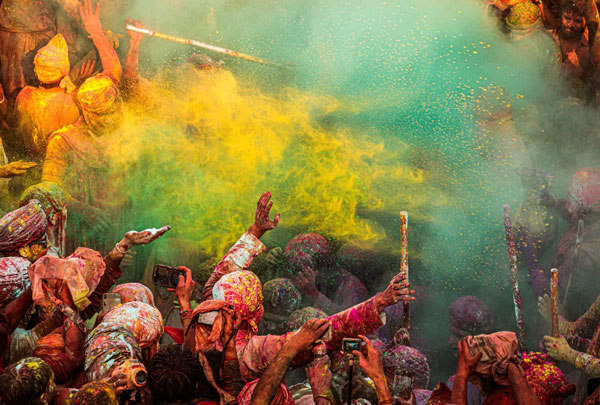
Few celebrations in North India transform an entire region as completely as Holi in Mathura and Vrindavan. Streets fill with color, temple courtyards become gathering places, devotional songs continue through the day, and thousands of residents, pilgrims, and visitors take part in traditions connected with Lord Krishna.
For international travelers, celebrating Holi in Mathura and Vrindavan is very different from attending a single organized festival. Holi here unfolds across several locations and dates. Different temples and towns follow their own customs, and celebrations can begin well before the main Holi day. Understanding where to go, what type of celebration takes place, and how to move safely through crowded areas makes a major difference to the visit.
Mathura and Vrindavan lie in the Braj region of Uttar Pradesh, the area traditionally associated with the childhood and life of Lord Krishna. This religious connection gives Holi here a significance that goes far beyond throwing colored powder. Music, temple rituals, flowers, processions, devotional gatherings, and community celebrations all form part of the festival period.
For travelers interested in Indian religion, photography, local traditions, and living culture, a carefully planned Mathura Vrindavan Holi tour can become one of the most memorable parts of a North India journey.
Why Is Holi So Important in Mathura and Vrindavan?
Holi is celebrated throughout India, but the Braj region holds a particularly important place in Holi traditions because of its association with Lord Krishna and Radha.
Stories connected with Krishna describe playful celebrations involving colors in the villages and communities around Braj. These traditions remain closely connected with Holi celebrations in Mathura, Vrindavan, Barsana, Nandgaon, and surrounding places.
As a result, Holi in this region is not confined to one afternoon. The festive period includes temple events, devotional singing, the use of colored powders and flowers, religious ceremonies, and celebrations in different towns.
International visitors should therefore think of Holi in Mathura and Vrindavan as a festival season rather than simply one day of throwing colors.
Holi Celebrations in Mathura
Mathura is regarded as the birthplace of Lord Krishna and remains one of India’s major pilgrimage cities. During Holi, its temples, markets, lanes, and public spaces become particularly busy.
The area around Shri Krishna Janmabhoomi attracts large numbers of pilgrims. Religious activities and Holi celebrations bring visitors from across India, while streets around important temple areas can become densely crowded.
Mathura also has public Holi events and processions depending on the annual program. Traditional music, drums, colored powder, decorated streets, and groups of participants create a lively atmosphere.
Foreign visitors who want to photograph the celebrations should plan their movements carefully. Large crowds can make it difficult to move quickly between locations, and traffic restrictions may operate around important areas.
Rather than trying to cover every event, it is often better to select a few important locations and spend enough time at each one.
Holi Celebrations in Vrindavan
Vrindavan is closely associated with Krishna’s youth and contains numerous temples dedicated to Krishna and Radha. Holi celebrations here often have a strong devotional character.
Temples become central gathering points. Devotees sing bhajans, colored powder is used during celebrations, and large crowds gather for special events.
One of the best-known locations is Banke Bihari Temple, where Holi celebrations draw substantial numbers of devotees. The lanes surrounding the temple can become extremely crowded, particularly during major festival periods.
Visitors should not expect a quiet temple sightseeing experience during these days. The atmosphere can be intense, with colors in the air, chanting, music, tightly packed crowds, and constant movement through narrow streets.
This energy is part of the appeal, but it also means foreign visitors should arrive prepared rather than treating the visit like an ordinary sightseeing stop.
Phoolon Wali Holi – Holi with Flowers
One of Vrindavan’s distinctive traditions is Phoolon Wali Holi, or Holi played with flowers.
Instead of relying primarily on colored powders, flower petals are showered during the celebration. The event is associated particularly with temple traditions and provides a visually different side of Holi.
For international travelers who want to see the religious and cultural character of Holi rather than only street celebrations, flower Holi can be particularly interesting.
The event can be relatively brief compared with a full day of public celebrations, and temple access can become difficult because of the number of devotees. Arriving early and understanding the scheduled timing is therefore important.
Widow’s Holi in Vrindavan
Vrindavan has also become known for Holi celebrations involving widows who live in the holy city. Traditionally, widows in many conservative communities faced social restrictions that prevented participation in celebrations and the wearing of bright colors.
Organized Holi celebrations involving widows have attracted considerable attention because they represent a visible change from those older restrictions.
For visitors and photographers, this should be approached with sensitivity. The participants should not be treated simply as photographic subjects. Respectful behavior and permission for close portraits remain important.
Holika Dahan – The Evening Before Holi
The evening before the principal color celebrations is marked by Holika Dahan, when bonfires are lit in communities across the region.
The ritual is connected with the Hindu story of Prahlada and Holika and symbolizes the victory of good over evil.
For foreign visitors, attending Holika Dahan provides useful cultural context before the energetic celebrations of the following day. Families and communities gather around bonfires, religious rituals may be performed, and the atmosphere differs considerably from daytime color celebrations.
A festival itinerary that includes both Holika Dahan and the following morning’s Holi activities provides a more complete understanding of the occasion.
What International Travelers Should Expect on Holi Day
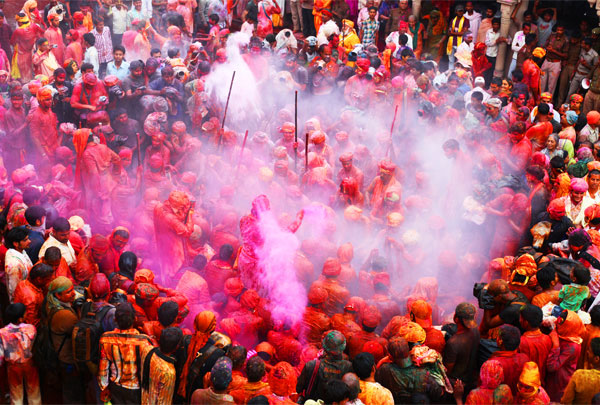
The main Holi day can begin early. Colored powder known as gulal is thrown into the air and applied to faces and clothing. Water may also be used in public celebrations.
Travelers should assume that clothing worn into active Holi areas will become heavily stained. Shoes, bags, phones, cameras, and other belongings also require protection.
Crowds can be intense, particularly around famous temples and narrow streets. Noise levels are high, personal space becomes limited, and moving between locations may take much longer than normal.
Foreign visitors who are uncomfortable with dense crowds or being covered with colors should consider attending a controlled hotel or organized celebration rather than entering the busiest public areas.
Those who want the traditional Mathura-Vrindavan atmosphere should visit with realistic expectations and suitable arrangements.
Best Time to Visit Mathura and Vrindavan for Holi
Holi generally falls in February or March, with the exact date changing every year according to the Hindu lunar calendar.
However, travelers should not arrive only on the main Holi morning. Important events in the Braj region take place on different days before the main festival.
A stay of several nights allows visitors to attend selected temple celebrations, see Mathura and Vrindavan outside peak celebration hours, attend Holika Dahan, and participate in the main Holi festivities.
Travelers planning a dedicated Holi Festival tour in India should confirm the annual calendar before booking international flights.
Difference Between Mathura Holi, Vrindavan Holi and Lathmar Holi
These celebrations are related but should not be treated as identical.
Mathura has major religious and public celebrations connected with Krishna’s birthplace. Vrindavan is particularly known for temple-based Holi traditions and its strong connection with Krishna and Radha.
Lathmar Holi, meanwhile, is primarily associated with Barsana and Nandgaon and follows its own distinctive traditions. It takes place before the main Holi celebration.
Travelers interested in seeing several Braj traditions can combine them in one longer festival journey, but each requires separate timing and planning.
Photography During Mathura and Vrindavan Holi
Holi provides exceptional opportunities for travel photography. Clouds of colored powder, temple architecture, devotional gatherings, musicians, pilgrims, flower petals, and street scenes can produce striking images.
At the same time, Holi is challenging for camera equipment.
Fine colored powder can enter lenses, camera bodies, buttons, and openings. Water presents another risk. Professional photographers should carry appropriate protective covers and avoid unnecessary lens changes in crowded, dusty environments.
A lightweight setup is often easier to manage than carrying several lenses and a large camera bag.
Permission remains important when taking close portraits. Religious worship, elderly participants, children, and private family moments should be photographed with particular sensitivity.
What to Wear During Holi
Foreign visitors should wear inexpensive, comfortable clothing that they do not mind staining permanently.
Many travelers choose light-colored clothes because Holi colors show clearly in photographs, but the material should not become transparent when wet.
Women may feel more comfortable wearing a longer top with trousers rather than very light or fitted clothing. Closed footwear or secure sandals are preferable to loose flip-flops in crowded streets.
Sunglasses can help protect the eyes from powder. A scarf or bandana can provide additional protection for hair and face.
Visitors should avoid carrying expensive jewelry, watches, or unnecessary accessories.
Protecting Your Phone, Camera and Personal Belongings
Phones, passports, wallets, and cameras should be protected before entering active Holi celebrations.
A waterproof phone pouch or securely sealed protective cover is useful. Passports should normally remain in the hotel safe unless there is a specific reason to carry them.
Carry only the cash and essentials needed for the day. A small secure bag worn close to the body is preferable to an open handbag or loose backpack.
Professional photographers should prepare their equipment before leaving the hotel rather than attempting complicated camera changes inside crowded areas.
Safety Tips for Foreign Tourists During Holi
Holi in Mathura and Vrindavan can be enjoyable, but the large crowds require sensible precautions.
Travel with a reliable guide when entering unfamiliar high-density areas. Stay with your group, establish a meeting point, and keep your phone protected but accessible.
Avoid accepting unfamiliar drinks or food from strangers when you cannot confirm what they contain. Alcohol and intoxicating preparations such as bhang may be consumed during Holi in some places, so travelers should know what they are being served.
Women traveling alone may prefer an organized or guided arrangement, particularly in extremely crowded street celebrations.
If a particular street or crowd feels uncomfortable, leaving the area is preferable to remaining simply for photographs.
Respectful Behavior During Holi
Although Holi is playful, visitors should not assume that every person wants to be covered in color.
Ask before applying color to strangers, particularly elderly people, photographers, shopkeepers, or visitors who appear to be avoiding active celebrations.
Religious spaces require additional respect. Follow temple instructions regarding footwear, photography, bags, and access.
Holi should not be treated merely as a party. Understanding its religious and cultural background makes the visit more meaningful and helps international visitors interact appropriately with local communities.
Food and Drinks During the Festival
Mathura and Vrindavan are strongly associated with vegetarian food and sweets.
Travelers may encounter gujiya, a sweet commonly eaten around Holi, along with milk-based sweets, snacks, lassi, and other North Indian dishes.
Foreign visitors with sensitive stomachs should choose reputable restaurants and freshly cooked food. Drink sealed bottled or properly filtered water and remain hydrated throughout the day.
Travelers should also be aware of thandai containing bhang. Bhang is a cannabis preparation traditionally consumed by some people during Holi. Visitors should never consume a drink without knowing exactly what it contains.
How to Reach Mathura and Vrindavan
Mathura and Vrindavan are conveniently located for international travelers following the Delhi–Agra–Jaipur Golden Triangle route.
Mathura is connected by rail and road, while Vrindavan is a short drive away. Delhi is the main international gateway for most overseas visitors.
A private vehicle is particularly useful during a Holi tour because festival schedules, traffic restrictions, road closures, and crowds can complicate normal transportation.
During major celebrations, vehicles may not be allowed close to some temple areas. Walking or local transport may therefore be required for the final section.
Where to Stay During Holi
Travelers can find hotels and guesthouses in Mathura and Vrindavan, but accommodation should be booked well in advance.
International visitors should pay particular attention to cleanliness, room facilities, location, vehicle access, breakfast arrangements, and distance from the planned festival venues.
Another option is to stay in a higher-category hotel in a nearby destination and make carefully timed visits to the Braj region, although this may reduce flexibility for early-morning or late-evening events.
The best choice depends on whether the priority is festival access, hotel comfort, photography, or a combination of these factors.
Combining Holi with a North India Tour
Mathura and Vrindavan fit naturally into a longer private journey through North India.
A particularly practical route is:
Delhi – Mathura – Vrindavan – Agra – Jaipur
This allows international visitors to combine Holi traditions with the Taj Mahal, Agra Fort, Jaipur’s palaces and forts, and Delhi’s major historical sites.
Travelers with more time can continue into Rajasthan, adding Pushkar, Jodhpur, Udaipur, Jaisalmer, or other destinations.
Varanasi can also be included for travelers interested in India’s religious traditions, although flight and rail connections need to be considered when designing the itinerary.
Planning a Mathura and Vrindavan Holi Tour with India Fortune Journey
A successful Mathura Vrindavan Holi tour package requires more planning than a normal sightseeing itinerary. Different celebrations occur at different locations, festival dates change annually, hotels become busy, roads may be restricted, and temple areas can receive extremely large crowds.
India Fortune Journey can arrange a private itinerary around the confirmed Holi calendar, including accommodation, private transportation, sightseeing, and suitable festival visits.
For international travelers, the itinerary can be connected with Delhi, Agra, Jaipur, Rajasthan, or Varanasi to create a broader North India Holi tour.
The aim is not simply to place travelers inside the largest crowd. Good planning should provide opportunities to see the religious, cultural, and celebratory sides of Holi while maintaining practical transportation, suitable accommodation, and enough time to understand Mathura and Vrindavan beyond the festival itself.
Fair Festivals
Personalized Travel Experiences Across India
Tell us about your
Travel Plans
Share your travel preferences and our destination specialists will create a personalized itinerary along with the best travel recommendations and pricing. Most inquiries receive a detailed response within 24 hours with no obligation.
Have a Question?
Whether you're planning a private tour, luxury holiday, family vacation, chauffeur-driven journey, hotel booking, or a customized India itinerary, our travel experts are ready to assist you.
Share your requirements and we'll provide the best travel options, recommendations, and pricing tailored to your needs.