
- /
- Fair & Festivals
- / Hemis Festival Ladakh
Hemis Festival Ladakh
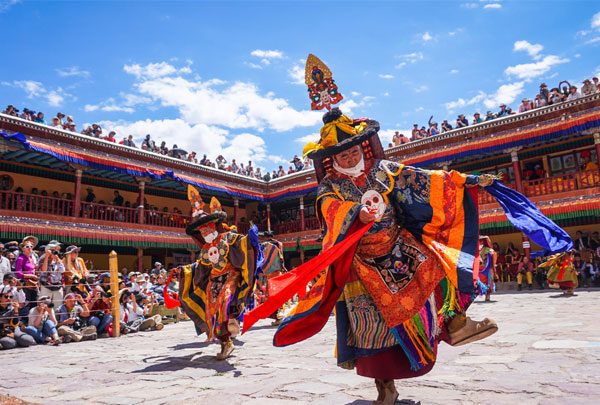
High in the mountains of Ladakh, the Hemis Festival brings Buddhist traditions, sacred masked dances, ceremonial music, religious rituals, and local communities together within the historic setting of Hemis Monastery. For international travelers, the festival provides an opportunity to see an important part of Ladakh’s living Buddhist culture while traveling through one of India’s most dramatic Himalayan regions.
The festival is held at Hemis Monastery, located outside Leh in the Indus Valley. During the celebration, the monastery courtyard becomes the main gathering place, with monks performing ritual dances in elaborate masks and ceremonial costumes. Traditional instruments accompany the performances, while monks, local families, pilgrims, photographers, and visitors watch from around the courtyard.
The Hemis Festival in Ladakh should not be viewed simply as a colorful performance arranged for tourists. Its rituals have religious meaning within Tibetan Buddhist tradition, and the monastery remains an active religious institution. Foreign visitors who understand this background can appreciate the symbolism behind the masks, costumes, movements, music, and ceremonies rather than seeing the event only through a camera lens.
A journey for the festival can also be combined with Leh, the monasteries of the Indus Valley, Nubra Valley, Pangong Lake, and other parts of Ladakh. Careful planning is particularly important because Ladakh’s high altitude affects how quickly international visitors should begin sightseeing after arriving.
What Is the Hemis Festival?
The Hemis Festival is an important Buddhist celebration held at Hemis Monastery in Ladakh. It honors Guru Padmasambhava, also known as Guru Rinpoche, an important figure in Tibetan Buddhism who is traditionally associated with the spread of Buddhism across the Himalayan region and Tibet.
The festival follows the Tibetan lunar calendar, which means its dates can change from year to year. It normally takes place during the summer travel season, when Ladakh is accessible and weather conditions are generally more suitable for visitors.
During the festival, religious ceremonies and masked monastic dances become the main focus. These dances are not simply entertainment. They form part of Buddhist ritual traditions and carry symbolic meanings associated with spiritual teachings and the overcoming of negative forces.
For foreign travelers interested in Buddhism, Himalayan culture, monasteries, photography, or anthropology, Hemis provides a very different festival experience from the large street celebrations found elsewhere in North India.
Hemis Monastery – The Setting of the Festival
The location itself is an important part of the experience. Hemis Monastery, also known as Hemis Gompa, belongs to the Drukpa tradition of Tibetan Buddhism and is one of Ladakh’s best-known monastic institutions.
The monastery lies in a mountain valley away from the dense urban setting of Leh. Its whitewashed buildings, courtyards, prayer halls, religious paintings, statues, and surrounding mountains create a striking Himalayan setting for the festival.
During ordinary days, Hemis can be visited as part of an Indus Valley monastery tour. During the festival, however, the atmosphere changes significantly. The courtyard becomes crowded, ceremonial spaces become active, and the normally quiet monastery receives large numbers of visitors.
International travelers should therefore consider visiting other Ladakhi monasteries on quieter days as well. This provides a better understanding of Buddhist monastic life beyond the festival crowds.
Guru Padmasambhava and the Religious Meaning of Hemis Festival
Understanding Guru Padmasambhava helps explain why Hemis Festival is important. Guru Rinpoche holds a highly respected place within Tibetan Buddhism and is traditionally credited with playing a major role in establishing Buddhist teachings in Tibet during the eighth century.
The Hemis celebrations commemorate his life and spiritual legacy. Rituals, prayers, music, and masked dances are connected with Buddhist teachings rather than being independent cultural performances.
For an international visitor unfamiliar with Tibetan Buddhism, the symbolism may initially be difficult to understand. A knowledgeable guide can explain the basic meaning of the ceremonies, religious figures represented by the masks, and the role of different rituals without interrupting the religious proceedings.
Learning even a small amount about the festival beforehand can make the visit considerably more rewarding.
Cham Masked Dances at Hemis Festival
The Cham dances are the most visually recognizable part of Hemis Festival. Buddhist monks wear elaborate masks and brightly colored ceremonial costumes while performing carefully structured movements in the monastery courtyard.
Some masks represent protective deities or symbolic figures within Buddhist traditions. The movements, costumes, music, and ritual objects used during the performances form part of a religious presentation with spiritual meaning.
The dances can appear slow and deliberate compared with conventional stage performances. Foreign visitors should not expect a fast-paced entertainment program. The repetition and measured movements are part of the ritual character of Cham.
For photographers, the combination of detailed masks, layered costumes, monastery architecture, mountain light, and ceremonial movement provides exceptional subjects. However, photography should never interfere with the monks, ceremonies, or local devotees.
Traditional Music and Ceremonial Instruments
Music plays an important role during the Hemis Festival. Monks use traditional instruments that may include drums, cymbals, long horns, and other ritual instruments associated with Tibetan Buddhist ceremonies.
The deep sound of horns and rhythmic percussion changes the atmosphere of the monastery courtyard. Unlike a modern musical performance, the sound accompanies religious rituals and the Cham dances.
International travelers may find it worthwhile to spend time simply observing and listening rather than continuously taking photographs. The combination of sound, movement, incense, costumes, and the mountain setting is a significant part of the Hemis experience.
Visitors seated farther from the main performance area may still hear the ceremonies clearly even when their view becomes partially restricted by crowds.
What Foreign Travelers Can Expect at Hemis Festival
Festival days can be busy from the morning, and visitors often arrive early to find suitable positions around the monastery courtyard. Seating and standing space becomes limited as monks, Ladakhi families, pilgrims, tour groups, and photographers gather.
Local residents may attend wearing traditional Ladakhi clothing, adding another cultural element to the occasion. The event provides an opportunity to see how religious traditions remain part of contemporary Ladakhi life rather than existing only inside museums or historic buildings.
Foreign travelers should expect periods of waiting between activities. The festival follows ceremonial requirements rather than a tourist entertainment schedule, so patience is important.
Carrying water, sun protection, and appropriate clothing is useful, but travelers should avoid bringing unnecessarily large bags into crowded areas.
Best Time to Attend Hemis Festival
Hemis Festival generally takes place during June or July, although exact dates depend on the Tibetan lunar calendar and should be confirmed for the intended travel year.
Summer is also one of the main travel seasons in Ladakh. Daytime weather can be pleasant in the sun, but temperatures change quickly, particularly in shaded areas, early mornings, and evenings.
Travelers should plan to reach Leh several days before attending the festival. This is not only useful for sightseeing but also important for altitude acclimatization.
A common mistake is to fly into Leh and immediately begin a demanding sightseeing schedule. The body needs time to adjust to the elevation, even if the traveler feels well on arrival.
Leh and High-Altitude Acclimatization
Leh sits at an elevation of approximately 3,500 meters above sea level, making altitude one of the most important considerations for overseas visitors.
After flying into Leh, travelers should keep the first day light and allow their bodies to adjust. Heavy exercise, rapid mountain excursions, and an overloaded sightseeing schedule should be avoided immediately after arrival.
Common altitude-related symptoms can include headache, fatigue, disturbed sleep, dizziness, and reduced appetite. More serious symptoms require prompt medical attention and should never be ignored.
Travelers with existing medical conditions should consult an appropriate medical professional before a high-altitude trip. Staying hydrated, avoiding excessive alcohol, and increasing elevation gradually after initial acclimatization are sensible precautions.
The Hemis Festival itinerary should therefore be designed around the realities of Ladakh’s altitude rather than treating Leh like an ordinary lowland city.
How to Reach Hemis Monastery from Leh
Hemis Monastery lies southeast of Leh and is generally reached by road. The journey passes through the Indus Valley and can be incorporated into a broader monastery sightseeing route.
A private vehicle is one of the most convenient options for international visitors, particularly during the festival when road traffic and visitor numbers increase.
Travelers should leave Leh with enough time to account for congestion near the monastery and walking from the vehicle drop-off area. Parking arrangements may change during major festival days.
Hemis can also be combined with other important sites in the region depending on time and road conditions, although trying to visit too many monasteries on the main festival day can make the itinerary unnecessarily rushed.
Photography at Hemis Festival
The Hemis Festival is particularly popular among cultural and travel photographers. The Cham masks, ceremonial costumes, monks, Ladakhi clothing, monastery architecture, and surrounding mountains create a wide range of photographic opportunities.
Arriving early can help photographers find a better position before the courtyard becomes crowded. A moderate telephoto lens can be useful for photographing the masked dances without entering ceremonial spaces.
Visitors should check photography rules for monastery interiors separately. Permission to photograph outdoor festival activities does not automatically mean photography is allowed in every prayer hall or religious room.
Flash photography should be avoided when it disturbs ceremonies, and photographers should never stand in areas reserved for monks or local participants merely to obtain a better angle.
Portraits of local residents should be taken respectfully. Asking permission is especially important for close photographs of individuals.
What to Wear at Hemis Festival
Ladakh’s strong mountain sun can make daytime temperatures feel warm, while shade, wind, and changing weather can quickly make conditions cooler. Layered clothing is the most practical choice.
International travelers should carry a light warm jacket, sun hat, sunglasses, and high-SPF sunscreen. Comfortable shoes are important because monastery visits may involve steps, uneven ground, and walking between parking areas and entrances.
Clothing should remain modest inside the monastery. Shoulders and knees should be covered, and visitors should follow instructions about footwear when entering prayer halls or sacred spaces.
A scarf can also be useful for sun, wind, and dust protection.
Food and Drinking Water During the Festival
Leh has a good selection of restaurants serving Ladakhi, Tibetan, Indian, and international food. Visitors may try local dishes such as momos, thukpa, and other Himalayan specialties during their stay.
At the festival, food options may be more limited than in Leh. Travelers who have specific dietary requirements should plan accordingly rather than depending entirely on what is available near the monastery.
Drinking enough water is particularly important at altitude, although hydration alone does not prevent altitude sickness. Travelers should carry safe drinking water and avoid excessive alcohol during the first days in Ladakh.
Food should be eaten at clean establishments, particularly for visitors whose bodies are already adapting to altitude and a different climate.
Responsible Behavior Inside Hemis Monastery
Hemis remains an active Buddhist monastery, and respectful behavior is essential even when festival crowds create a lively atmosphere.
Visitors should avoid touching religious objects, sitting in spaces reserved for monks, interrupting prayers, or blocking ceremonial routes. Instructions given by monastery staff should be followed immediately.
Inside prayer halls, travelers should speak quietly and check whether photography is allowed. Hats may need to be removed in certain areas, and visitors should not point their feet toward altars or religious figures when seated.
Foreign travelers should also avoid treating monks as props for photographs. Requests for portraits should be polite, and a refusal should always be accepted without pressure.
Where to Stay for Hemis Festival
Most international travelers stay in Leh and make a day trip to Hemis Monastery. Leh offers a much wider selection of hotels, boutique properties, guesthouses, restaurants, and other traveler services than the immediate monastery area.
Staying in Leh also allows visitors to acclimatize before the festival and visit nearby attractions at a comfortable pace.
Accommodation should be reserved early during the summer travel season, especially when Hemis Festival coincides with high tourist demand. Travelers should confirm room heating arrangements if required, hot-water availability, electricity backup, and vehicle access when selecting accommodation.
Higher-category hotels can provide greater comfort, while smaller guesthouses may offer a more personal atmosphere. The right choice depends on budget and travel style.
Other Monasteries to Visit in Ladakh
Travelers attending Hemis should consider visiting several other monasteries to understand Ladakh’s Buddhist heritage more fully.
Thiksey Monastery is one of the most visually impressive monastic complexes in the region and is known for its hillside setting. Shey has historical connections with Ladakh’s former royal family, while Spituk, Alchi, Likir, Lamayuru, and other monasteries can be included depending on the itinerary.
Visiting quieter monasteries before or after Hemis Festival provides an important contrast. Travelers can spend more time studying wall paintings, prayer halls, statues, architecture, and monastic settings without the large festival crowds.
Combining Hemis Festival with Nubra Valley
After proper acclimatization, many international travelers continue from Leh toward Nubra Valley. The route crosses high mountain terrain and leads to landscapes that differ significantly from the Indus Valley.
Nubra is known for mountain scenery, villages, monasteries, sand dunes in selected areas, and Bactrian camels. An overnight stay or longer visit allows travelers to see a more remote part of Ladakh.
The route should be planned according to current road conditions and local travel requirements. Long driving days should be avoided when possible, particularly for travelers still adapting to altitude.
Combining Hemis Festival with Pangong Lake
Pangong Lake is another popular addition to a Ladakh itinerary. Its high-altitude landscape and changing shades of blue have made it one of the region’s best-known natural attractions.
However, Pangong is considerably higher than Leh. International travelers should not rush there immediately after flying into Ladakh.
A sensible itinerary places Pangong after several days of acclimatization and other sightseeing. Weather, road conditions, and accommodation standards should also be considered when planning an overnight visit.
Combining Hemis Festival, Leh, Nubra Valley, and Pangong Lake can produce a rewarding Ladakh itinerary when enough days are available.
A Practical Hemis Festival Itinerary for Foreign Travelers
International visitors should avoid scheduling Hemis immediately after landing in Leh. A more practical journey begins with arrival and rest in Leh, followed by light local sightseeing after the body has had time to adjust.
The following days can include Leh Palace, Shanti Stupa, local markets, and selected monasteries in the Indus Valley. Hemis Festival can then be attended once the traveler is better acclimatized.
After the festival, the itinerary can continue toward Nubra Valley and, where suitable, Pangong Lake. Returning to Leh before the onward flight provides additional flexibility in case mountain road conditions affect travel times.
This slower structure is far more appropriate for foreign visitors than trying to cover every major Ladakh attraction within only a few days.
Planning a Hemis Festival Ladakh Tour with India Fortune Journey
A well-designed Hemis Festival Ladakh tour should balance cultural interest with the practical realities of Himalayan travel. Festival dates need to be confirmed, hotels should be booked early, transportation must allow for increased visitor numbers, and sufficient acclimatization time should be included before demanding excursions.
India Fortune Journey can arrange private transportation, accommodation, festival visits, monastery sightseeing, and a wider Ladakh itinerary based on the traveler’s available days and interests. The journey can include Leh, Hemis, Thiksey, Shey, Nubra Valley, Pangong Lake, and other destinations where appropriate.
International visitors traveling through North India can also combine Ladakh with Delhi, Agra, Jaipur, or Rajasthan. Delhi serves as a practical connection point for flights to Leh, making it possible to combine Himalayan Buddhist culture with the major heritage destinations of North India.
The Hemis Festival is particularly suitable for travelers who want their India journey to extend beyond conventional monuments. Its religious ceremonies, masked dances, monastery setting, mountain landscapes, and connection with Ladakhi Buddhist traditions provide a cultural setting found nowhere else on a standard Golden Triangle itinerary.
Fair Festivals
Personalized Travel Experiences Across India
Tell us about your
Travel Plans
Share your travel preferences and our destination specialists will create a personalized itinerary along with the best travel recommendations and pricing. Most inquiries receive a detailed response within 24 hours with no obligation.
Have a Question?
Whether you're planning a private tour, luxury holiday, family vacation, chauffeur-driven journey, hotel booking, or a customized India itinerary, our travel experts are ready to assist you.
Share your requirements and we'll provide the best travel options, recommendations, and pricing tailored to your needs.